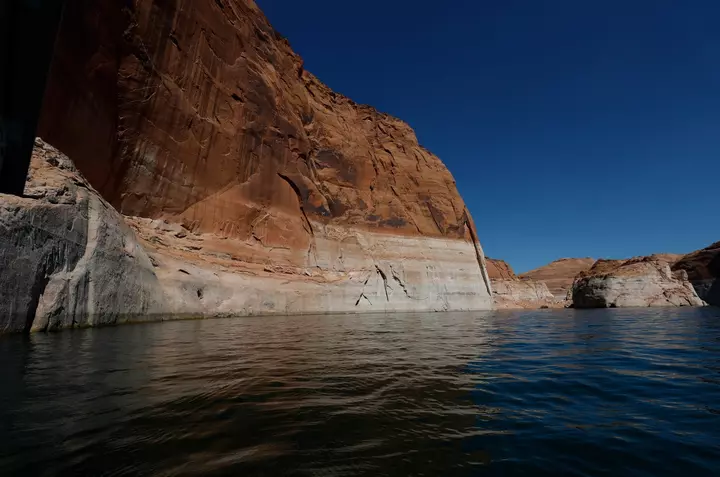
Lake Powell has risen following heavy rains, providing a slight, if perhaps only temporary ease to concerns that dwindling water levels were threatening hydropower production at Glen Canyon Dam. The nation’s second largest reservoir sank to record low levels in September. However, recent heavy rainfall in the Southwest has offered some reprieve.
Water levels at the reservoir, which straddles the Arizona-Utah border, have risen from a mid-September low of around 3,519 feet to approximately 3,537 feet as of Wednesday, according to provisional U.S. A spokesperson for the Bureau of Reclamation, which manages the reservoir, previously indicated to Newsweek the agency expected the rise. Following earlier stormy conditions, they said: "Recent precipitation has significantly improved inflows to Lake Powell, and, with additional storms forecast through the end of the month, reservoir elevations could rise further." Newsweek contacted Reclamation for further comment via email on Wednesday and is awaiting a response.
Downstream, Lake Mead—America’s largest reservoir—saw relatively little improvement. Levels as of Wednesday were largely unchanged compared with mid-September, according to Reclamation data. Lake Mead’s water level is also affected by releases from Lake Powell.
The agency’s spokesperson previously said, however, that the reservoir was expected to end October and November about three feet higher than projections previously indicated. "Precipitation in the Lower Colorado Basin has resulted in additional tributary inflow into Lake Mead as well as less water demand from the irrigation districts in southern Arizona and California," they said at the time. While the region’s storms appear to have been good news for Lake Powell, they led to damaging floods and forced evacuations in portions of the Southwest, including Colorado and Arizona.
The flooding also disrupted Election Day plans. Roads and bridges were washed out; polling locations such as Rock Point, Arizona, flooded; and some ballots were swept away, preventing or delaying voters from reaching polling stations. Though Lake Powell’s levels have seen an uptick, the Colorado River system in which it is situated has been grappling with a multidecadal drought, the effects of which experts say a single event can’t reverse.
Reclamation warned earlier this year that the reservoir’s water levels faced falling to below 3,490 feet—the minimum level needed for hydropower production—"without major intervention." The agency announced steps to prevent this, including increased releases from Flaming Gorge Reservoir upstream and a cut in downstream releases to Lake Mead. "It’s going to put off dead pool for a little bit, right? We were getting dangerously low to that issue with Lake Powell.
Extract — continue reading at the source.