Most Popular PlacesRandom PlaceListsItinerariesAdd a PlaceDownload the App Laredo’s Palace Hazelnut Inn Melvin-Lewis Pioneer Cemetery The Kuji Amber Museum Where to See the World’s Creepiest Dolls and Toys 4 days ago Where to See the World’s Most Famous Preserved Body Parts 11 days ago An eclectic and whimsical building, the product of its creator’s imagination. Ornate Moorish-style oriel window Luis Morato / Atlas Obscura User The small Arab room is richly decorated with intricate muqarnas plasterwork and tiles inspired by Granada’s Alhambra. Luis Morato / Atlas Obscura User Ornate Moorish-style oriel window Luis Morato / Atlas Obscura User The small Arab room is richly decorated with intricate muqarnas plasterwork and tiles inspired by Granada’s Alhambra.
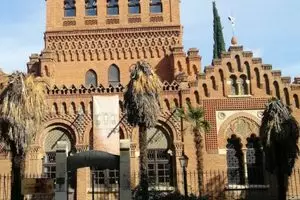
Luis Morato / Atlas Obscura User As soon as you leave the Alcalá de Henares train station and walk toward the historic center, a richly decorated Neo‑Mudéjar brick building immediately stands out, reminiscent of Comillas Palace by Gaudí. This is Laredo Palace, created by Manuel José Laredo (1842–1896), who was not only the city’s mayor but also a painter, decorator, and restorer. Completed in 1886, the palace blends Neo‑Mudéjar, Neo‑Gothic, and Modernist elements.
Although the official architect was Juan José de Urquijo, Laredo personally directed the entire project, inspired by William Morris’s Arts and Crafts movement. He oversaw everything from the architectural plans to the interior decoration. The exterior features brick façades with geometric patterns, galleries with Moorish latticework, and, most notably, a clock‑tower minaret topped with a dome covered in green and white glazed ceramic scales.
Inside, Laredo painted Modernist decorative motifs and others inspired by Pompeian frescoes. One highlight is the “Hall of Kings,” which contains portraits of monarchs and a ceiling depicting the medieval understanding of the cosmos. Neo‑Mudéjar and Moorish elements dominate the interior, including a small Arab room adorned with plasterwork and tiles inspired by the Alhambra.
To reinforce this aesthetic, Laredo incorporated archaeological pieces from other buildings: the vault and columns from Santorcaz Castle, coffered ceilings from the Palace of the Marquises of Tendilla, and tiles from the Palace of Peter I, among others. Today, the palace houses a small museum where visitors can see, among other exhibits, a complete copy of the Complutensian Polyglot Bible, the first of its kind in the world. Get more unusual and extraordinary places each week with the Atlas Obscura Places newsletter.
Your newsletter subscriptions with us are subject to Atlas Obscura's Privacy Policy and Terms of Use. Laredo's Palace is very close to The Alcalá de Henares commuter train Station. Sprawling archeological site of an 8th-century Islamic castle.
Extract — continue reading at the source.