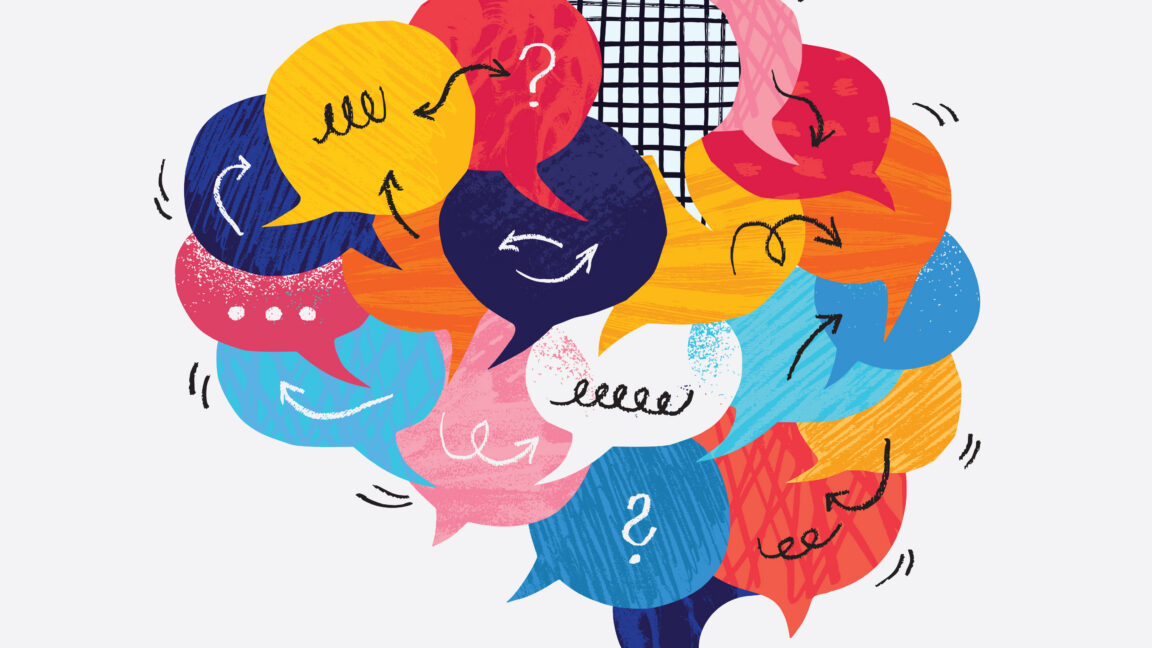
Learning another language is a highly complex mental activity. It requires people to remember words, distinguish unfamiliar sounds, recognize patterns, work out grammatical rules, and retrieve the right expression at the right moment. All of this happens while listening, interpreting, and preparing a response.
Could all this mental activity also help keep an aging brain healthier? Research suggests it can. Concerns about memory and dementia can send aging adults looking for ways to exercise their brain and maintain cognitive function, whether it is solving crossword puzzles or playing a musical instrument.
Language learning might not seem like the same kind of brain exercise, but it is a complex activity that engages several mental processes at once. I am a linguist who studies language acquisition, use, and loss. My new book, Beyond Words: How We Learn, Use, and Lose Language, examines language and the mind across people’s lifespans.
Research increasingly suggests that language learning and bilingualism can offer cognitive benefits—including for older adults. Learning another language can also create opportunities for communication and social connection. A person’s brain remains capable of change throughout their life.
This ability to adapt in response to experience is known as neuroplasticity. Learning unfamiliar sounds, vocabulary, and grammatical patterns requires the brain to form and strengthen connections. Language learning engages several mental processes at once, requiring people to absorb and retrieve information, notice when something does not work out, and adjust.
This sustained mental effort makes language learning a particularly rich form of cognitive exercise.
Extract — continue reading at the source.