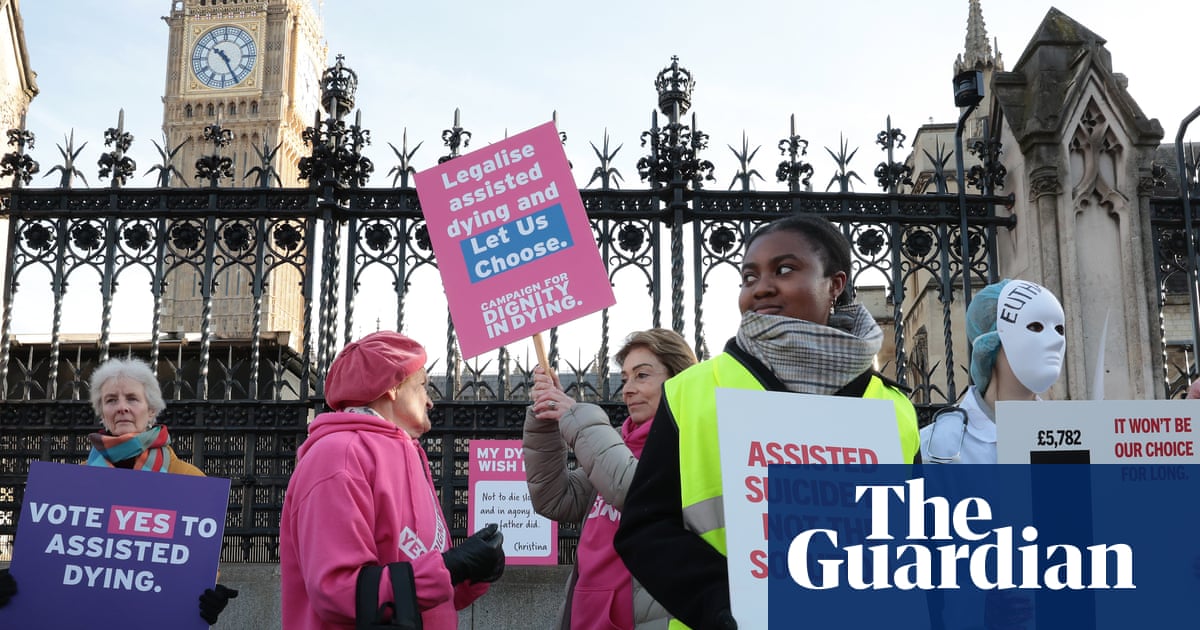
MPs on both sides of the assisted dying debate have voiced fears about turnout affecting the vote on Friday, when the bill returns to the Commons for its second attempt to become law. Those who back the change in the law have been emphasising the “undemocratic” nature of the bill’s rejection by the House of Lords after it was talked out by a handful of peers after passing the House of Commons. The bill fell despite multiple days of debate from peers because of the number of amendments tabled in the Lords.
Several former cabinet ministers and ministers say they intend to speak out on the bill now they are freer to express their views, especially on the conduct of the Lords. The private member’s bill – originally sponsored by Kim Leadbeater – has been revived by the Labour MP Lauren Edwards. It had passed last year by a majority of 23 in the Commons.
In an article for the Guardian, Edwards said the bill was “the most pressing, progressive reform of this parliament. But it was blocked in the Lords earlier this year by a small minority of peers, led in part by former Tory ministers such as Thérèse Coffey and Mark Harper”. She said the Lords should not be “allowed to frustrate the will of the elected chamber a second time”.
Edwards said she rejected some accusations from Labour MPs that she was reopening divisions in the party at a moment when there was a chance to reunite it now that Andy Burnham had replaced Keir Starmer as prime minister. MPs have already made their decision. In a democracy, we settle our differences by voting on them.
Last time, opponents in the Lords prevented a vote taking place on the bill’s provisions,” Edwards said. But once passed, the reforms were quickly accepted and ceased to be controversial. We owe it to them, and to the vast majority of voters who support them, not to sit back and allow a minority of unelected peers to stand in their way.” Backers of the bill have stressed that MPs should see the vote as a moment to assert the Commons’ decision-making power, rather than rerun the arguments.
Jo Stevens, a former Welsh secretary, said: “I’ve always supported the principle of assisted dying. I have constituents and friends who desperately wanted one and a constituent who I helped after they were arrested for escorting someone who chose an assisted death at Dignitas. Many of these are former MPs who should know better, especially former ministers who were rejected by the electorate.” However, several MPs said they believed it was the pro-side that was finding it hardest to convince MPs to stay and vote on Friday.
Extract — continue reading at the source.