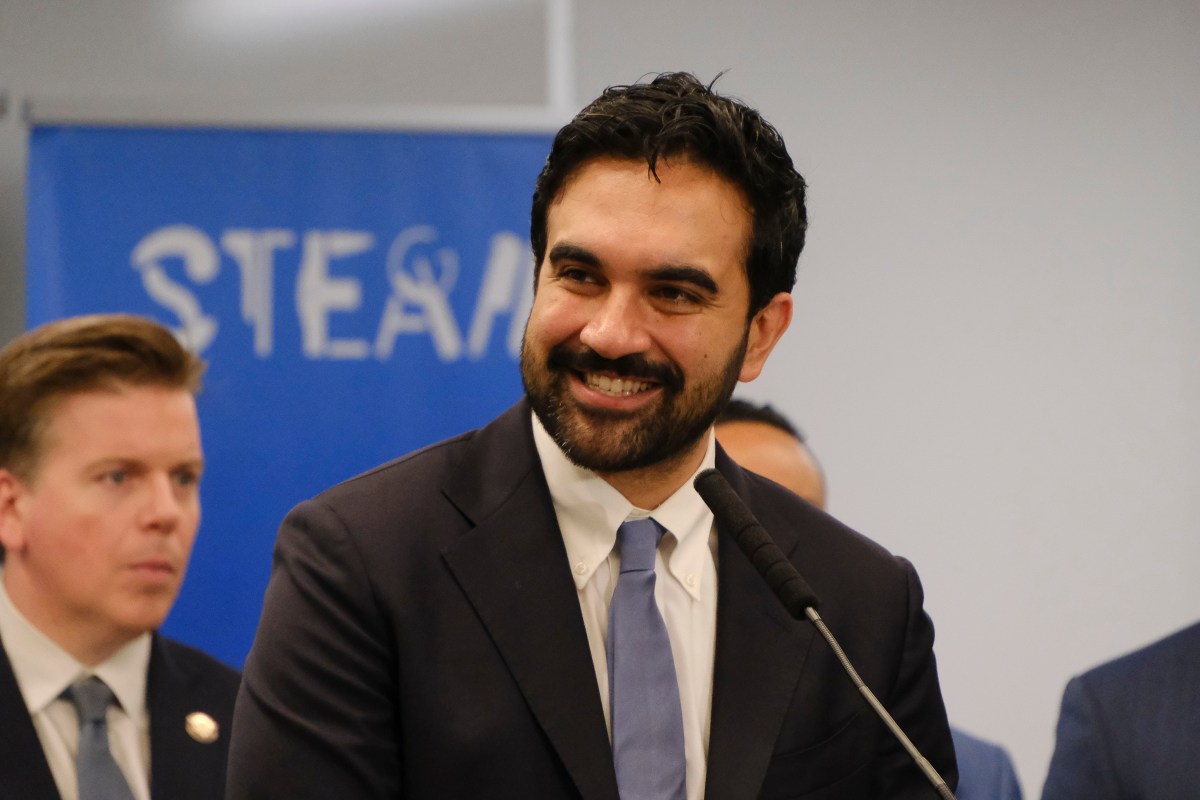
New York City Public Schools, the nation's largest school district, is imposing a one-year moratorium on student-facing generative artificial intelligence (AI) through eighth grade, marking one of the most aggressive restrictions on AI in U.S. classrooms. Mayor Zohran Mamdani and Schools Chancellor Kamar Samuels announced the policy on Wednesday, saying the district will pause the use of student-facing generative AI tools for younger students for a year while officials study the technology's impact on learning and child development. The restrictions affect roughly 600,000 students and include a ban on AI companion chatbots across all grades.
They need to develop skills alongside their peers, build relationships with educators and wrestle with tough problems on their own,” Mamdani said in a Wednesday press release. Samuels added, “We’re putting guardrails in place to protect the human connection, curiosity and creativity that help children grow. We’re standing firmly in our belief that innovation does not mean more technology, and over the next year, we will lead with evidence to make sure technology serves learning — not the other way around.” Mamdani’s move comes amid a growing divide among various educators, parents, and policymakers over the role of AI in schools.
As some districts expand AI literacy programs and classroom use, others have imposed new guardrails or restrictions, arguing that unchecked use could stunt critical-thinking skills, increase screen time and create various academic integrity and privacy concerns. Newsweek has reached out to the mayor’s office for comment via email on Wednesday. Mamdani's policy imposes a one-year moratorium on student-facing generative AI for students from pre-K through eighth grade, affecting roughly 600,000 students in New York City's public school system.
The restrictions are set to begin with the 2026-27 school year while the city studies the technology's impact on learning and child development. The Technology in Schools coalition includes students, educators, parent leaders, elected officials, advocates, union partners, and experts, all of whom will help assess the impact of the new policy and publish a report. We do not see it that way.
That’s why we’re implementing a moratorium on generative AI for students in 2-K through 8th grade and spending the next year studying the impacts of this technology,” the mayor said. The plan includes five limited AI pilot programs for high school students, featuring tools such as Quill for English language arts, Edia for math, Brisk Teaching for text and video instruction, Playlab and Intel AI-Ready Schools. New York Governor Kathy Hochul backed the move, saying in the Wednesday press release, “New York State has been leading the way in our efforts to keep kids focused on learning and growing — not clicking and scrolling — and I commend Mayor Mamdani for building on this work and pushing our shared commitment to supporting New York’s kids forward.” “New York City's new measures on AI are probably the most restrictive, but they're not in a radically different category from all other major districts,” Meredith Coffey, a senior policy and operations associate at the Thomas B.
Fordham Institute, told Newsweek in an email Wednesday. She added, “LAUSD [Los Angeles Unified School District] doesn't allow student-facing AI for students under 13, and Fairfax County, VA, has a ban on student-facing AI in grades K-5. That said, there are other large districts at the opposite end of the spectrum, like Chicago, where there's AI literacy in the curriculum for K-12.” Los Angeles Unified School District, the nation's second-largest school district, has adopted significant restrictions on classroom technology use as educators reassess the role of digital tools in student learning.
Extract — continue reading at the source.