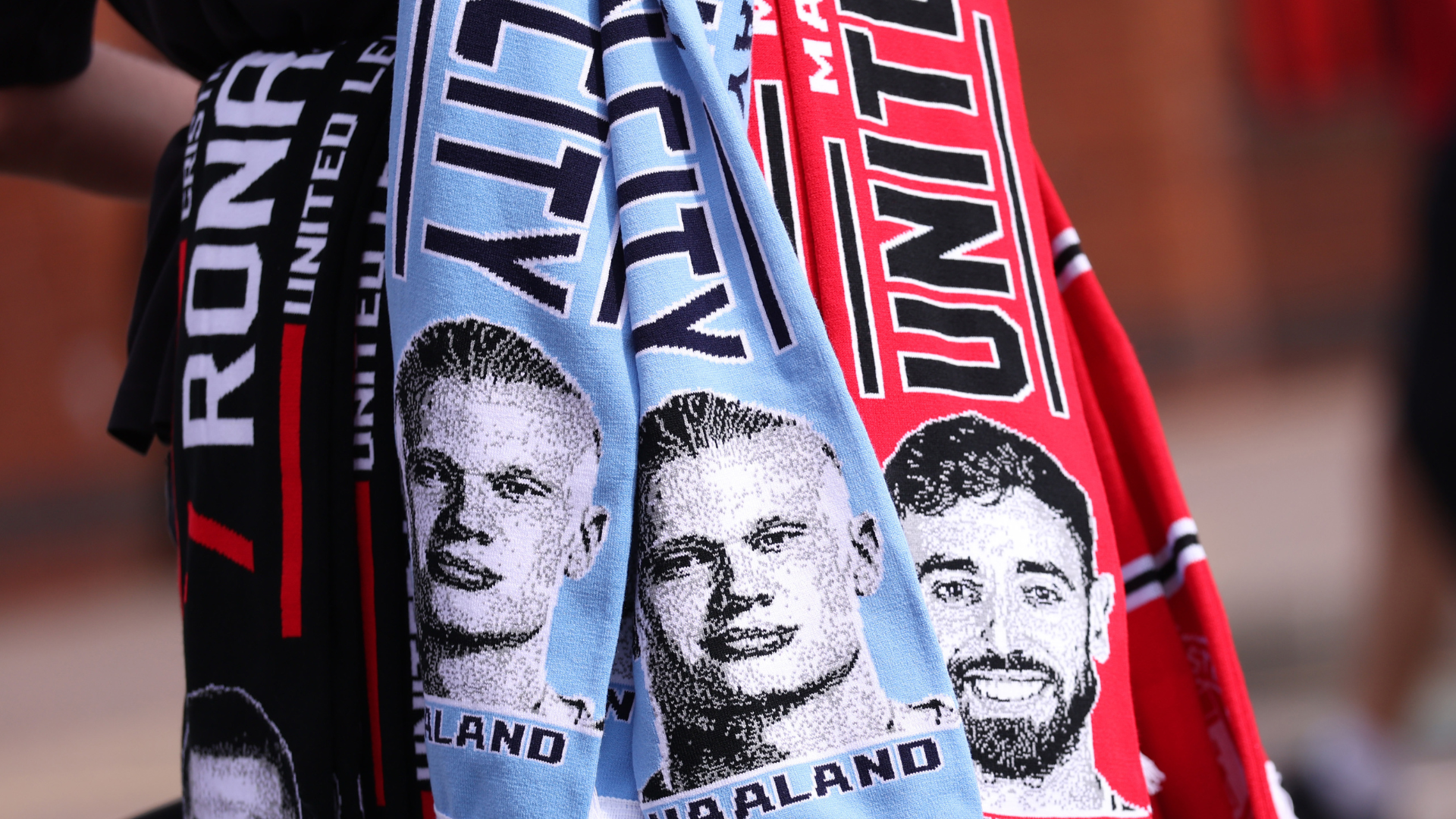
As two of their number face off at Anfield on Sunday afternoon, this would seem to be a good time to find yourself one of the so-called Red Cartel. Manchester City are facing the prospect of sanctions that would cast them out from the Premier League's inner circle, while those other big-six clubs that play in white and blue have spent half a decade retreating from the title race (as, it should be noted, have Manchester United). If City's sanctions land this season, it could be that Liverpool are the nearest rivals to Arsenal in the title race, another domestic crown carved up by the grand old dukes of the English game.
Believe City's defenders and this triopoly is just what Abu Dhabi protected the Premier League from. "A conspiracy by the Red Cartel to keep clubs like Manchester City out of sitting at the top table," was how one supporter described the finding that City had breached 114 of the Premier League's rules over a nine-season period. When their chief executive Ferran Soriano talks about a "Premier League conspiracy theory," well, no one thinks the shadowy cabal is being led by Brentford and Bournemouth.
A version of this framing has gathered pace beyond the realms of the Etihad Stadium, intermingling with burgeoning dissatisfaction over financial rules from both the Premier League and UEFA, that have resulted in sanctions for grand old clubs such as Everton, Nottingham Forest and Aston Villa. It was best articulated by ex-Chelsea midfielder Joe Cole earlier this month, who insisted that the game's financial settlement was locking out ambitious clubs in a way that his former club was not when it was bought by Roman Abramovich. "The regulations that are in place are not doing the job they're supposed to do," he said.
Of course, there is one crucial caveat to any assessment of the Premier League's profit and sustainability regulations (PSR) and the squad cost ratio that has replaced it. When one team is found to have flouted them through "sham" contracts that inflated its revenue to the tune of over $1 billion, it is quite hard to know how this sport might operate on a level playing field. Under Pep Guardiola, City's domestic achievements were unprecedented.
No English side had sustained a four-year spell of domestic preeminence, won all three domestic trophies or delivered a 100-point season. Anyone who argues that, were it not for City, this would have been a Premier League dominated by the big boys in red must accept that they are engaged in historical counterfactuals. What actually happened was a record-breaking spell of dominance by a team that, it was found, "systematically broke Premier League rules for nearly a decade." Then again, if you were to journey through the what-ifs, maybes and never-weres of the last 18 years, you would struggle to immediately and convincingly argue that it was City and City alone who stood against the LaLiga-fication of the Premier League.
Indeed, there was never really a period when all three of Arsenal, Liverpool and Manchester United were in the chasing pack. The last season in which these teams all finished in the Premier League top four was 2008-09, the campaign whose defining moment was the unheralded sale of City to Sheikh Mansour on Sept. 1. Indeed, 2026-27 should be considered a banner year in the smoke-filled, oak-clad boardrooms of the cartel.
Extract — continue reading at the source.