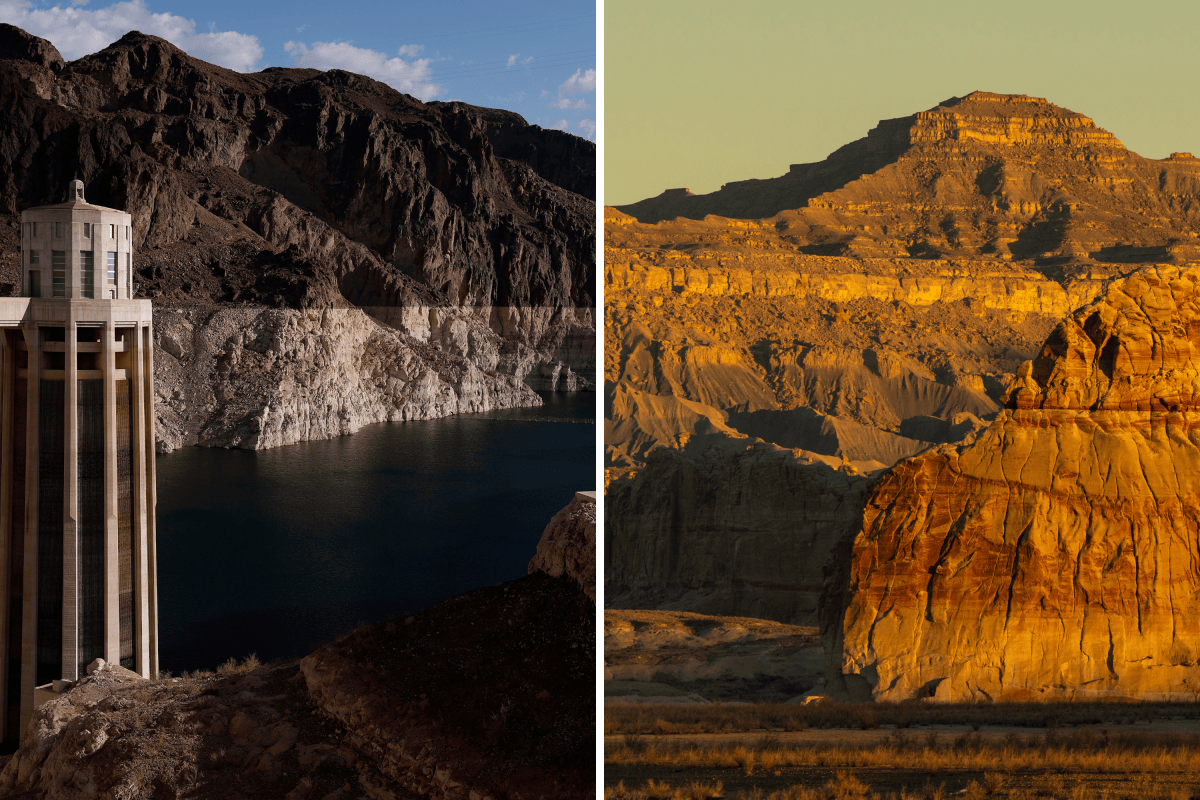
Smaller towns that rely almost entirely on a single water source are more vulnerable to the West’s drought crisis than major metropolitan areas such as Phoenix, Las Vegas, and Los Angeles. If Lake Powell or Mead were to fall below the levels needed to supply cities, some of these communities could face severe shortages because they lack the backup water infrastructure that the larger cities have built over decades, says a recent analysis from World Atlas. Kathryn Sorensen, a Colorado River expert at Arizona State University and former director of Phoenix Water Services, told Newsweek that smaller communities can be particularly vulnerable because developing alternative supplies is costly.
"Smaller communities have a smaller customer rate base over which the cost of developing new water supplies can be spread," Sorensen said. The clearest example is Page in Arizona, a city of roughly 7,500 residents that was originally built to support construction of Glen Canyon Dam. It sits directly above Lake Powell and draws its water directly from the reservoir.
According to the WorldAtlas analysis, that supply is effectively Page's entire water source, and officials and water analysts have previously warned that if Lake Powell falls far enough, the city could lose access to municipal water. Bureau of Reclamation spokesperson told Newsweek that it had "completed a project in January 2023 that allows the City of Page and the Lechee Chapter of the Navajo Nation to draw water at lower elevations down to 3,362 feet." It seems like the community closest to one of the nation's largest reservoirs might actually be one of the least protected from its decline. LeChee, Arizona, a Navajo Nation community near Page, is another community closely tied to the Lake Powell system.
LeChee receives water through the same network that serves Page, and federal officials became concerned that falling reservoir levels could threaten deliveries to both communities. The Bureau of Reclamation responded by constructing a new lower-elevation intake at Glen Canyon Dam to ensure water could continue flowing to Page and LeChee if Lake Powell dropped below levels accessible to existing infrastructure. While the project was designed to protect local supplies during extreme drought conditions, LeChee remains heavily reliant on the reservoir and the infrastructure connected to it.
The Bureau spokesperson told Newsweek that it understands that "a reliable and sustainable water supply is vital to the health of a community," adding that it’s "actively working with communities to help assess risks and address them," confirming that its approach "centers on decisive, continuous action and collaborative solution development with Basin states, Tribes, and all partners." Boulder City, in Nevada, is another community that has less backup infrastructure to protect against water shortages. Originally built to house workers constructing Hoover Dam, Boulder City draws its water from Lake Mead and is described by World Atlas as the only Southern Nevada user that doesn’t return treated water back into the reservoir, preventing it from receiving the same return-flow credits relied upon by other users in the region. Although Congress has provided initial funding to study infrastructure improvements, the city remains more directly dependent on its reservoir source than its neighboring communities.
Henderson is another community that depends heavily on water delivered from Lake Mead through the Southern Nevada Water Authority (SNWA). The city is part of the broader Las Vegas Valley water system, which relies on the reservoir as a key source of water for the city. As concerns about drought and declining water levels in the Colorado River Basin continue, Henderson remains closely linked to the long-term health of Lake Mead and the infrastructure that delivers water from it.
Extract — continue reading at the source.