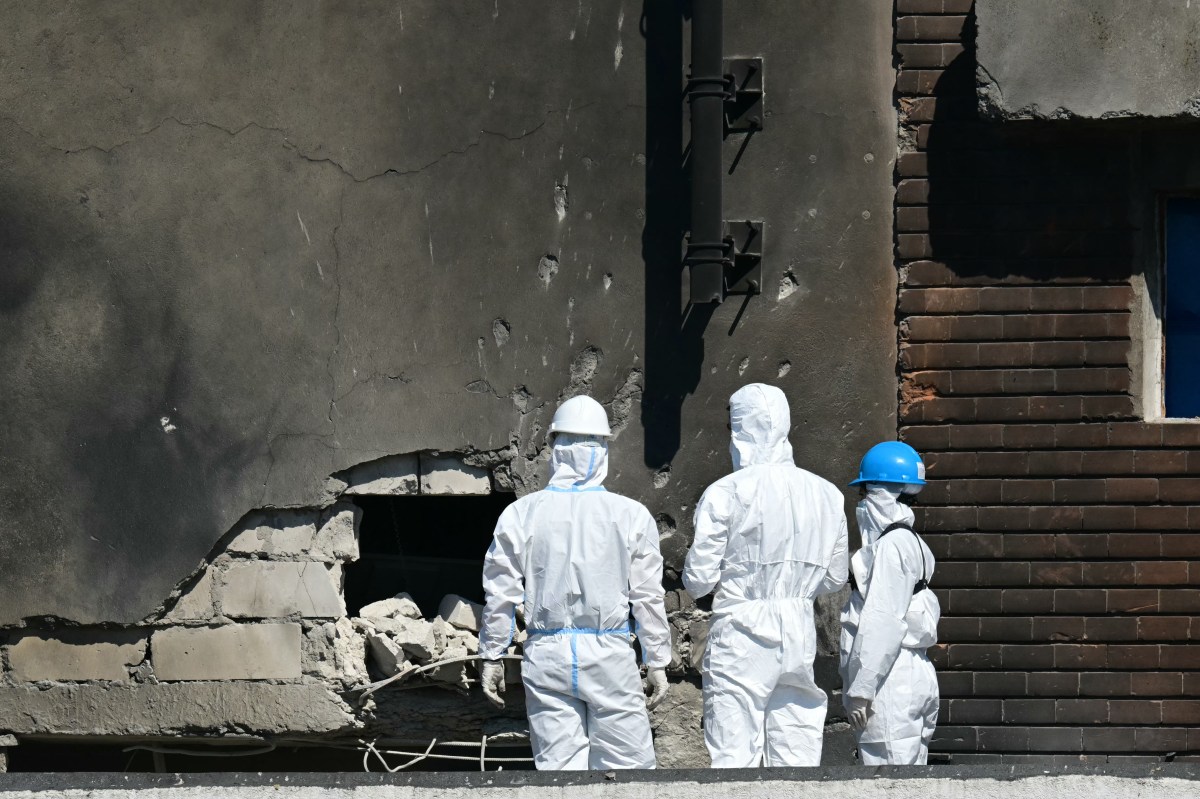
Lithuania has backed Estonia in accusing Russia of an arson attack on a defense company in Tallinn, as a map shows the spread of suspected sabotage acts across Europe linked to Russia since the start of the Ukraine War. Lithuania's foreign ministry expressed solidarity with Estonia on Wednesday over a fire that damaged a building in Tallinn belonging to defense firm Milrem Robotics on August 15. Estonia's Internal Security Service said it was an act of sabotage ordered by Russian secret services, an accusation Moscow denied.
NATO's eastern flank members continue to warn that Russia is testing the alliance's resolve with hybrid actions that fall below the traditional threshold of war. These include GPS jamming, airspace violations, and arson. Data and mapping by Kyiv-based Sahaidachnyi Security Center show that since February 24, 2022, there have been 542 incidents in Europe either attributed to Moscow by European government officials or fitting the pattern of Russian acts, but not formally attributed.
The purpose of Russia's operations is "to coerce allies into reducing support for Ukraine and undermine public support for Ukraine by imposing social and economic costs on European societies," Elena Davlikanova, a Sahaidachnyi senior fellow, told Newsweek. Kremlin spokesman Dmitry Peskov has previously rejected Western claims about Russian hybrid operations and in August called them “scare stories." Newsweek reached out to the Kremlin for comment. The data from Sahaidachnyi Security Center outlines incidents which include airspace violations by planes, drones and missiles, jamming and spoofing, as well as sabotage against critical and military infrastructure.
It documents military provocations, sabotage acts, cyberattacks, and other hybrid operations targeting Europe since the start of Moscow's full-scale invasion and is based on verified open-source intelligence. Its map shows the incidents spread right across the continent, including the United Kingdom, Italy, Germany and Poland. Davlikanova said Russian sub-threshold activity was relatively dispersed in the first two years of the full-scale invasion, but there were two clear surges in spring 2024 and autumn 2025, and activity had remained elevated into this year.
This was because Russia needed time to adapt after its failure at the start of the war, as Ukraine had absorbed military and intelligence resources. Russia then expanded drone production, electronic-warfare capacity, cyber capability and the infrastructure surrounding its sanctions-busting shadow fleet of vessels while gaining battlefield experience in using cheap autonomous and remotely controlled systems. Davlikanova said what began largely as cyber pressure, intelligence activity, signaling and relatively isolated incidents has developed into a multidomain campaign.
This combines sabotage, recruited proxies, drones, GNSS interference, maritime activity, cyber operations, electronic warfare and increasingly overt military probing. "The desired political reaction is therefore more important than the destruction of any single target," she said. "Russia benefits if European citizens begin asking their governments to avoid 'escalation', and seek a political accommodation with Moscow." In two of the latest incidents, Poland and Romania scrambled jets overnight Tuesday during a Russian bombardment of Ukraine.
Extract — continue reading at the source.