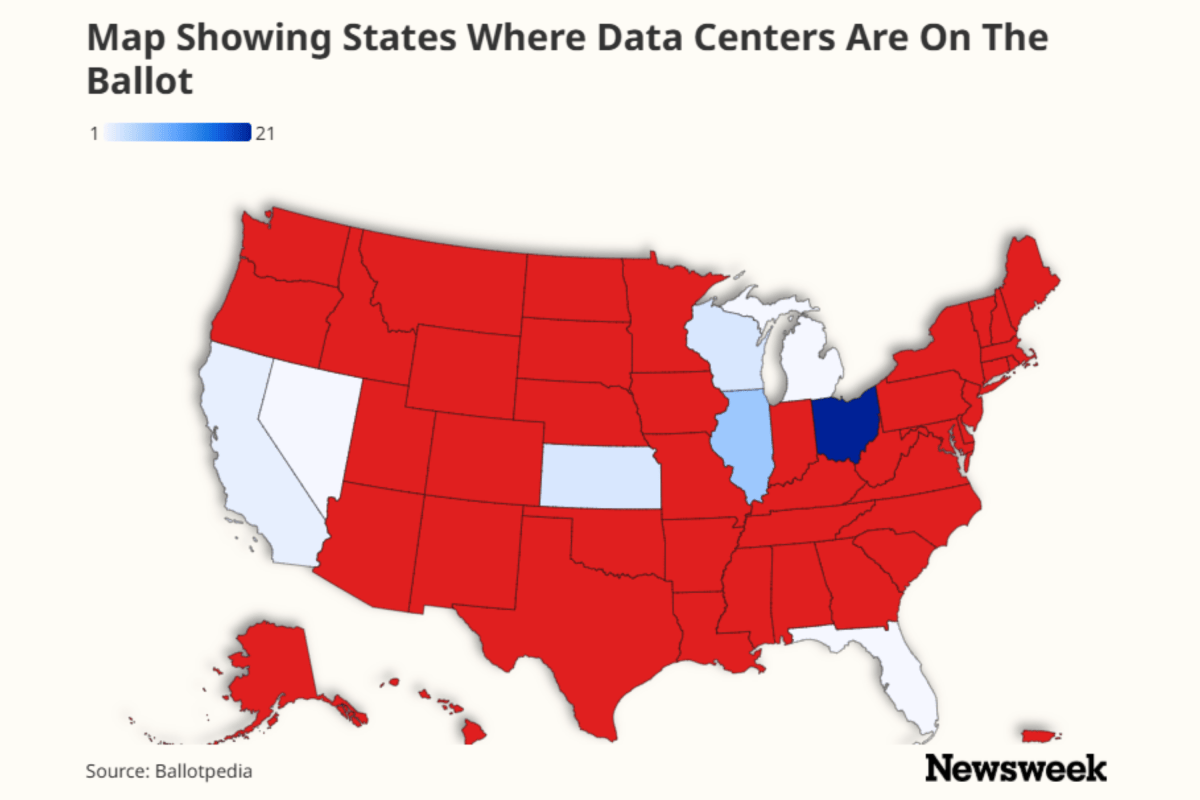
Voters in eight states have faced, or are soon to face, local ballot measures over data center development, as the infrastructure powering AI becomes an increasingly important issue in the midterm elections. According to the latest Ballotpedia count, at least 39 measures have been scheduled across California, Florida, Illinois, Kansas, Michigan, Nevada, Ohio and Wisconsin. Of those, 35 will be decided during the November 3 general election, while four were put to voters earlier in the year.
The proposals range from outright bans on new data centers to advisory questions supporting the development. Others would require voter approval, introduce zoning protections or place conditions on companies receiving tax incentives. Data centers have become a major midterm issue because of concerns about their demands on electric grids, water supplies and land, as well as questions about tax breaks and whether residential customers could be left paying for infrastructure upgrades.
At the same time, supporters argue that the facilities are essential to America’s AI ambitions and can generate construction work, investment and local tax revenue. The debate is affecting midterm races, even when data centers don’t appear directly on the ballot. Candidates are increasingly being judged on whether they do or don’t support tax incentives or projects, or whether they have or haven't called for restrictions and greater protections for ratepayers.
In Ohio, for example, Democratic Senate candidate Sherrod Brown has sought to make Republican Senator Jon Husted's role in the growth of the state's data center industry a central campaign issue, arguing that Husted was a leading advocate for the projects during his time as lieutenant governor. Brown told the Statehouse News Bureau in August: "I've made clear from the beginning that Jon Husted is the point man for these 230 or 240 new data centers in Ohio," labeling him “the face of data centers in Ohio.” During his time in office, Husted did publicly celebrate projects from technology companies including Google and Amazon Web Services, arguing that they would help establish Ohio as the "tech capital of the Midwest" and strengthen the state's role in the AI economy. More recently, however, Husted has emphasized consumer protections around data center growth, introducing the Ratepayer Protection Act, which seeks to ensure large electricity users such as data centers pay for the infrastructure needed to serve them rather than shifting costs onto households and small businesses.
That evolution is reflected in Newsweek's AI Policy Scorecard, an interactive tool that evaluates where members of Congress stand on AI-related issues including regulation, data centers and energy, jobs and the economy, safety and privacy, and national security. Lawmakers are ranked from "AI Skeptic" to "AI Booster" based on their voting records, legislation, and public statements. While Brown continues to focus on Husted's previous support for bringing data centers to Ohio, the scorecard currently categorizes Husted as a "Lean Skeptic" on data centers and energy, indicating a more cautious approach to large-scale expansion and its impact on communities and utility customers than lawmakers classified as "boosters." Here are all 39 measures tracked by Ballotpedia, including the 35 scheduled for November and four decided earlier in 2026.
Voters in Alhambra will settle on a measure that would prohibit data centers within the city. It’s one of the most straightforward measures on the November ballot, as it simply asks residents whether the facilities should be banned rather than regulated through additional conditions. A second California measure has already been decided.
Extract — continue reading at the source.