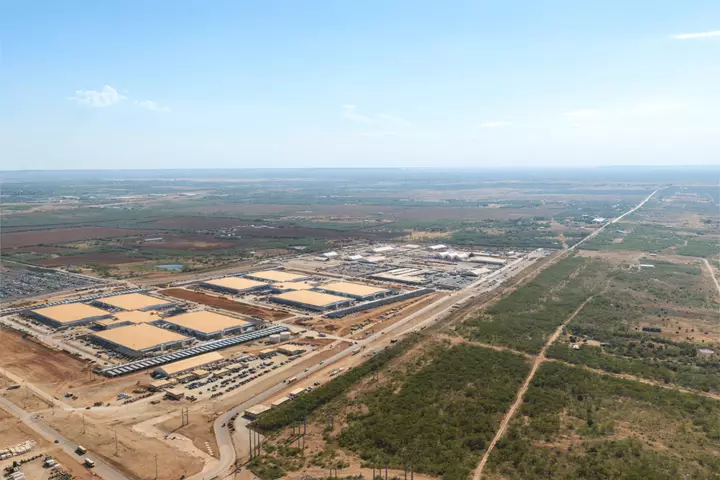
Texas' rapidly expanding data-center industry could threaten decades of progress in reducing air pollution, according to new research examining the enormous amounts of electricity the state's AI boom may need. A recent assessment published by the Houston Advanced Research Center (HARC) modeled how different ways of meeting future data-center electricity demand could affect emissions of nitrogen oxides (NOx), volatile organic compounds (VOCs), sulfur dioxide, fine particulate matter (PM2.5) and carbon dioxide through 2031. The researchers found that the impact depends heavily on how the additional electricity is generated.
Newsweek has contacted HARC for comment. The warning comes as data centers spread across Texas, with state records showing projects in Abilene, the Dallas-Fort Worth area, San Antonio, Austin and parts of West Texas. The Texas comptroller maintains registers of qualifying data centers and qualifying large data-center projects, including facilities associated with companies such as Google, Microsoft, Amazon and Oracle.
The City of Abilene maintains a dedicated information page for data-center construction, including the Stargate project, while the City of Fort Worth reported in June that it already had four data centers comprising 10 buildings and about 3 million square feet, with additional projects proposed within the city and surrounding area. Texas has made substantial reductions in emissions over the past two decades. HARC found that between 2002 and 2024, NOx emissions from power generation declined by 67 percent, sulfur dioxide by 80 percent, VOCs by 37 percent, carbon dioxide by 52 percent and PM2.5 by 60 percent.
But electricity demand from data centers could change that trajectory. Under HARC's scenario in which new data-center demand is supplied entirely by the Texas electricity grid, using the mixture of energy sources the grid is projected to have at that time, NOx emissions in 2031 would be 136 percent higher than HARC's projected no-data-center baseline, approaching volumes last recorded around 2004. VOC emissions would exceed their 2002 volume by 32 percent, while PM2.5 emissions would rise to about their 2006 level.
Power sources make a pronounced difference. HARC found that nitrogen oxide emissions could be two to 10 times higher if data centers generate the additional power they need by burning fuel rather than relying on a combination of grid electricity, solar and wind. Even under the cleanest energy scenario studied, the research center found that data-center growth would still increase emissions because of the large amount of additional electricity the facilities require.
Separate figures from the state's electric-grid operator, Electric Reliability Council of Texas (ERCOT), illustrate the scale of potential data center development. In August, Republican Governor Greg Abbott's office said ERCOT was considering more than 474 gigawatts of requests to connect to the grid and that about 90 percent were from data centers. Abbott ordered the Public Utility Commission of Texas and ERCOT to carry out an audit of data-center projects going through the interconnection process, including their electricity and water requirements and plans for on-site generation.
Extract — continue reading at the source.