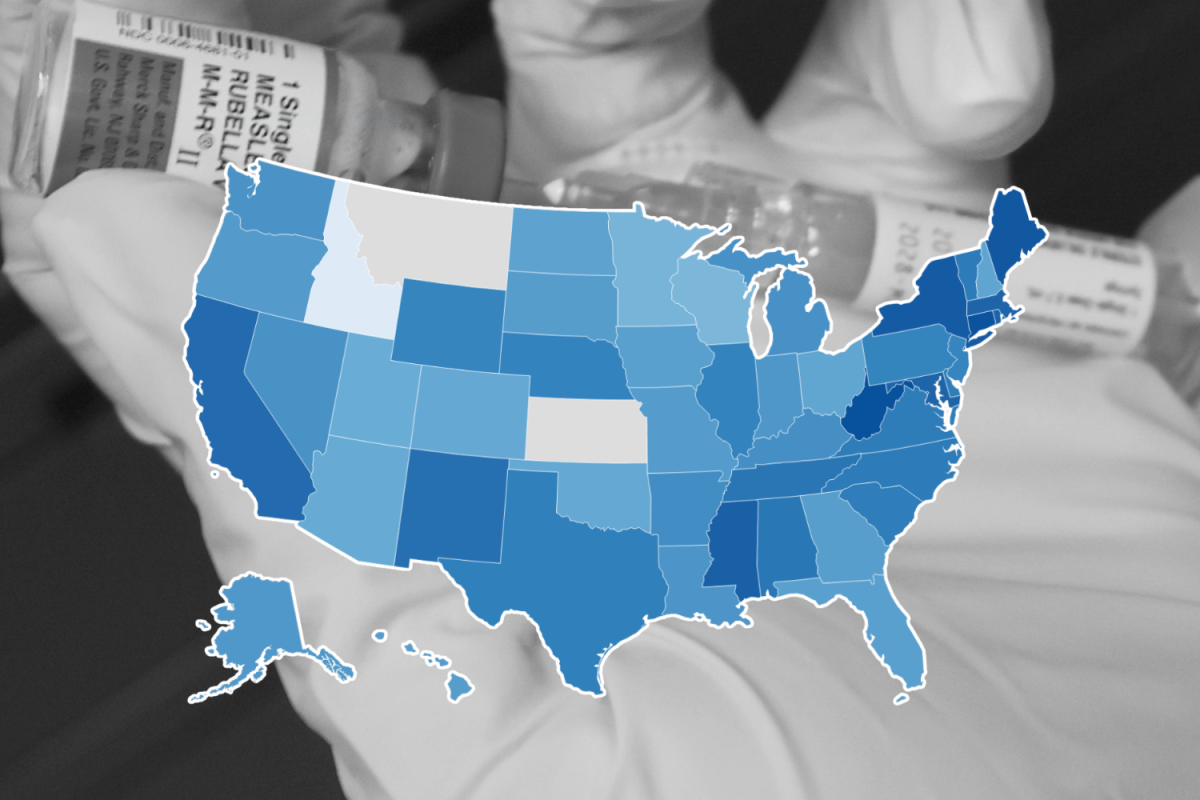
Measles vaccination rates among U.S. kindergarteners fell again during the 2025-26 school year, according to new federal data, with national coverage for the measles, mumps and rubella (MMR) vaccine dropping to 92.4 percent and exemptions reaching a record 4.2 percent. The figures come as the United States has reported 2,566 measles cases so far in 2026, already surpassing the 2,289 recorded during the whole of 2025, with the overwhelming majority of infections occurring among people who were unvaccinated or whose vaccination status was unknown. Professor Helen Bedford, who has spent much of her career specializing in childhood immunization at University College London, told Newsweek: “Any fall in uptake of MMR is a cause for concern, particularly with respect to controlling measles disease.
Measles is among the most highly infectious diseases which means to stop it spreading very high rates of vaccine uptake need to be sustained.” The Centers for Disease Control and Prevention said MMR coverage among kindergarteners fell to 92.4 percent during the 2025-26 school year, down from the previous year and below the 95 percent threshold generally considered necessary to help prevent sustained community transmission of measles. The agency found vaccination coverage decreased for all routinely reported childhood vaccines, while exemptions from one or more vaccines increased to 4.2 percent nationally from 3.6 percent a year earlier. Exemptions increased in 41 states and Washington, D.C., and 24 states reported exemption rates above 5 percent.
The CDC estimated that about 155,000 kindergarteners were exempt from one or more vaccines during the school year. Meanwhile, roughly 280,000 kindergarteners were attending school without documentation showing completion of the recommended MMR vaccine series. State-level data released by the CDC shows substantial differences in measles vaccination coverage across the country.
The highest-performing states reported MMR coverage well above the national average, while several states fell significantly below the 95 percent target often cited by public health officials as necessary to maintain community protection against outbreaks. "We now have a stark reminder of the consequences of lower vaccine uptake with the largest numbers of cases of measles this year since the early 1990s," Bedford said. "This is a huge backward step for disease prevention, leaving children at risk of a potentially very serious disease." The new CDC figures arrive amid a broader debate over childhood vaccinations in the United States.
Earlier this month, the Trump administration announced plans to review the federal childhood immunization schedule, including vaccines recommended for infants and children. On August 10, the president signed an executive pushing to reduce total recommended shots and split combined vaccines into separate visits. Public health experts have expressed concern over these changes.
Patsy Stinchfield, executive director of the Measles Collaborative, told Newsweek that the combined MMR shot has been safely used since 1971 and that “more than 99 percent of people who receive two doses after their first birthday develop protective antibodies.” She called the administration’s plan to divide the shot “not an evidence‑based recommendation." But as cases continue to rise, one unexpected voice spoke in favor of vaccination—in early August, Robert F. Kennedy Jr., one of the nation's most prominent vaccine skeptics, urged the public to take up the MMR vaccine. "Parents should get their children vaccinated for measles.
Extract — continue reading at the source.