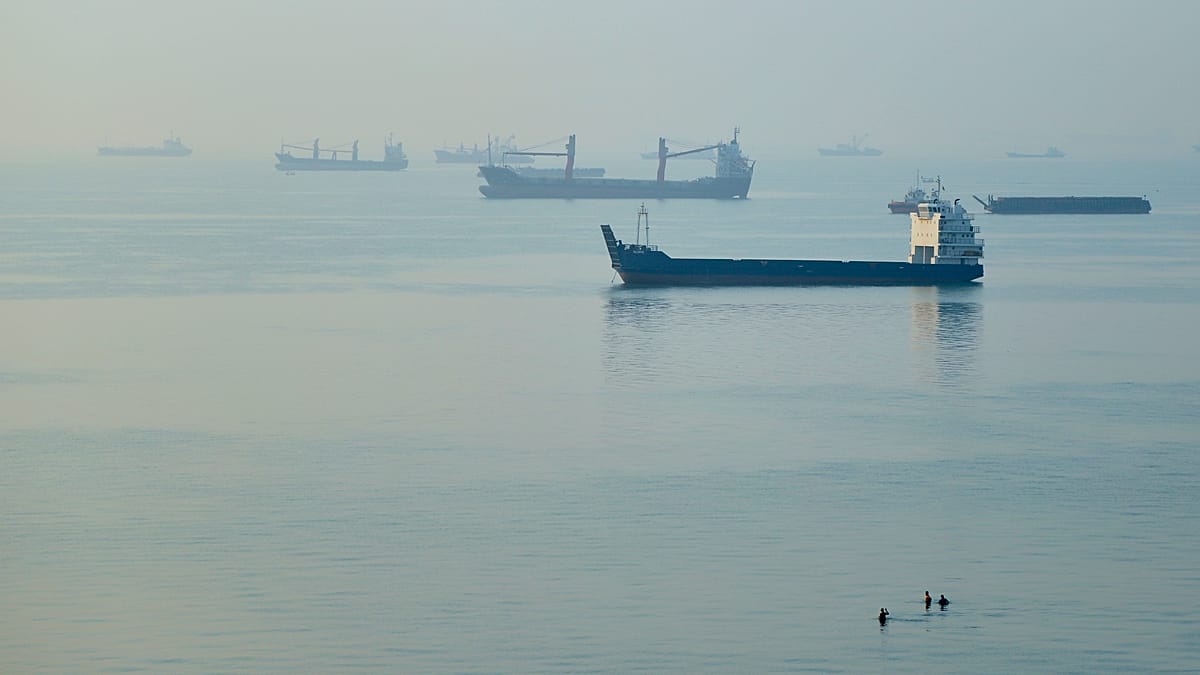
Middle East crude oil exports rose in September to their highest monthly level since the Iran war began seven months ago. Preliminary data from Kpler put regional exports at 16.3 million barrels a day. That was still around 3.2 million barrels a day below the 19.5 million recorded in February.
Saudi Arabia accounted for much of the increase, more than doubling its exports from 2.45 million barrels a day in August to around 5.4 million in September. Flows through the Strait of Hormuz were projected to reach about 9.7 million barrels a day as Saudi Arabia sent additional crude from its Gulf terminals after attacks damaged its East-West pipeline to the Red Sea. The regional total also includes oil shipped from ports outside the strait.
Several Qatar-linked LNG tankers also crossed Hormuz this month after no visible crossings were recorded in August. Normal exports have not resumed, however, and QatarEnergy has extended delivery suspensions for some customers in Europe and Asia. Edison said it had received a new notice from QatarEnergy extending force majeure until early December.
Another six LNG cargoes due at Italy’s Adriatic LNG terminal will not be delivered. That brings the number of missed cargoes since April to 35. Edison has replaced 23 of them, mainly with gas from the United States.
Edison’s 25-year contract with QatarEnergy supplies 6.4 billion cubic metres of gas a year, equal to around 10% of Italy’s total consumption. Some customers in Pakistan and Bangladesh have also been told that delivery suspensions will continue through November. Force majeure allows a company to suspend its contractual obligations when events outside its control prevent it from fulfilling them.
The disruption began after joint US-Israeli strikes on Iran on 28 February in the opening salvo of the ongoing war, which has sharply reduced traffic through Hormuz, while both the US and Iran targeted commercial ships in and around the strait. US President Donald Trump on Saturday rejected an Iranian proposal to reopen Hormuz and end the fighting within seven days. The proposal had been passed to Washington through Qatari mediators, who are continuing to push for talks.
Extract — continue reading at the source.