I know a lot of people in their 40s and 50s who now openly admit they don’t follow the news because it’s “too depressing.” As a journalist that’s not what I want to hear, but I do understand the sentiment. As you age, it becomes much more difficult to avoid the thought that politics will end up driving you crazy. You can be a real political animal with knowledge and passion about the issues that define your life and the lives of your fellow citizens, but somehow politics becomes more absurd, more infuriating and more frightening the older you get.
The familiar phrase—"If you're not a socialist when you're 20 you have no heart. If you're not conservative by the time you're 40 you have no brain"—doesn’t seem to apply so much in 2026. It feels like everyone has a heart and no one has a brain.
For many young people, voting in the midterm elections would have seemed like the most important political act in their lives. It can feel like liberation. A chance to exert influence.
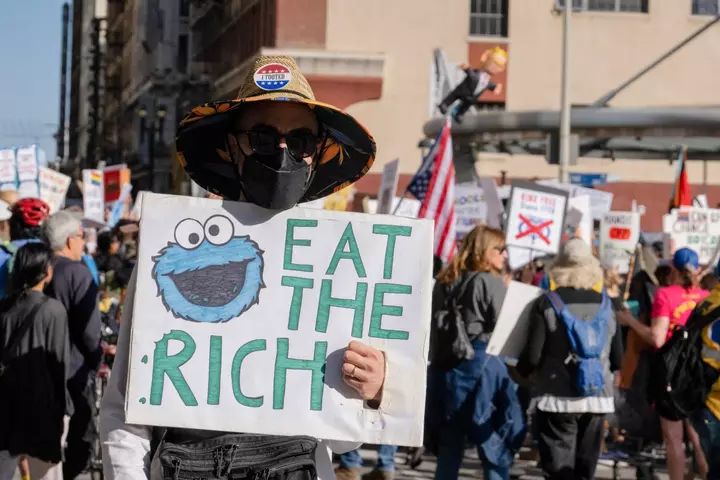
These are all very understandable impulses. A lot will have voted for the Democratic Socialists of America candidates and against Republicans. But if you look at the demographics of pro-socialism or anti-Israel demonstrations (for example) you will notice that the young radicals have been joined by old radicals, who appear even more animated and angry than their young fellow travelers.
Terrible blue and pink hairstyles are not confined to idealistic students. The older I get the more I think the joke was the wrong way around. It’s younger people who shouldn’t be allowed to vote.
And the more I narrowed down the criteria for voting eligibility the more I came back to the same conclusion. I’m the only person whose opinions I respect, so maybe I should be the only person allowed to vote. That would solve a lot of problems.
Extract — continue reading at the source.