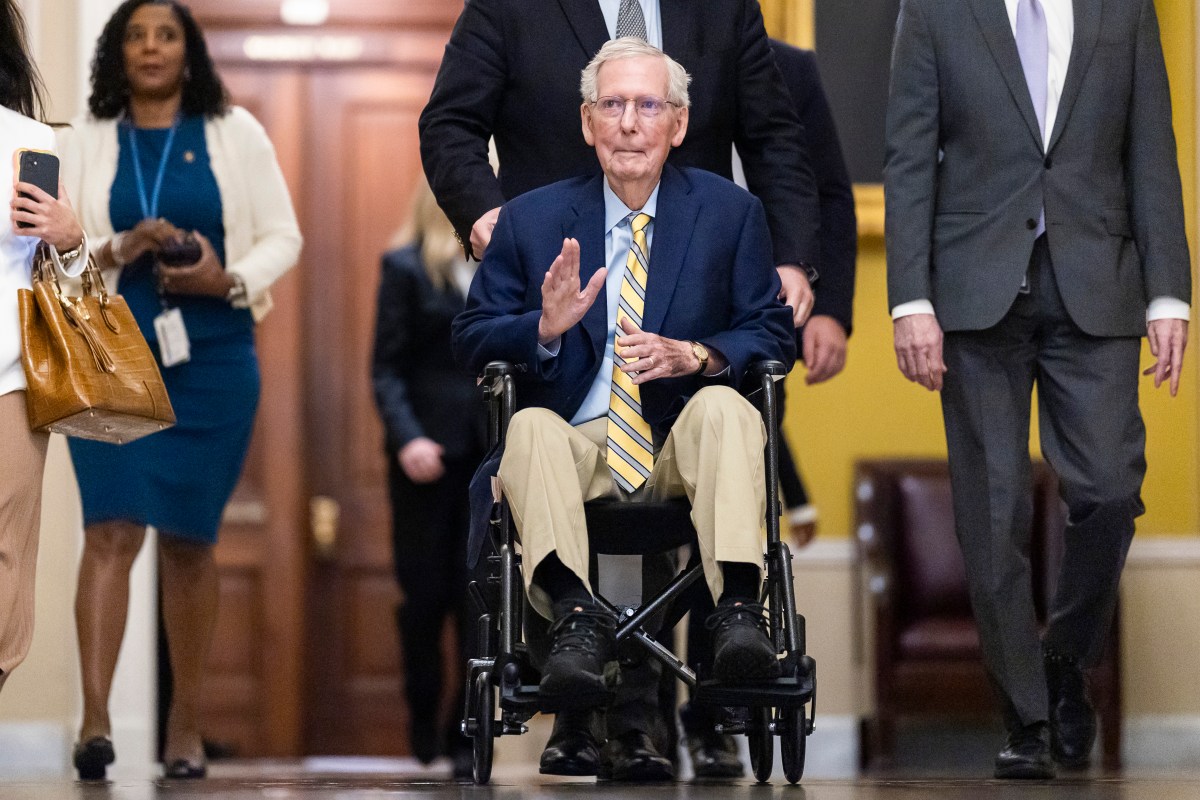
The clearest sign of old age is when falling over becomes “a fall." Having “a fall” is an ID card for being geriatric, like using a senior discount coupon or eating too much creamed corn. Just ask Senator Mitch McConnell. The 84-year-old Kentucky Republican finally reappeared at the Capitol after three months of convalescence.
At that venerable age, poor Mitch didn’t have the option to just fall over. It’s a sobering thought, even for those of us a generation or two behind him. Some people will do anything to convince themselves that physical deterioration can be held at bay.
I completely understand this paranoia, though good health has downsides (more on that later). For those entering the “Sniper's Alley” of their fifties, the vibe increasingly becomes “the spirit is willing, but the flesh is weak." I am (hopefully) at least 20 years from having a fall, this terrifying semantic portal through which no elderly person returns. I don’t do much falling over, and although I look undeniably middle-aged, I’m a steady kind of fella and physically resilient.
Thanks to a very athletic youth, I’ve retained some core strength and coordination. But I know this will ebb away. I’m young enough that if I trip over the robot vacuum cleaner or tumble getting out of the shower, I'll retain my strength, if not my dignity.
But I dread the day when my daughter says to her friends. He’s had a fall.” All those yellow bruises. Your fifties are thought of as the make-or-break decade.
It’s said if you don’t sort out your fitness and diet by then, you are setting yourself up for big trouble. I wouldn’t want to suggest avoiding a healthy lifestyle, but the effort required to stay fit comes with its own set of problems. Four years ago, I had an arthroscopy on my right knee after tearing my cartilage.
Extract — continue reading at the source.