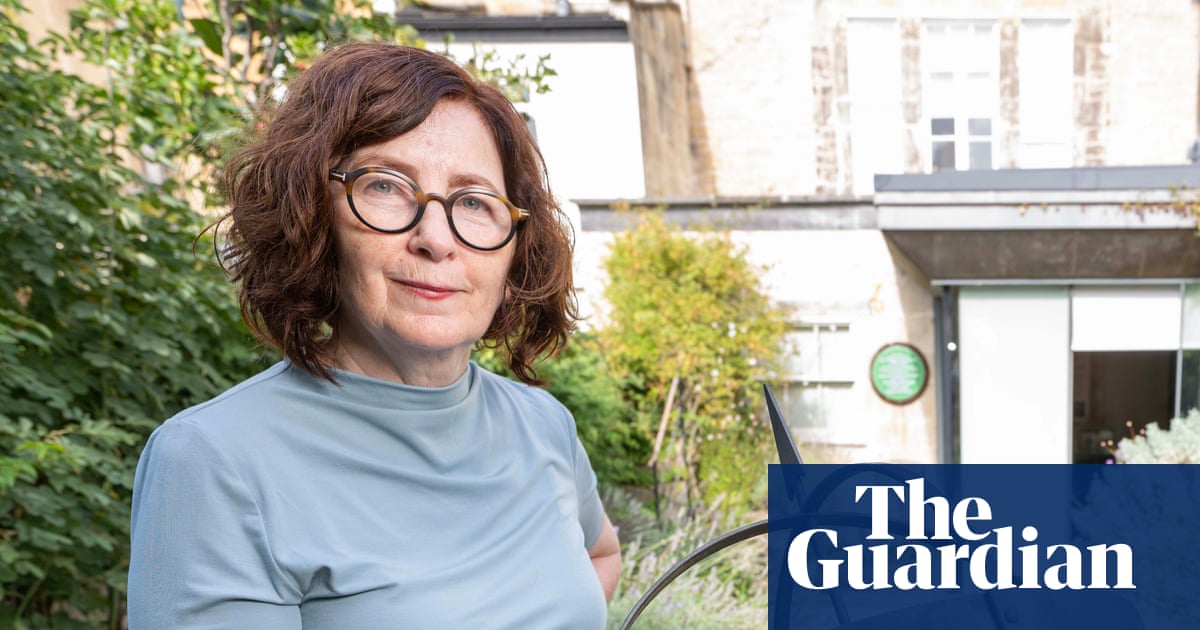
From the garden of their Georgian townhouse in Bath in the late 18th century, a brother and sister made a series of extraordinary astronomical discoveries. A new art show in the house where the siblings – William and Caroline Herschel – worked and lived highlights their pioneering spirit and their domestic arrangements. The Irish artist Grace Weir, who created the exhibition in what is now the Herschel Museum of Astronomy, said she was deeply interested in the science that went on at the house, including the discovery of the planet Uranus, and fascinated that it took place in such a cosy environment.
They would have had conversations about their discoveries across the dining table.” One of her artworks, On the Construction of Heavens, was inspired by William Herschel’s drawing of the Milky Way in 1785. Weir has had a copy of the drawing embroidered on to an antique linen tablecloth, which is laid over the family dining table. A key element of the show is to make sure Caroline Herschel gets her share of the credit for the pair’s advances in science.
William Herschel was a self-taught amateur astronomer who came to Bath from Germany in 1777. His sister followed, initially as a housekeeper. She quickly became his assistant, recording his findings, helping him with calculations, keeping his telescopes in order but then made discoveries of her own, finding eight comets and becoming the first woman in England to be paid as an astronomer.
One of the most striking pieces Weir has created is a tribute to Caroline Herschel’s comet-spotting abilities. Called An Imperfect Account, it features a piece of meteorite and a piece of obsidian in the shape of one of Caroline’s worry beads. Weir said: “William had to persuade her mother to let her come to Bath.
He recognised her intelligence and once she got here, they were incredibly collaborative. They drove each other along, they understood each other.” The pieces created by Weir are scattered around the house, meaning the visitor has to look for them. Weir said people were losing the art of observing closely.
Amy Frost, a senior curator at Bath Preservation Trust, said it was the first time in the museum’s history that contemporary site-specific artworks had been integrated. The exhibition, called The As-Yet Unseen (a quote by William Herschel predicting the discovery of the planet Neptune), runs from 5 September until 3 January 2027. A second exhibition studying the work in photography of William’s son, John Herschel, also runs until January.
Extract — continue reading at the source.