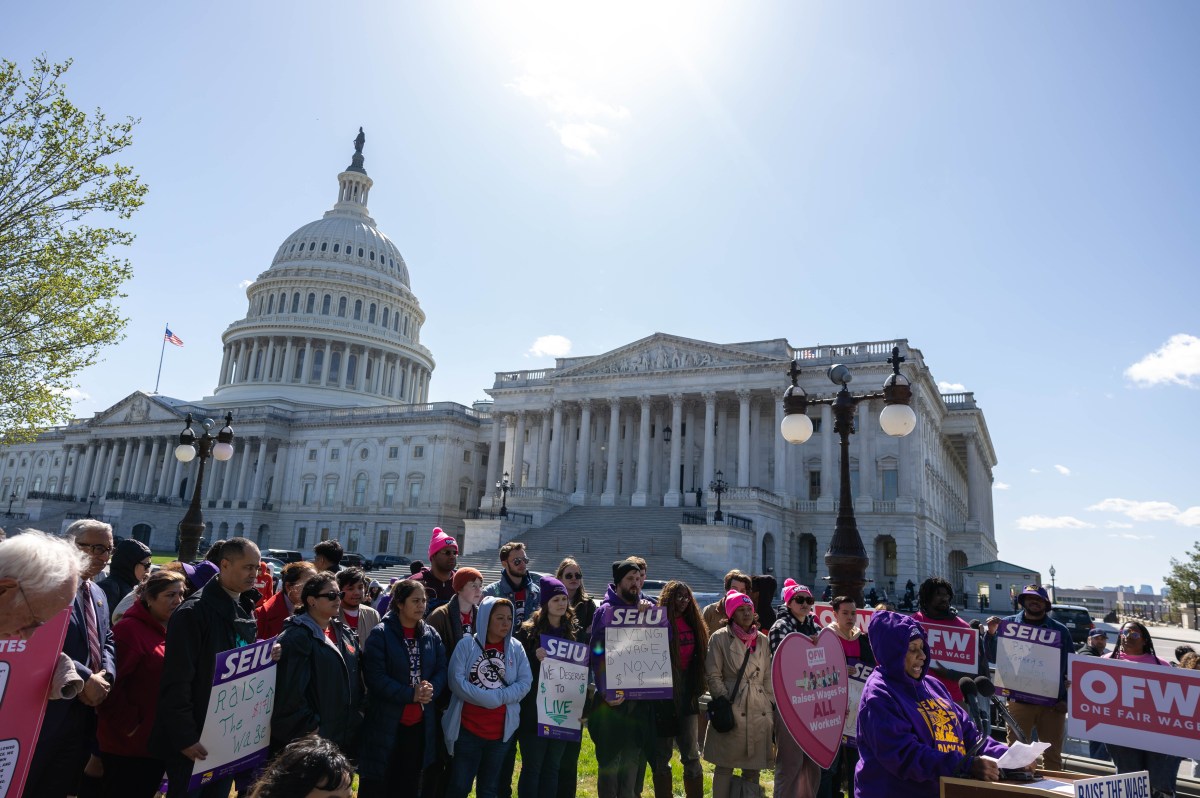
A number of states and municipalities are making minimum wage changes to ensure residents’ purchasing power can keep up with inflation in 2027 and beyond. Many already index their wages to some measure of price increases, such as the U.S. Consumer Price Index (CPI), meaning automatic adjustments take place annually, whereas others are implementing increases to hit certain wage targets—such as Florida’s six-year effort to reach $15 per hour.
Last week, the Office of Labor Standards in Seattle, Washington—the most generous state when it comes to the minimum wage—announced that the city’s rate would rise to $22.14 from $21.30 from January 1 to "reflect the rate of inflation" tracked by the CPI for the Seattle-Tacoma-Bellevue metropolitan area. The change is the result of Seattle’s Minimum Wage Ordinance, which took effect in 2015 and requires the state to increase the level annually. According to the website Business Tax Deadlines, an online calendar of fiscal policy changes in the U.S., there are 102 minimum wage changes set for 2027, across 20 states and 74 cities, counties or local jurisdictions.
The changes will take place on two dates—73 jurisdictions updating wages on the first day of the year, with a further 29 on July 1. As well as Seattle and other Washington State areas like Renton and Burien, a number of states and cities have recently announced their own set of inflation-related minimum wage adjustments. In mid-September, Maine’s Department of Labor announced that the state’s minimum wage will increase to $15.70 from $15.10 in 2027.
According to inflation calculations from Bloomberg Tax, Montana will also be raising its hourly minimum wage—from $10.85 to $11.20—thanks to state statutes requiring annual cost-of-living adjustments. Cities and states routinely update the minimum their workers must be paid to account for inflation and the rising cost of living, and given stagnancy in the federal minimum wage. The latter has stayed at $7.25 per hour since 2009, when the final phase of the Fair Minimum Wage Act of 2007 took effect, though the U.S.
Consumer Price Index (CPI) has risen by over 50 percent since that time. According to the Department of Labor, as of July, 30 states alongside Washington, D.C. had set minimum wages above the federal level—reaching as high as $17.13 in Washington and $18.40 in the capital. Many localities have also implemented their own minimum wages, and bills have been introduced in Congress to increase the federal level, though these have all failed to become law.
While primarily Democrat-led, a bipartisan proposal last year came from the Republican Senator Josh Hawley and Democratic Senator Peter Welch, which would have doubled the $7.25 minimum and permit further inflation adjustments in the future. President Donald Trump has previously expressed some interest in increasing the federal minimum wage. In an interview with NBC in 2024, Trump acknowledged that $7.25 was "a very low number," and said that there "is a level at which" the government would be able to raise this.
Extract — continue reading at the source.