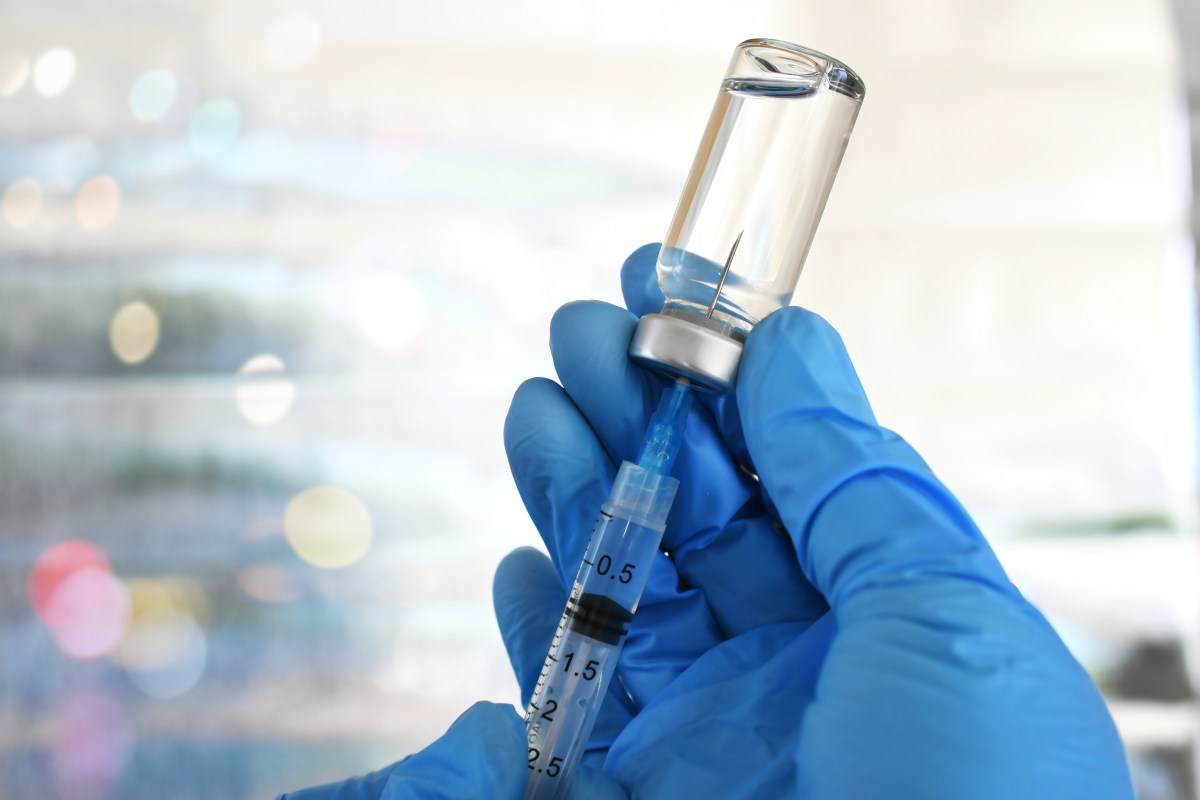
A breakthrough cancer vaccine developed by Moderna and Merck is fueling hopes that the next revolution in medicine could be as transformative as the arrival of antibiotics, organ transplants or the first targeted cancer drugs. Moderna and Merck announced this week that their Phase 3 INTerpath-001 trial met its primary endpoint of recurrence-free survival and a key secondary endpoint of distant metastasis-free survival in patients with high-risk melanoma whose tumors had been surgically removed. The treatment being studied, intismeran autogene, is a personalized mRNA therapy tailored to each patient's tumor and administered alongside Merck's immunotherapy Keytruda.
The companies said the results represent the first positive Phase 3 readout for an individualized neoantigen therapy and an mRNA-based cancer therapy. The data will be presented at an upcoming international medical meeting, a Moderna spokesperson told Newsweek. "Pending regulatory feedback, intismeran could be available as soon as next year," the spokesperson said.
While the vaccine has so far demonstrated positive Phase 3 results only in melanoma, Merck and Moderna are also studying the personalized mRNA therapy in several other cancers, including non-small cell lung cancer, bladder cancer and kidney cancer. Whether the approach can deliver similar benefits in those diseases remains the subject of ongoing clinical trials. Although the treatment is still experimental and has demonstrated a positive Phase 3 result only in melanoma so far, the findings are being viewed as a potential proof of concept for a new method of cancer treatment.
Unlike traditional therapies that are the same for every patient, intismeran autogene is custom-built using the unique mutations found in an individual's tumor. If ongoing studies in other cancers produce similar results and regulators ultimately approve the vaccine, the technology could influence far more than cancer care itself, potentially changing how treatments are developed, manufactured and delivered across the U.S. healthcare system. For decades, cancer treatment has largely focused on removing tumors and preventing them from returning.
Personalized cancer vaccines introduce a different possibility: keeping patients cancer-free for much longer after initial treatment. If future studies confirm similar benefits in other cancers, personalized cancer vaccines could help some patients remain cancer-free for longer periods after treatment, though researchers are still studying the long-term impact on survival and disease recurrence. "We need better ways to prevent recurrence for patients in remission.
Recurrence of cancer is a most dreaded event," Dr. Robert Vonderheide, director of the Abramson Cancer Center at Penn Medicine and president-elect of the American Association for Cancer Research, told Newsweek. "A vaccine to mobilize the immune system to guard against recurrence would be a gamechanger.
Extract — continue reading at the source.