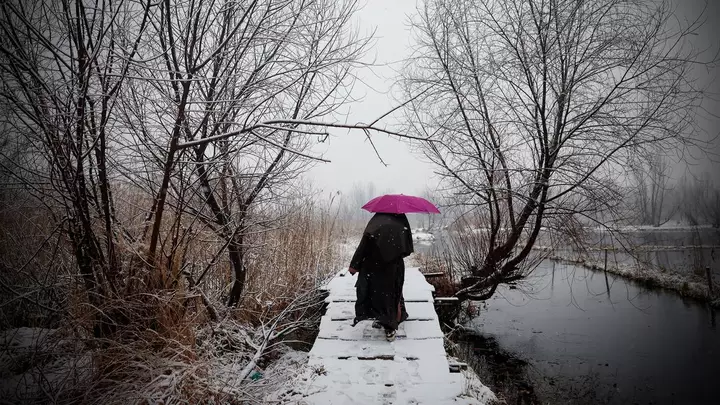
Photo by Sharafat Ali/ is an award-winning journalist, who has reported extensively on caste, sexuality, identity and gender from 22 Indian states. She lives in Berlin, Germany. On page five of an eight-page letter dated 3 September 2019, my friend – whom I will call Naaz – wrote to me: Naaz had never written to me before – not a note, not a postcard.
We were on each other’s speed dial for as long as I could remember. But that August, the Indian state had revoked Jammu and Kashmir’s semi-autonomous status and, anticipating blowback, had throttled internet broadband, cable TV, landlines and mobile networks. Even postal services were disrupted; Naaz planned to hand-deliver her letter.
Another letter tells me that on 11 August she knocked on my door for a long time. But I had already left for New Delhi, and would soon be halfway across the world. In Kashmir, we are used to uncertainty but, in those days, it was dialled all the way up.
When I left, I did not know when I would be able to speak with my parents again. We seemed to have collectively tumbled back in time to the 1990s, when separatist conflict was at its peak and, with it, the Indian state’s iron-fist policy to counter it. I was leaving for a year-long journalism fellowship at Harvard, and wracked with guilt and self-doubt: guilt over leaving when so many others could not, self-doubt over whether I would live up to the opportunity.
Perhaps Naaz sensed my ambivalence, which is why she wrote those lines. She knew I might need the reminder. Naaz first knew me as a bushy-browed teenager, travelling 110 km each day to study journalism in Baramulla, a small town in Kashmir.
We met on a bus, in the spring of 2005. She was in a three-seater near the middle, in a white crewneck sweater with a Fair Isle pattern around the neckline. I took the seat beside her.
Extract — continue reading at the source.