But, as my parents taught me, it’s important to show up anyway. My earliest memories of voting take place at the elementary school up the street from my parents’ house. Every Election Day, my parents would bring me and my younger sister along with them to the polls.
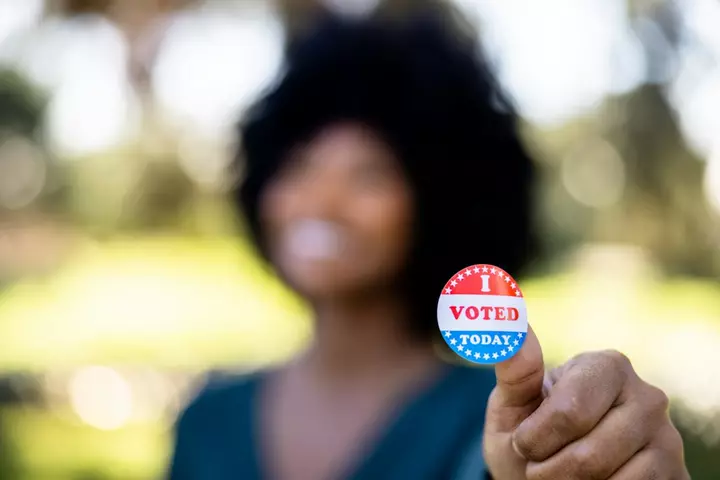
I remember standing in the long lines impatiently wondering when it’d be our turn. I remember at least one year where there was a mock ballot for kids. And, perhaps most importantly to elementary-school-aged me, I remember receiving the prized Future Voter sticker at the end.
At the time, I didn’t think of any of this as civic education. My parents weren’t necessarily sitting us down for lectures about democracy or giving us pop quizzes on the Voting Rights Act of 1965 (although that would come later during my AP U.S. My parents were simply voting and we were watching.
But, as it turns out, we were learning by observing. My parents made it abundantly clear to my sister and me that voting was both a right and a responsibility — and that this wasn’t always the case for people who looked like us. As Black girls growing up in America, that history mattered.
We learned that Black people had marched, organized, been beaten and even killed for the right my parents exercised so routinely at the elementary school around the corner. So, when Election Day came around, we went. And not just for the presidential elections every four years.
My parents participated in every election — local, federal, didn’t matter. The responsibility was the same. By the time I was finally old enough to vote myself, I couldn’t wait.
Extract — continue reading at the source.