Nakhchivan has long been a geographical enigma of sorts: an enclave of Azerbaijan inhabited by about 460,000 people, cut off from the rest of Azerbaijan by territory controlled by Armenia and accessible only by land through Iran or Türkiye. Until recently, that geography has made the place a liability rather than an asset for Azerbaijan, which has been treating the area as such. However, a new amendment to the socio-economic development program of Nakhchivan for the years 2023-2027 seems to indicate a change in that mentality.
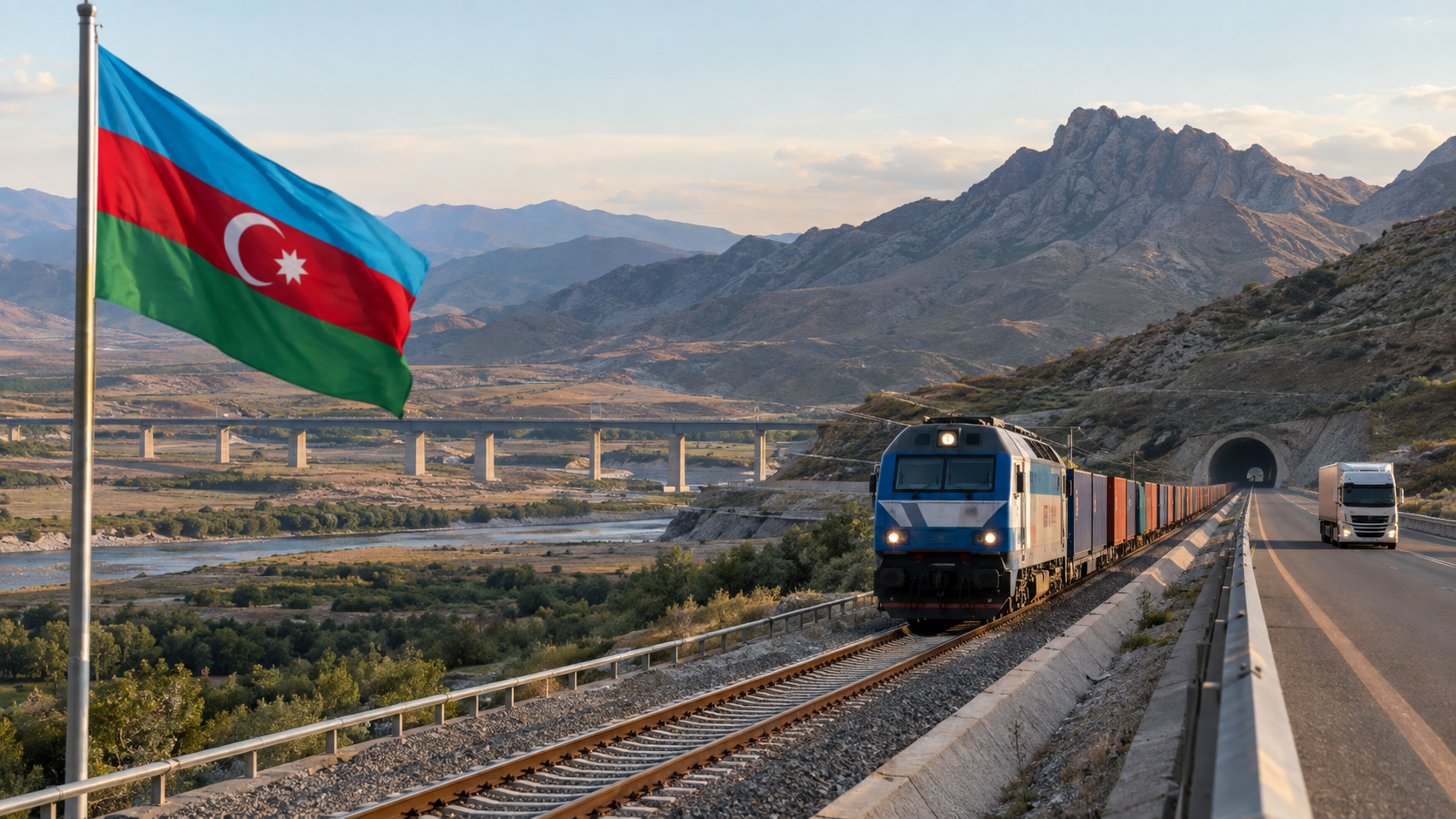
The document is based on the premise that a much-needed piece of infrastructure is going to come online soon - a Zangezur corridor [TRIPP] connecting Nakhchivan with Azerbaijan through the southern Armenian province of Syunik. The revised plan is light on numericals but heavy on intent, which itself reveals much. These include "targeted logistical support systems" for exporters, undefined tax and freight discounts that will "stimulate the comprehensive usage" of the corridor, and an enhanced entrepreneurial program when the route is open for business.
Governments generally don't revise five-year economic plans around infrastructure that exists only in theory. This decree should be understood as the Azerbaijani government gearing up to act quickly once the politics of the corridor – mainly the conflicting views on transit control rights held by Yerevan and Moscow through Syunik are sorted out. Nakhchivan's economy has traditionally operated based on budget transfers rather than exports.
In 2023, the overall economic output in the autonomous republic amounted to 1.55bn manats ($910m), where the share of industry amounted to 593.9 mln manats ($349 mln), while the agriculture sector produced 358.4 mln manats ($210 mln). However, there was a dramatic turn of events: between 2023 and 2025, Nakhchivan's GDP increased by 7.6%, industrial production – by 4.6%, and, interestingly, transport and warehousing increased their operations by 25.7%, having already outperformed all other sectors in growth before the corridor was even completed. Investments in fixed assets have increased 2.5 times in this timeframe, while construction and installation works have more than doubled.
The development of entrepreneurial lending took the same path: from 2023, 342 projects were supported by the region's Entrepreneurship Development Fund, amounting to 27.2 mln manats ($15.2 mln) of concessional loans, 77% of which were registered in 2025 and the first half of 2026. As far as the actual infrastructure goes, however, the numbers are, predictably for an initiative of three countries, disputed. Azerbaijan's very own approach roads have already neared completion: the 123.6km-long Horadiz–Jabrayil–Zangilan–Aghband road, comprising three tunnels amounting to 12km in total length, was claimed to be 95% finished by September 2025, with the rest of the works expected to be completed during the second half of 2026.
The rail network in Azerbaijan consists of a 110km-long Horadiz–Aghband track capable of transporting up to 15 mln. tonnes of cargo and 5.5 mln. passengers per year once operational. Türkiye has started the construction of a 224km Kars–Iğdır–Aralık–Dilucu railway line, which is to be a four-year project, whereas about 180km of tracks will need repairs or construction in Nakhchivan. The true bottleneck – the stretch going through sovereign Armenian territory – is the only part of the initiative on which estimates range wildly from 26km to 43.5km depending on the particular government official, and on which construction has yet to begin even in late 2026, according to Türkiye's own transport minister.
Extract — continue reading at the source.