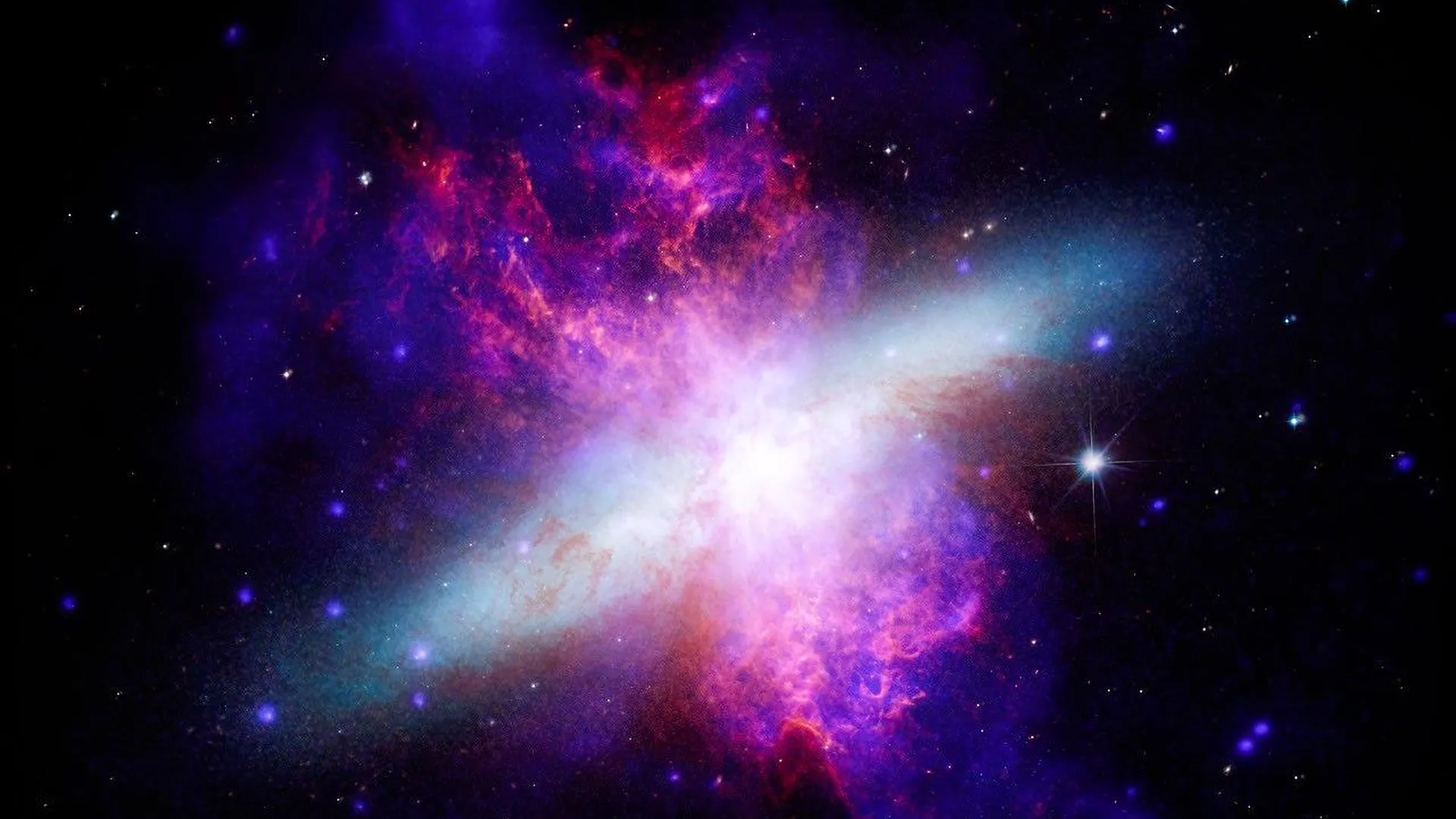
Some galaxies glow with sweeping spiral arms, while others are shaped by violent collisions, powerful black holes, and explosive bursts of star formation. A newly released collection of 16 images from NASA's Chandra X-ray Observatory and other telescopes reveals the extraordinary diversity of these cosmic structures. Like precious gemstones, galaxies come in many shapes and sizes, each with characteristics that tell a story about its history.
Astronomers generally classify them into three major groups. Spiral galaxies, including our Milky Way, have winding arms extending from their centers. Elliptical galaxies typically contain older stars and are often thought to form through galactic mergers.
Irregular galaxies have less orderly structures and can display a wide variety of cosmic activity. Much as gemstones preserve clues about the geological processes that shaped Earth over billions of years, galaxies hold evidence of the forces that have shaped the universe. Studying these distant systems helps astronomers piece together the Milky Way's history and better understand what may await our galaxy in the distant future.
NASA Combines Chandra, Webb, and Hubble to Reveal Galactic Secrets The new gallery features 16 images that bring together observations from some of the world's most powerful telescopes. Each includes X-ray measurements gathered by Chandra during its decades of operation in space. These observations are combined with data from NASA's James Webb and Hubble Space Telescopes, IXPE (Imaging X-ray Polarimetry Explorer), the Neil Gehrels Swift Observatory, NuSTAR (Nuclear Spectroscopic Telescope Array), and additional observatories operating on Earth and in space.
X-ray observations are especially valuable because they reveal extreme activity that other types of light can miss. Chandra can detect enormous clouds of gas heated to millions of degrees by powerful winds from massive stars, material expelled by supermassive black holes, and debris from stellar explosions. These processes also help spread chemical elements through space, including elements that ultimately become part of planets, the air we breathe, and our own bodies.
By combining X-rays with observations at other wavelengths, astronomers can see more of what is happening inside galaxies. The resulting images reveal how these vast systems form stars, interact with their surroundings, and change over billions of years. Spiral Galaxies Reveal Explosive Star Formation Several images highlight the remarkable activity taking place inside spiral galaxies.
Extract — continue reading at the source.


