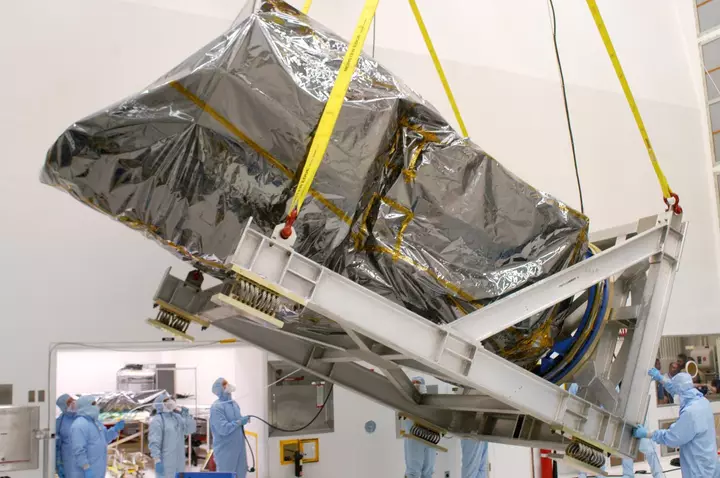
An aging NASA space telescope that spent more than two decades studying some of the universe's most powerful explosions is expected to plunge back through Earth's atmosphere within days, raising questions about whether any debris could survive the fiery descent and where it might end up. Space Force, the Swift Observatory is expected to re-enter the atmosphere around Friday after years of orbital decay accelerated by unusually intense solar activity. Most of the 1.5-ton spacecraft is expected to burn up during re-entry, however NASA says some dense parts of the observatory, including tungsten components and portions of its mirrors, could survive and reach the surface.
Any surviving debris is most likely to fall into the ocean, though officials cannot yet determine a precise location. Newsweek reached out to NASA for comment by email. The possible re-entry corridor spans a huge portion of the globe.
According to mission officials, areas within the potential impact zone include parts of Africa, Australia, India, Southeast Asia, Central America and South America. The broad range reflects the difficulty of predicting a satellite's final path until shortly before re-entry. Small changes in atmospheric conditions can significantly alter the location where a spacecraft breaks apart.
As a result, officials typically narrow re-entry forecasts only in the final hours before a satellite returns to Earth. Space Force continues to track Swift's orbit as it descends. The telescope's return follows a failed effort to save the mission.
NASA hired private company Katalyst Space to attempt a rescue using a robotic spacecraft called Link, which was intended to approach Swift and help raise its orbit. But the mission encountered technical problems and never came close enough to execute the maneuver. The rescue vehicle later re-entered Earth's atmosphere, leaving Swift on a path back toward Earth.
Intense solar activity over the past several years also played a role. Increased solar activity can heat and expand Earth's upper atmosphere, creating more drag on satellites in low-Earth orbit and causing them to lose altitude more quickly. NASA officials said those conditions accelerated Swift's descent.
Extract — continue reading at the source.