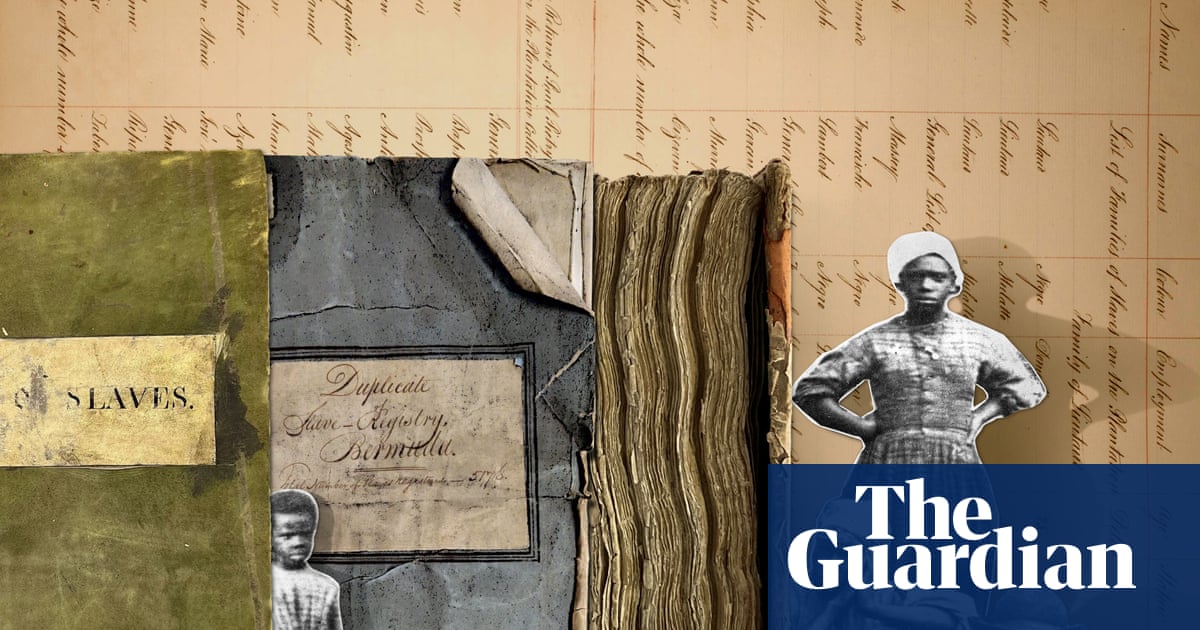
Nearly 4m records documenting the lives of enslaved people across 20 former British colonies have been made searchable online for the first time. The records have been digitised and indexed by the genealogy company Ancestry, which has partnered with the Centre for the Study of the Legacies of British Slavery at University College London. The global collection offers millions of descendants across the African-Caribbean and wider African diasporas access to one of the most extensive surviving archives of British enslavement, potentially helping them uncover family histories.
The collection, known as the Former British Colonies Enslavement Registers, contains about 300,000 pages recording enslaved people across former British colonial dependencies between 1813 and 1840, including the Bahamas, Barbados, the Cape of Good Hope in South Africa, Jamaica, Mauritius and Trinidad. The registers were created by the British government after the abolition of the transatlantic slave trade in 1807, and were designed to prevent illegal trading of enslaved people and to monitor the enslaved population. Researchers say people were recorded in the registers with chilling precision.
Entries include names, ages, physical descriptions and family ties, as well as births, deaths and transfers of ownership. Some distinguish whether a person was born in Africa or in the Caribbean. Nicka Sewell-Smith, a professional genealogist and senior story producer at Ancestry, said it was not lost on her that records originally created to count enslaved people as property were now being used by their descendants to reconstruct their family histories.
Our product is restoring the humanity of a person.” In some cases, the level of detail is extraordinary. The digitisation also removes a practical barrier for those interested in delving into their family histories. Instead of needing to know how to navigate registers held at the National Archives in London, Sewell-Smith said, descendants would be able to search the collection simply by entering a name.
That’s foundationally not true.” Prof Matthew J Smith, the director of the centre at UCL, described the registers as “the most systematic set of archival documents we have on enslavement in the British Caribbean and British colonial world”. The release of the collection follows the publication last week of the Register of British Slave Traders, a three-year research project that revealed the enormous scale of Britain’s involvement in the transatlantic trafficking of enslaved Africans. The register identified as many as 10,500 people who invested in the trafficking of enslaved Africans over nearly 250 years.
But there have been growing calls for historians to shift the focus of research from the people and institutions that owned, trafficked and administered enslaved populations towards the lives of enslaved people themselves. The T71 collection, which takes its name from the National Archives series in which the records are held, could change that, he said. Smith said researchers had been testing the data in their work on Jamaica, where they had been able to trace some families across six generations.
Extract — continue reading at the source.