But modern politics has made that symbolism (and much of diplomacy’s old modus operandi) unstable. Today, rejection can be repackaged as proof of courage, condemnation slowly starts being called persecution and the establishment’s refusal to listen becomes, in the hands of a practiced populist, evidence that the speaker is saying what the establishment cannot bear to hear. Benjamin Netanyahu understands this grammar well.
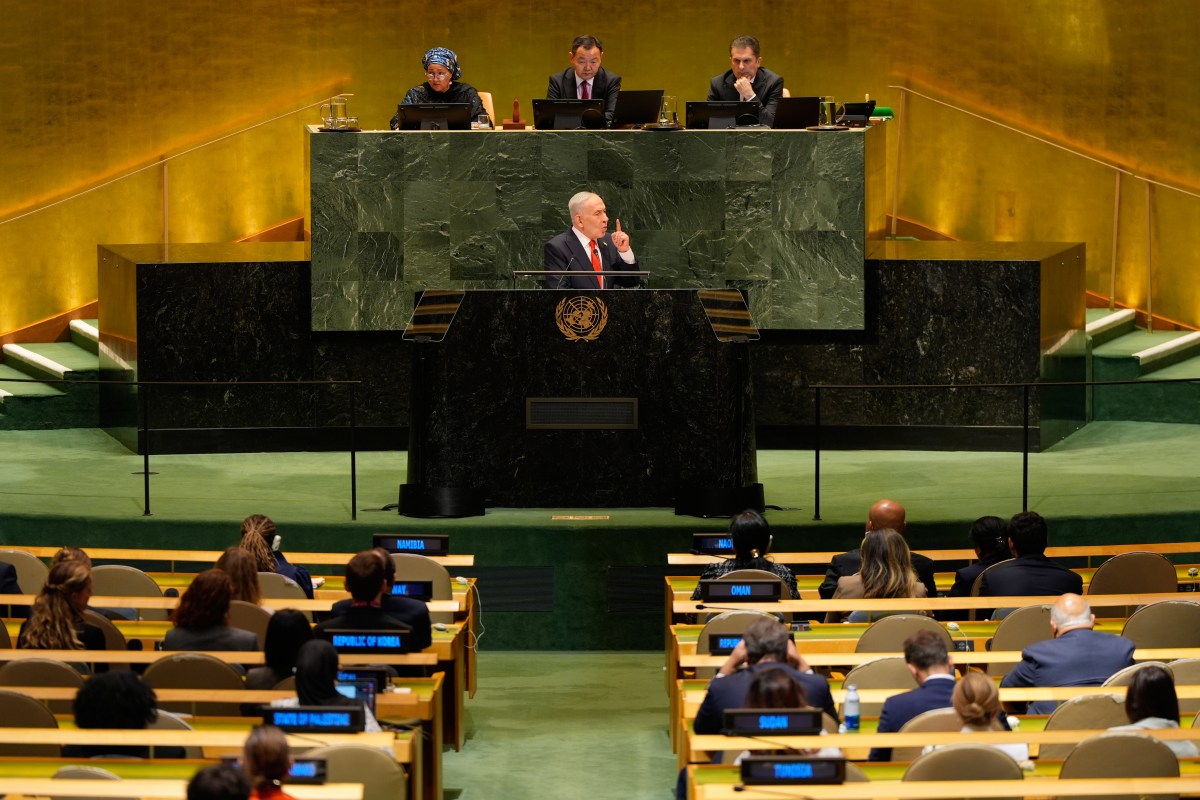
The scale of Thursday’s walkout was difficult to miss. As Netanyahu approached the podium at the United Nations General Assembly in New York, dozens of delegates rose and filed out, amid boos and cheers, until a majority of the chamber’s seats were empty. The protest had been encouraged in advance by the Palestinian Mission to the U.N., which had urged members among the organization’s 193 states to fill the chamber and then collectively walk out when Netanyahu was announced.
As the departures continued, General Assembly President Khalilur Rahman repeatedly called for order. Netanyahu did not wait for the spectacle to acquire a meaning. The walkout, though, did not need to persuade anyone in the hall.
Its real political life began once the cameras caught it. On television, on social media and in the partisan afterlife of the speech, the empty seats became scenery for a familiar Netanyahu argument—Israel stands alone because others have lost their nerve, their judgment or their moral clarity. The diplomats intended to make themselves absent.
Visually, though, they became their own declared enemy's supporting cast. The official meaning of the walkout was plain enough. Those who left wanted to register disgust with Netanyahu and his government’s conduct.
In diplomatic terms, it was a rebuke. Turns out, though, that this particular political spectacle was not solely owned by the people staging it. Netanyahu was speaking in New York, but one of his most important audiences was elsewhere.
Extract — continue reading at the source.