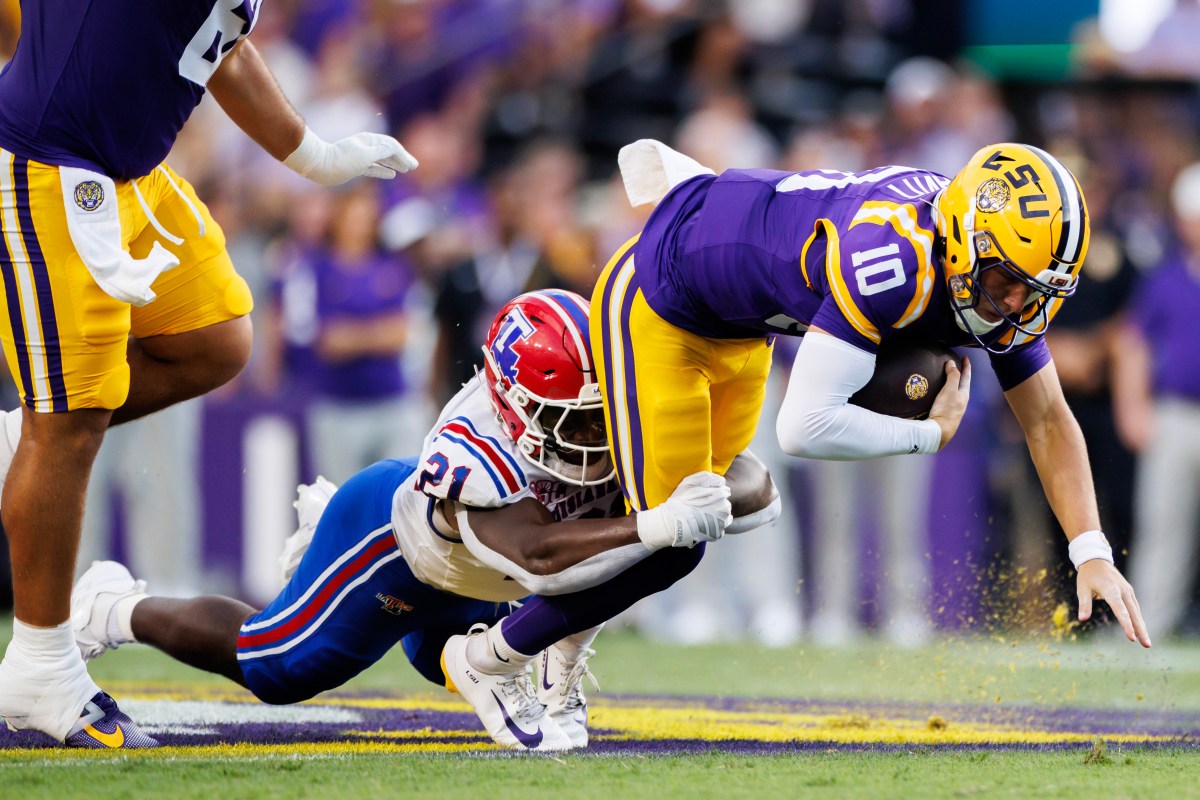
Tigers head coach Lane Kiffin didn't mention the injury when he spoke with reporters on Monday. The injury report was met with broad skepticism across the college football world, with some suggesting LSU was trying to put a smokescreen around Ole Miss before one of the more intriguing games on the calendar this fall. A new reality is emerging for Leavitt and LSU on Thursday.
More News: Exclusive: Breakout NFL Executives Who Could Become Future General Managers More News: 4 QBs Generating Serious Trade Buzz Weeks Before NFL Regular Season Starts Per Matt Moscona, Leavitt participated in practice on Thursday morning. The quarterback did not work out on Wednesday due to back spasms. "NEW: Sam Leavitt participated in LSU’s practice Thursday morning, sources confirm," Moscona posted on X.
"Back spasms kept him out of Wednesday’s workout, leading to his listing on the initial availability report." Per Pete Nakos of On3, Leavitt was dealing with back tightness and a sore shoulder on Wednesday and has been "limited" at practice. He did not throw on Wednesday. However, multiple sources told Nakos that they expect Leavitt to play for LSU against Ole Miss on Saturday night.
It's unclear why Leavitt was listed as doubtful on Wednesday. It would appear Leavitt is trending to play against Ole Miss. Per the SEC, a player can be listed as "doubtful" if they are "unlikely to play due to significant concerns." A player would be "questionable" to play if they are "uncertain to play due to injury or condition." A player would be "probable" if they are "likely to play, barring any setbacks." The SEC can penalize a football team anywhere from a range of $25,000 to $100,000 for an inaccurate or late report.
Leavitt had a strong outing against Clemson in Week 1, throwing for 230 yards, one touchdown and one interception while adding 133 yards and two touchdowns on the ground. He struggled in LSU's 45-14 win over Louisiana Tech, throwing for 344 yards, one touchdown but three interceptions while adding 22 yards on the ground.
Extract — continue reading at the source.