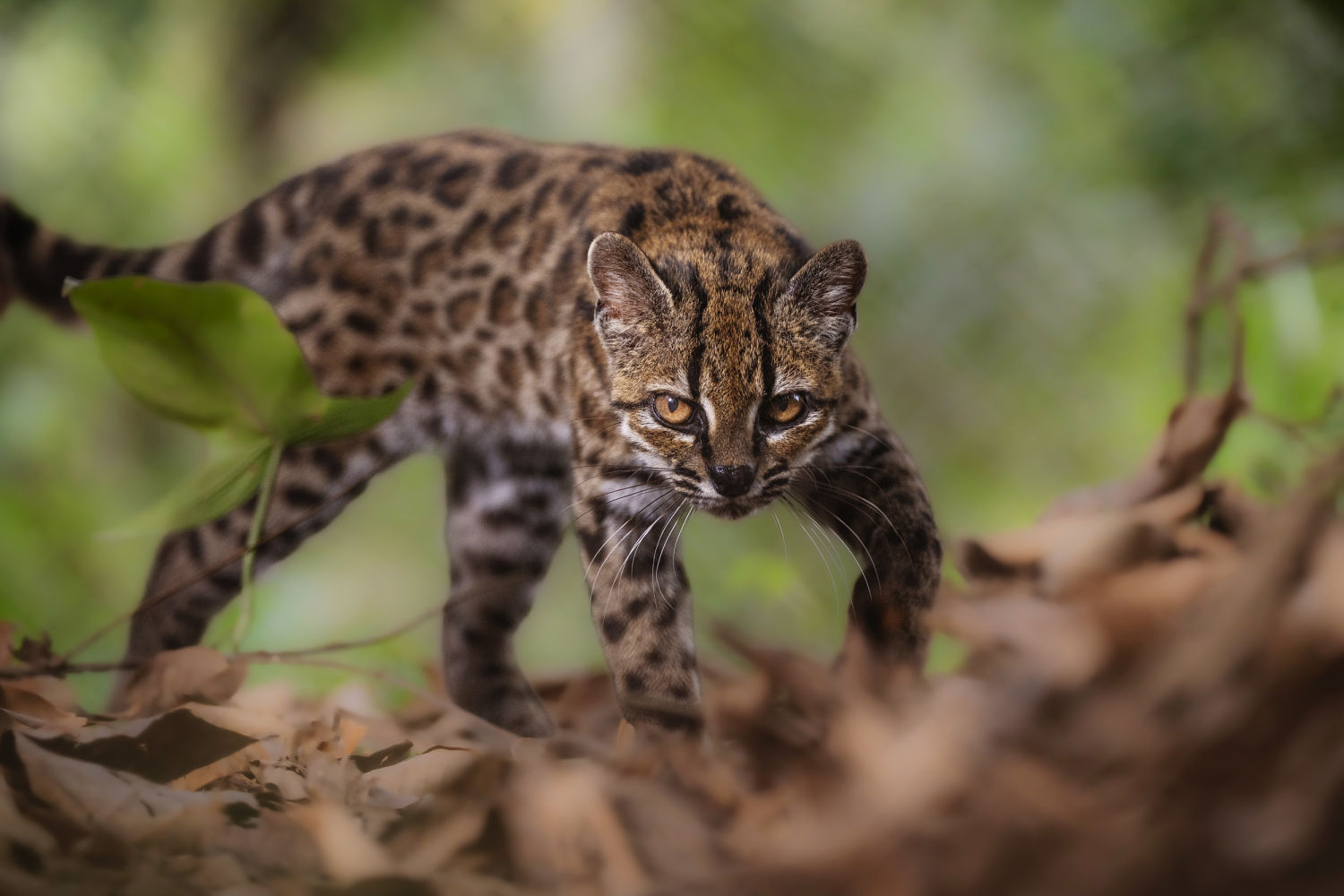
For the first time in a century, researchers say they’ve identified a new species of wild cat previously unknown to science. Leopardus tilcayo — or the Tilcayo tiger cat — is slender and spotted, with rounded ears. It is smaller than a typical house cat and lives in the Bolivian Yungas, the cloud forest where the Andes mountains meet the Amazon basin.
The species was described for the first time in the journal Current Biology on Thursday. It’s rare to find a new, relatively large mammal — unsurprisingly, most new animal species discovered are small in size, said Paola Nogales-Ascarrunz, who co-authored the study and leads a wild cat conservation program called the Programa de Investigación de Félidos Bolivia (Bolivian Felid Research and Conservation Program). And it hasn’t happened in 100 years,” she said.
No one else had described it.” The size of the Leopardus tilcayo population is not clear yet. The new study says there are five tiger cat species in South America. Leopardus tilcayo might have continued to escape notice if not for Nogales-Ascarrunz’s sharp eyes.
She volunteers at a wildlife rehabilitation center near La Paz called the Senda Verde Wildlife Sanctuary. He had fed the animal noodles, rice and eggs, only to realize it was wild and that he could not take care of it. So he brought it to the sanctuary.
Initially, colleagues at the sanctuary thought the animal might be a known tiger cat species from Brazil, but Nogales-Ascarrunz wasn’t convinced. Nogales-Ascarrunz did genetic testing, using tissue from the tiger cat and a second animal that also turned up at Senda Verde. The results from those specimens revealed that the two cats were unique and from the same species, which had diverged from other tiger cat lineages about 1.4 million years ago.
That’s enough genetic distance to consider it a new species. Nogales-Ascarrunz said, however, that local communities in Bolivia have been aware of the species’ presence for generations. And when you ask, ‘Does it have some meaning in Quechua or Almyra and other indigenous languages?’ they say, ‘No, my grandpa told me that’s the Tilcayo,’” Nogales-Ascarrunz said.
Extract — continue reading at the source.