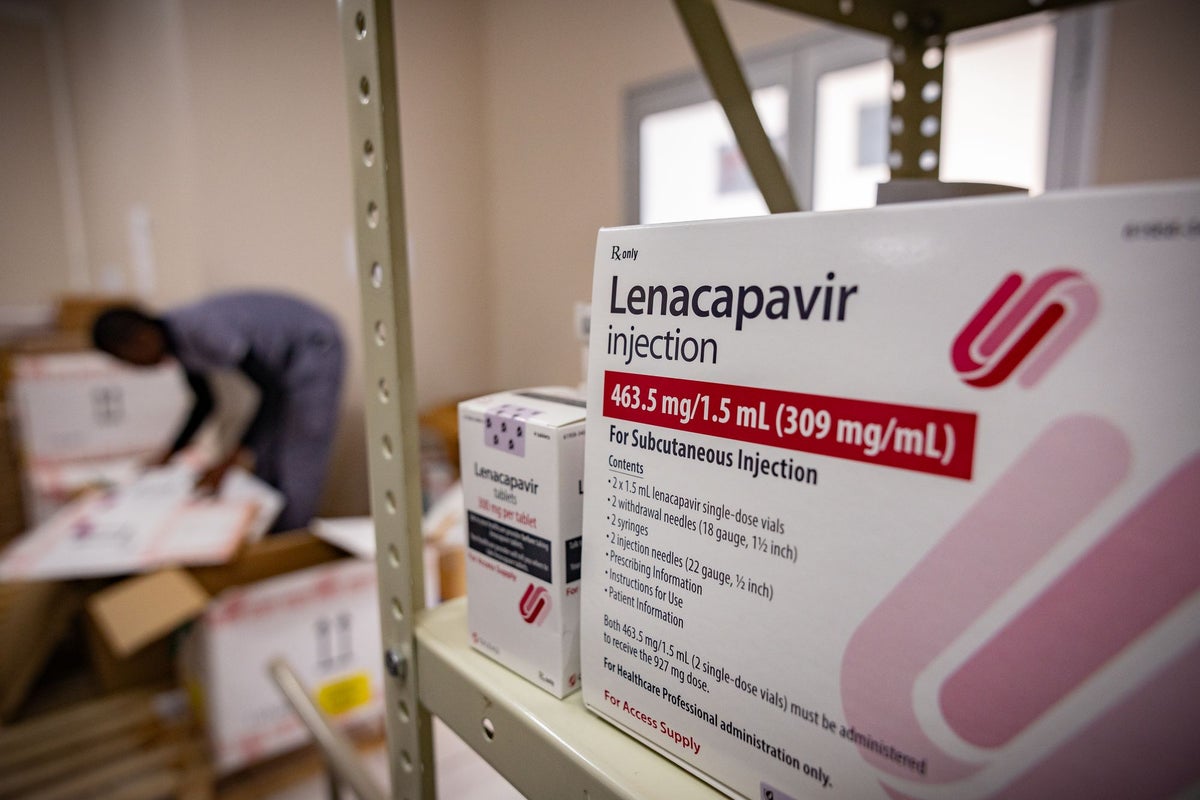
Hundreds of people across England living with multidrug-resistant HIV will soon have access to lenacapavir, a breakthrough HIV treatment. The decision, announced by the NHS this week, has been welcomed by HIV campaigners who had been calling for this because lenacapavir will be life-saving for many people living with HIV in the UK who have run out of other treatment options. But as lenacapavir is rolled out here in England, there are many across the rest of the world who do not have access to this treatment, including the very communities who hosted clinical trials and helped make the drug possible.
Lenacapavir can be a lifesaver for people living with rare drug-resistant HIV, but it is also a major breakthrough in HIV prevention. Given as an injection just twice a year, it can prevent HIV without requiring people to take a pill every day. For many people around the world who live with HIV, multiple barriers such as stigma and discrimination, criminalisation, financial insecurity, and geographic isolation make sourcing and taking daily medication difficult.
A twice-yearly injection truly has the potential to prevent new HIV cases on a large scale. But the drug is expensive. In rich countries it sells for $28,000 to $40,000 (£21,000 to £29,000) per person per year.
While some low-income countries around the world will have access to the drug for the much more affordable price of $40 (£29) per person per year, when generics become available, countries including Brazil, Mexico and Peru who hosted clinical trials, still have to pay the full price and are unable to do so. The bitter irony is that despite helping to make the drug viable, the communities in these countries can’t access this lifesaving preventative treatment. The HIV movement has spent decades fighting the idea that where you live or what you earn should determine whether you get lifesaving treatment.
We cannot accept a future where people in wealthy countries can access the latest HIV innovations whilst people in other countries, many carrying some of the highest HIV burdens, are left waiting. Médecins Sans Frontières (MSF) has set out three straightforward demands in its campaign “Lenacapavir: Two Shots. $40. To bring the price of lenacapavir below US$40 per person per year in all low- and middle-income countries, to increase global supply to meet actual demand and to allow organisations working directly with communities to purchase lenacapavir directly (including MSF).
These demands are the minimum needed if we are serious about making this breakthrough available to everyone who could benefit from it and realising the global goal of ending AIDS as aa public health threat by 2030. The UK is now benefiting from the scientific progress that made lenacapavir possible and should now use its financial and diplomatic influence to make sure that this progress is shared. The UK should support organisations such as Unitaid, which has already helped secure the US$40-a-year price for generic lenacapavir, and the Global Fund, which is also helping countries introduce and deliver lenacapavir.
Extract — continue reading at the source.