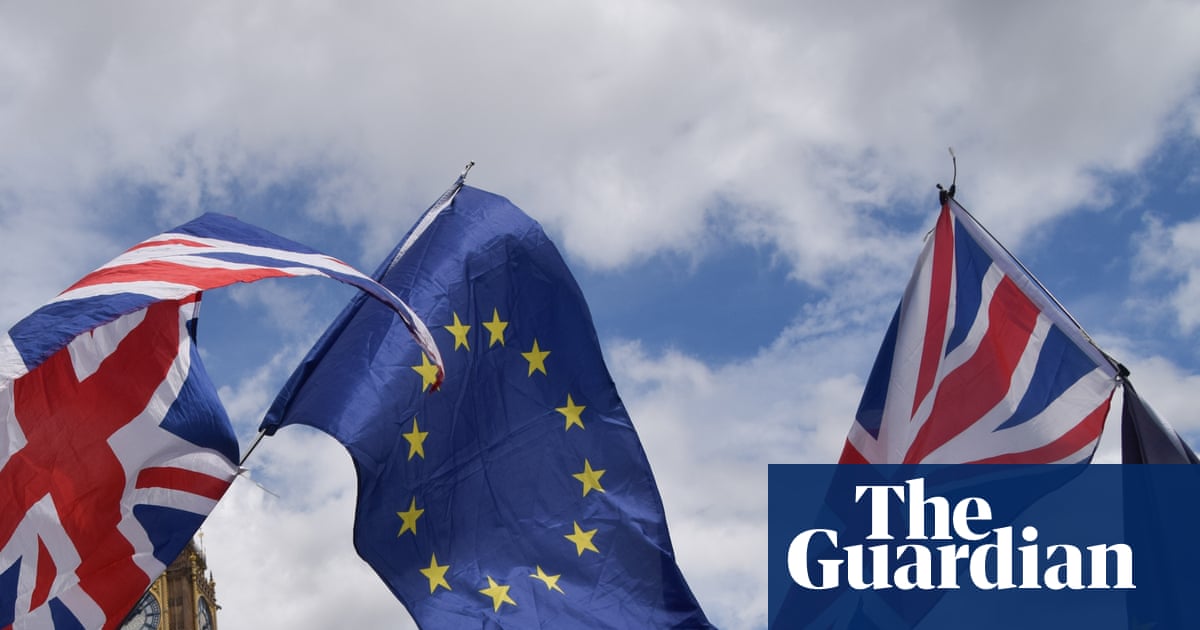
Senior Downing Street officials have been reaching out to thinktanks and pollsters as they look to test public support for the UK rejoining the EU. Aides to Andy Burnham have been talking to EU experts in a range of organisations about how the public would view a promise to rejoin, as momentum builds behind including such a pledge in the next Labour manifesto. Some in No 10 are keen to promise that Labour would at least negotiate over re-entry to the bloc, something Burnham has said he wanted to see happen “in his lifetime”.
Others are nervous, however, that making such a promise could revive the flagging political fortunes of Nigel Farage, the Reform UK leader. Burnham used his first conference speech as the Labour leader to announce a review of the options for Britain’s relationship with Europe, and added on Wednesday that these options should include rejoining entirely. The prime minister told delegates on Tuesday: “Brexit has done more harm than good.
So I will take the opportunity around the [UK-EU] summit to lay out to you, to lay out to the country, what I believe are the different options for Britain’s long-term relationship with our European partners.” On Wednesday he clarified that this would include an option to rejoin – something ruled out by his predecessor Keir Starmer. Burnham told BBC Radio 4’s Today programme: “We could stay as we are. That’s definitely an option, if people think this is the right place to stay.
Alex Burghart, the Conservative deputy leader, said: “Labour cannot blame a democratic vote from over a decade ago for the consequences of their own economic decisions.” The Guardian has learned, however, that Burnham’s comments are part of a wider effort by No 10 to test consensus over rejoining, with a view to possibly including such a promise in the next manifesto. Officials have been in talks with several prominent thinktanks and pollsters who have been working on projects to flesh out arguments over rejoining and test public opinion. Last week, the Tony Blair Institute released a paper arguing that Burnham should seek talks with Brussels over becoming a member once more, but only do so if Europe relaxed its regulations in sectors including energy and technology.
On the same day the pro-EU campaign group Best for Britain released a megapoll conducted by YouGov suggesting Labour could more than double its seat total if it went into the next election promising to rejoin. Over the coming weeks, the influential Institute for Public Policy Research will also release a paper calling for the country to rejoin, while Think Labour has also been looking into how difficult it would be to do so. Some in Downing Street are buoyed up by polling which shows that promising to re-enter the bloc does little to boost support for Reform.
They also point out that Farage attacked the prime minister’s speech for the promise to change the pensions triple lock, rather than his comments about Europe. The Guardian has been told that some at the top of government wanted the prime minister to use this week’s speech to promise to begin work on rejoining after the next election, rather than carrying out a review. In the end, such an option was ruled out because the party was already bracing itself for a fight over pensions, and did not want to give succour to Farage while he faces accusations about millions of pounds’ worth of donations to his party.
Extract — continue reading at the source.