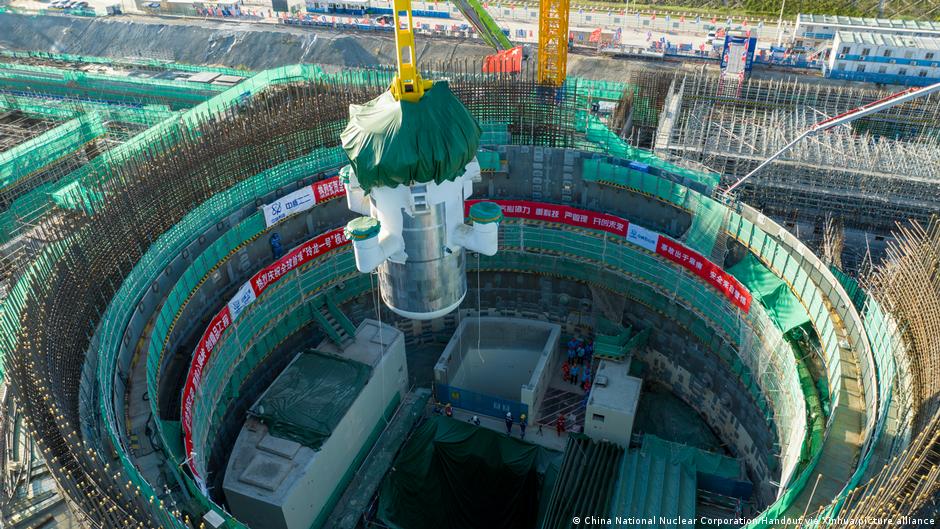
Southeast Asian governments are revisiting nuclear power as electricity consumption raises, exposing the region's dependence on fossil fuels. The rise is largely driven by new factories, electric vehicles and the region's rush to host data centers against the backdrop of countries trying to reduce carbon emissions. No Southeast Asian nation currently operates a commercial nuclear power plant, but several are now placing their bets on nuclear energy and reviving plans that had been stalled for years.
On September 8, Vietnam's state-owned Petrovietnam and South Korea's KEPCO agreed to deepen cooperation on the planned Ninh Thuan 2 nuclear plant. Six days later, Singapore's government said it was studying nuclear power and small modular reactors (SMRs)with an "open mind", though it stressed that it had not made a decision. Vietnam also wants to bring its two Ninh Thuan plants into operation by 2035 and pursue at least one SMR project.
Indonesia plans an initial 500 megawatts of nuclear capacity, with units targeted to begin operating in 2032, while the Philippines is working towards its first 1,200 MW of nuclear capacity from the same year. Thailand's latest draft power plan proposes its first SMR in 2037, while Malaysia and Singapore remain at the study stage. To view this video please enable JavaScript, and consider upgrading to a web browser that supports HTML5 video The renewed interest marks a sharp reversal from the caution that followed Japan's Fukushima nuclear disaster in 2011.
The incident stalled several Southeast Asian countries' plans to pursue nuclear energy, Alvin Chew, a senior fellow at the S. Rajaratnam School of International Studies (RSIS) at Nanyang Technological University in Singapore, told DW. But a string of geopolitical shocks in recent years has changed the energy debate.
The International Energy Agency (IEA) says Southeast Asia's electricity generation has risen by around 60% since 2015, but coal supplied most of that increase, pushing its share of regional generation from 37% to 47%. The war in Ukraine and the current Middle East crisis have heightened energy-security concerns for developing countries, even as most Southeast Asian governments have committed to net-zero emissions by 2050 or 2060, Chew said. The region's electricity demand is forecast to grow by an average of 5.3% a year between 2026 and 2030.
"Nuclear energy is deemed to be the viable solution to address both challenges of climate and energy security," Chew said. One reason governments are reconsidering nuclear power is that today's technology is starkly different from what was used 15 years ago in Fukushima. SMRs have broadened the range of possible projects.
Extract — continue reading at the source.