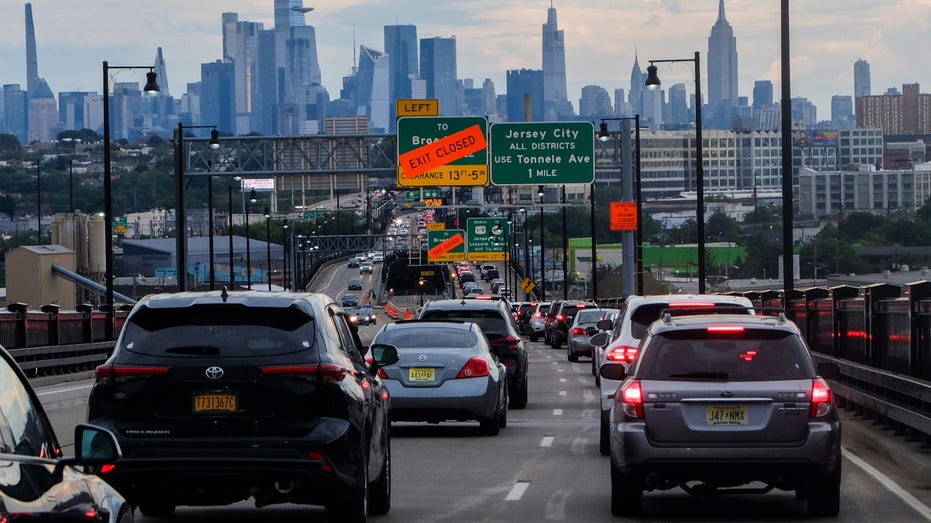
A lofty New York City toll slapped on drivers in an effort to reduce congestion and improve air quality produced nearly no change in pollution after its first year, according to the city’s own analysis. The New York City Health Department's report, released Friday, examined four traffic-related pollutants inside Manhattan's Congestion Relief Zone since the $9 toll was implemented last year. Researchers found that the city’s overall pollution levels remained largely unchanged, with no statistically significant improvement attributable to the toll.
Still, officials in the Big Apple touted the study as the city's most comprehensive look at congestion pricing's effect on air quality to date. MAMDANI’S AFFORDABILITY REVOLUTION STUMBLED AS RENT COSTS SOAR TO RECORD HIGHS They pointed to reduced traffic, public transit improvements, less traffic noise and other benefits as positive outcomes from the toll being implemented in January 2025. All similar things that New York Democrat Gov.
Kathy Hochul hailed in a June 2023 speech when she backed congestion pricing. Despite an 11% drop in traffic since implementation, the Health Department said vehicles account for only about 10% of the city’s pollution, meaning fewer cars alone is not expected to significantly improve overall air quality. Unlike many parts of the country, where cars and trucks are a major source of air pollution, New York City's emissions come largely from other sources.
The city's dense concentration of buildings, which burn fuel for heat and hot water, along with emissions from restaurants and power plants that supply the most populated U.S. city with electricity, are reasons for its poor air quality. Findings in the recent report could backfire and provide fresh ammunition to critics who have blasted congestion pricing as an expensive burden on commuters, small businesses and working families in America's largest city. The New York City Health Department and Hochul’s office did not immediately respond to Fox News Digital's request for comment.
MAMDANI'S RENT FREEZE, TAX HIKES A 'ONE-TWO WEALTH DESTRUCTION PUNCH,' ECONOMISTS WARN New York City’s congestion pricing toll applies to passenger vehicles entering the Congestion Relief Zone in Manhattan at or below 60th Street. The lofty $9 toll applies to E-ZPass users once-a-day during peak hours, which are weekdays from 5:00 a.m. to 9:00 p.m., and weekends from 9:00 a.m. to 9:00 p.m. All other off-peak hours require a $2.25 toll.
Those who do not have E-ZPass could face toll-by-mail rates that about 50% more than the typical charge. President Donald Trump and Transportation Secretary Sean Duffy have been among the program's most prominent opponents, with Duffy previously calling the toll a "slap in the face to working class Americans and small business owners." The Trump administration also attempted to withdraw federal approval for the Biden-era program, but a federal judge ruled in March that the effort was unlawful. Following that ruling, Gov.
Extract — continue reading at the source.