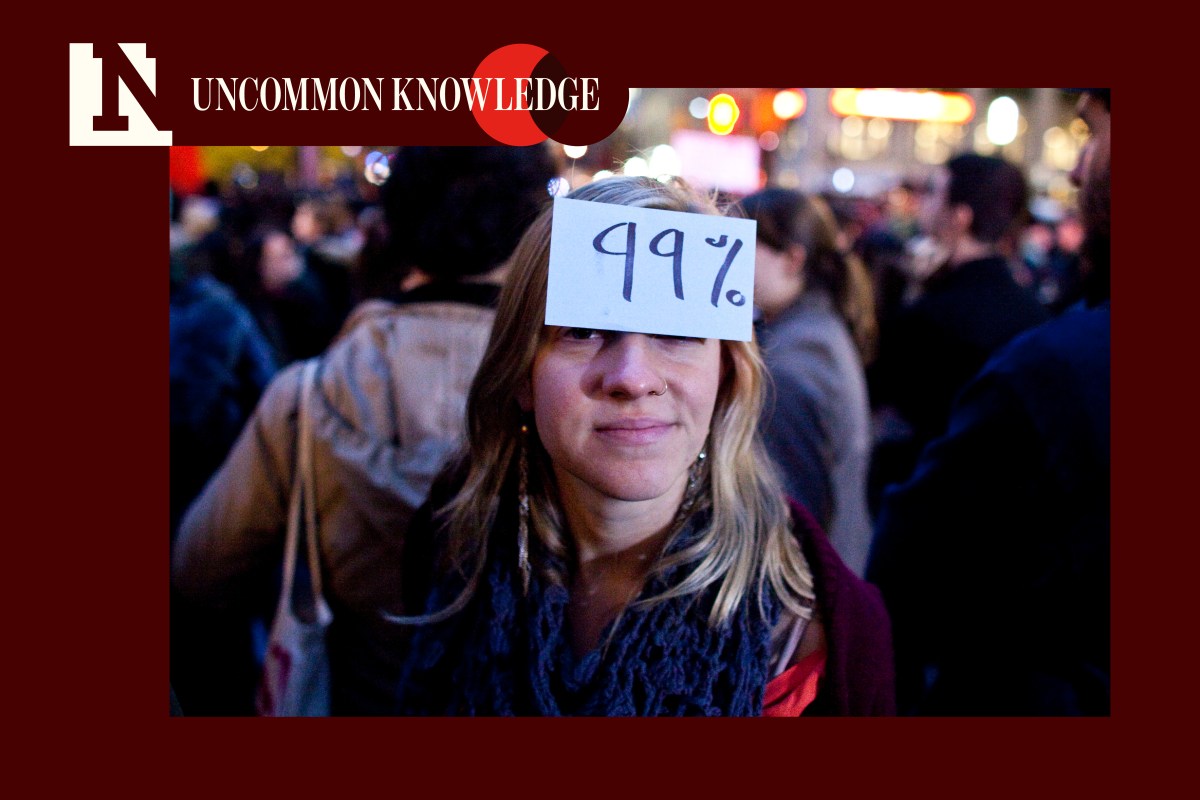
Fifteen years ago today, hundreds of protesters began gathering around a small park in Lower Manhattan. Adbusters, the Canadian anti-consumerist magazine, had summoned them to protest economic inequality and corporate power. They had hoped to "occupy" Wall Street but police barricades instead directed them to nearby Zuccotti Park.
The camp lasted until November 15, when police cleared it. So, the tents did not last, but the slogan endured anyway. "We are the 99 percent" took complex, deeply held concerns about the financial crisis, Wall Street and inequality and reduced them to five words.
Were those the right words? Might another two words—"Donald Trump"—be equally appropriate? At the end of 2011, the richest 1 percent of American households owned 29 percent of U.S. household net worth.
The bottom half owned 0.4 percent. Today, the Federal Reserve estimates that the top 1 percent owns 31.6 percent. So far, that sounds like the warning of Occupy: the protesters went home, and the 1 percent got richer.
Except that the bottom half now owns 2.5 percent. Its share, though still minuscule beside that of the very rich, is more than six times what it was at the end of 2011. The ratio between the share of national wealth owned by the top 1 percent and the bottom 50 percent has fallen from roughly 72.5 to 1, to 12.6 to 1.
And two days before Occupy's anniversary, the Census Bureau provided another complication. Real median household income reached $87,460 in 2025, up 2.6 percent in a year and the highest recorded level in a series going back to 1967. The official poverty rate fell to 10.2 percent.
Extract — continue reading at the source.