There are no atheists in foxholes, goes the saying, and indeed social scientists and evolutionary biologists have argued that the experience of war or conflict drives religious belief; in 2019, Joseph Henrich and others surveyed almost 2,000 people in three post-conflict societies – Uganda, Sierra Leone and Tajikistan – and concluded that their experience of conflict had prompted them to participate in Christian and Muslim rituals and groups. Atheism, it seems, may be as fragile as faith. Part scream, part song, it charts the gradual dissolution of her own rational assumptions, which govern everything from her views on God to extraterrestrial life.
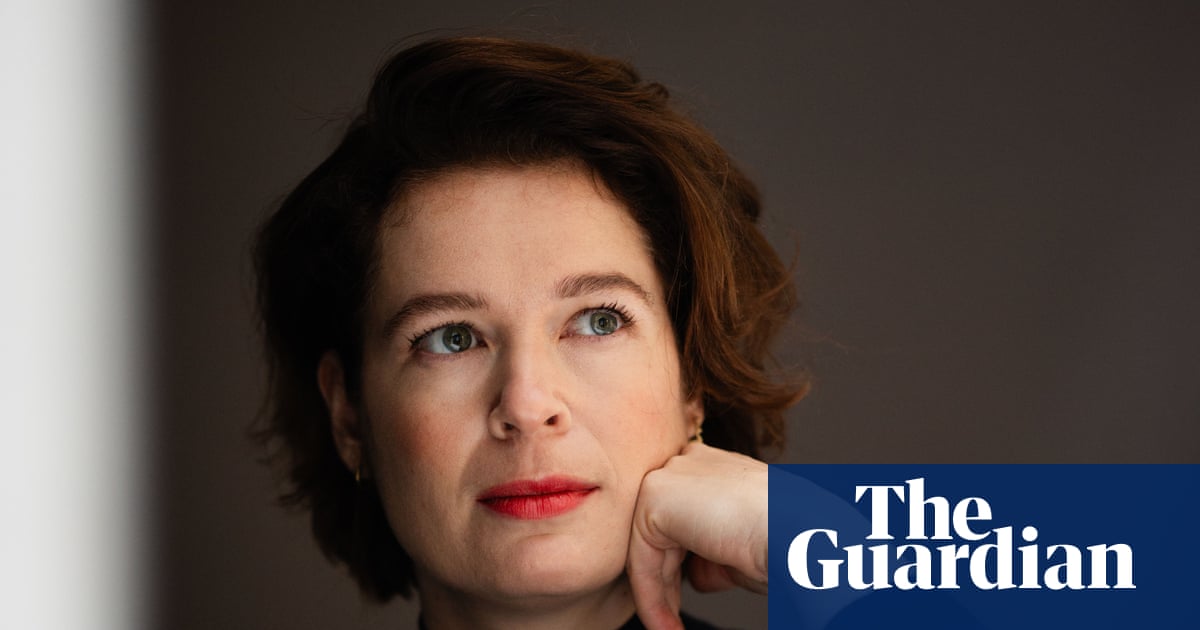
It is a brilliant, playful, layered and humane plea for openness and hope in the face of her own foxhole of intolerable suffering. Marsman was not a soldier, but she knew a thing or two about living with constant reminders of her own mortality. In 2018, at the age of 27, the poet was diagnosed with a rare and incurable form of cartilage cancer.
When a doctor informs her that her illness is terminal, she lets out a scream. Desperate to live, Marsman undergoes a barrage of treatments, including an operation to remove her arm and shoulder. However grim her situation, there is remarkably little about her body in this book, and the trials of her cancer treatment, from surgery to immunotherapy.
She opens herself to God, reads about the supernatural, and wonders whether aliens may come down and take her away. Her range is wild: she cites Leopardi, Pasolini, Alanis Morissette, Robert Musil, Spinoza, Euripides, Wittgenstein and William James. The most interesting sections, for me, related not to artists’ or writers’ reflections on mortality or rationalism, but those of scientists who expressed doubts about the solidity of the scientific framework that they themselves constructed.
She writes that she and her girlfriend spent hundreds of euros on empanadas. If the narrative vibrates with pain, there are also releases of humour; at one point she considers all the absurd things she could do to spice up her obituary, such as crashing in a paraglider or go-kart. Any reviewer knows that the author may read what you have written; a review is intended for potential readers of a book, yes, but I also think of it as a dialogue with its author.
Here there is no right of reply: Marsman died in June of this year, aged 35, and this book, more than a memoir, is a testament; to review it almost feels like a sacrilegious act, and perhaps it is best to let the author speak. And in those moments when everything in the here and now turns out to be utterly hopeless, I allow myself to think: on another planet they can save me.” I hope that that other planet exists, and somewhere, somehow, Marsman is still writing.
Extract — continue reading at the source.