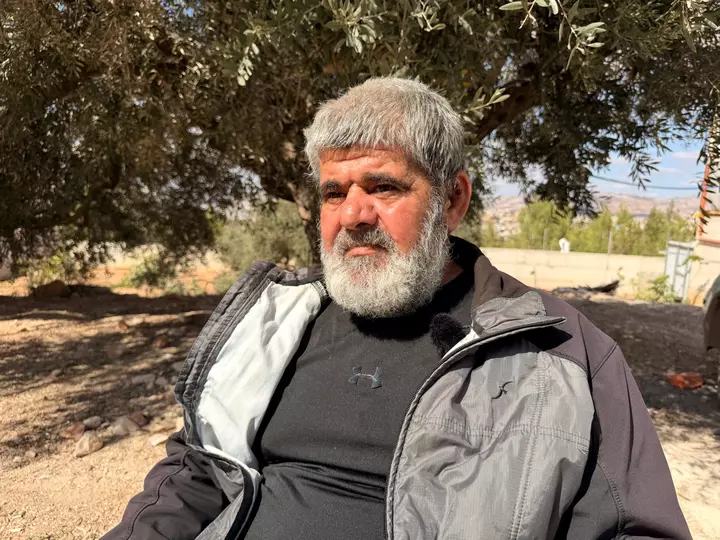
Beita, occupied West Bank – Olive harvest season is traditionally a time when Palestinian families gather in their groves, pick olives and cook over open fires. But when Musa Bani Shamsa and his 17-year-old son, who requested anonymity, arrived at his land in Beita, southeast of Nablus, the groves were empty. On the morning of October 14 after they arrived, a group of masked Israeli men surrounded them.
They carried pistols, knives, pipes, sticks and a hammer, Shamsa told Al Jazeera. Only their eyes were visible. The beating lasted at least 20 minutes until he and his son were left lying on the ground.
Shamsa was bleeding and lost consciousness. Shamsa said his attackers came from an Israeli outpost on the adjacent hill. Three days after the assault, his son was still unable to speak from the shock.
Settler violence across the occupied West Bank is rising sharply. Since September 1, the United Nations Office for the Coordination of Humanitarian Affairs recorded more than 200 attacks on Palestinian farmers, more than the total number of similar assaults for the entire season last year. With more beatings, arson attacks and livestock theft, “people are afraid,” Shamsa said, “in every sense of the word.” He shares that fear but refuses to abandon his land.
Harvesting begins earlier, at 5am. People block roads with stones to slow approaching settlers and take turns picking olives and keeping watch from rooftops with binoculars. When settlers approach, families flee.
Some return at night to harvest by phone light. But these precautions offer little protection. In nearby villages, Shamsa said, settlers wait until farmers have finished picking before stealing their harvest and equipment.
Extract — continue reading at the source.