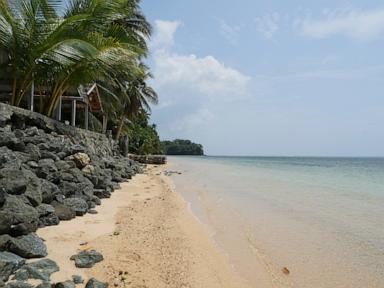
Stormy weather can send the Pacific Ocean flooding into people's homes in small, remote island nations KOROR, Palau -- When stormy seas batter Melekeok state on Palau’s biggest island, the Pacific Ocean floods right into people’s homes. Their leaders, gathered for a summit in Palau this week, are wrestling once more with the question of how tiny countries with little global power can use major polluters’ geopolitical interest in their region to secure a chance of survival. Some hope for funding to help them adapt to changes they can’t reverse.
Sebalt, a legislative clerk, is also a trained volunteer for her local disaster readiness team, making her one of 200 people across the western Pacific country now prepared to shepherd their communities through events such as catastrophic typhoons that have struck before. Almost a year ago, Sebalt moved to a subdivision being prepared inland for Melekeok’s people, where she’s the only resident so far. Sebalt said funding for plumbing, sewage and enough street light poles for others to move in was sourced in small chunks and much too slowly.
About 32 kilometers (20 miles) across the volcanic island, down winding roads fringed by tropical jungle, leaders from some of the small Pacific nations most imperiled by rising seas renewed dire warnings Wednesday about their expected fate. The officials standing in sweltering, wet heat outside the annual Pacific Islands Forum summit were responding to a bleak first-of-its-kind report issued by the United Nations, which said Earth would soon exceed the safe temperature threshold agreed upon in the 2015 Paris climate accord because of warming from the burning of coal, oil and gas. Wednesday’s report finally admitted that the world would cross the 1.5 threshold “in the next few years,” while recommending efforts to bring down the temperature.
The leaders gathered in Palau said that would be too late. Warmer seas would devastate the Pacific’s tuna fisheries, which produce 30% of the world’s catch, and the mangroves where fish hatch, according to the regional scientific organization SPC. This year’s El Nino chaos has left parts of the Pacific in drought while others flooded, and such events would only intensify, the body added.
But it’s often swept aside by geopolitical jostling from major powers on the sidelines of the event as they seek to shore up more influence in the strategically important region than their rivals. Palau’s President Surangel Whipps Jr., suggested this week that countries who sought involvement in the region could instead do so by funding climate projects, including his push to see the sunny region become the first in the world powered entirely by renewable energy. A geopolitical sideshow between China and Taiwan promptly erupted, however, when envoys from Beijing and Taipei were seated in the same row at the summit’s opening ceremony.
But there are other obstacles to the leaders’ ambitions. A Pacific-managed fund created by the summit’s members and intended to finance grassroots adaptation projects across the region has so far faltered because major donors haven’t pledged the hoped-for amounts. While some have cited governance concerns with the Pacific Resilience Facility, due to be headquartered in Tonga, the model is also new for an aid-dependent region where donors are used to controlling where money goes.
Extract — continue reading at the source.