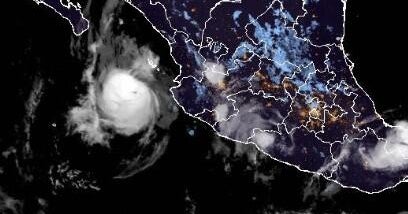
The drumbeat of monster hurricanes in the Pacific has broken a record for nasty, long-lasting storms east of the international date line, turbocharged by nature's supersized El Niño, scientists said. "Since September 20, when Odalys formed, it's been berserk," said Colorado State University researcher Phil Klotzbach, who forecasts and studies storm activity. "This year, just everything that forms is just lasting a long time and getting really powerful." One of the key measurements meteorologists use to judge hurricane seasons is called accumulated cyclone energy, or ACE, which includes a storm's wind speed and longevity.
On Sunday, a section of the Pacific east of the date line, which brews storms headed for Hawaii, Mexico and the U.S. West Coast, passed the old mark set in 2018. The area is still going strong with Hurricane Simon and appears on the verge of spawning another one that will really ramp up in strength, Klotzbach said.
On Tuesday, the Pacific will tie a record for most days with a hurricane spinning and is likely to break it soon after that, Klotzbach said. "It feels like almost everything that can spin up does spin up," said University of Arizona atmospheric scientist Kim Wood. Several meteorological factors have come together to supercharge the Pacific, chief among them the El Niño, Klotzbach and other hurricane researchers said.
An El Niño weakens and shifts the high-altitude vertical winds that otherwise can dampen or even decapitate storms. In the Pacific, that wind shear runs east to west, generally with the direction storms travel, so it's like riding a bicycle with a tailwind, Klotzbach said. Meanwhile, the weather pattern has dampened hurricanes in the Atlantic, where the ACE is less than 18% of what's normal for this time of year.
El Niño makes the wind shear in the Atlantic like riding into a headwind, he said. The Atlantic basin set a record this year for its longest stretch without any hurricanes developing. Isaias was its first, on Oct. 7.
Another factor is warm water, which serves as hurricane fuel. By definition, El Niño is a warming of the equatorial Pacific that changes weather worldwide. In the Pacific storm basin, it's several degrees Fahrenheit warmer than normal, said Kristen Corbosiero, a professor of storm atmospheric sciences at the University at Albany in New York.
Extract — continue reading at the source.