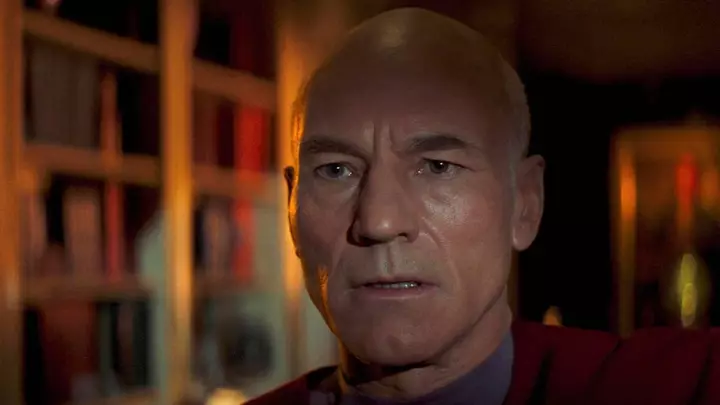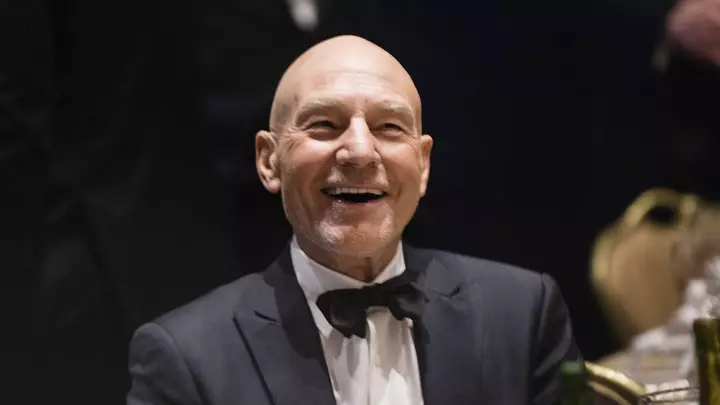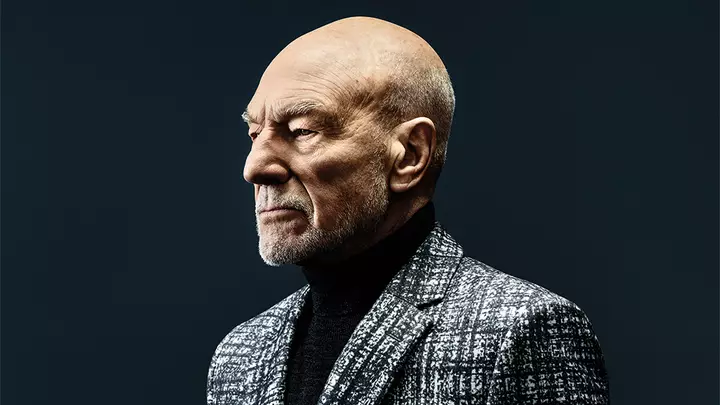
Patrick Stewart, the bald-headed English actor with impressive stage and film credits who will nevertheless be remembered most for his roles as Captain Jean-Luc Picard on “Star Trek: The Next Generation” and as Professor Charles Xavier in the “X-Men” films, died Wednesday at his Los Angeles home. According to a statement on his Instagram account, Stewart had a “brief” battle with Alzheimer’s and Lewy Body Dementia before his death. Stewart and his “Star Trek: TNG” co-stars took their characters to the big screen for several films before the “Star Trek” film franchise was rebooted by J.J.
Abrams with characters from the original series. In the high-profile “X-Men” film franchise, Stewart played Professor Xavier opposite his good friend Ian McKellen as the villainous Magneto. He reprised the role in this December’s “Avengers: Doomsday” alongside McKellen.
Stewart recently appeared in the 2015 film “Match,” based on the play by Stephen Belber, in which the actor played a vain, flamboyant dance instructor and — in a very different vein — in the horror-thriller “Green Room,” in which he played the leader of a band of neo-Nazis. He also starred in the Starz series “Blunt Talk,” about a substance-abusing English newscaster who moves to L.A. to host a talkshow. (Variety said of “Blunt Talk,” “Stewart demonstrates himself to be an enormously good sport, appearing to relish both the incongruity of his playing such a role and the dearth of in-every-scene gigs for an actor in his mid-70s.”) In a 2008 profile describing Stewart’s return to his roots in classical theater by starring in a production of “Macbeth,” the New York Times in its mash-up headline pithily referenced the two very different paths the actor had followed in his career: “To Boldly Go Where Shakespeare Calls.” It is hard to emphasize enough how dramatically Stewart’s life changed when he began his run on “Star Trek: The Next Generation” in 1987. For the two decades prior he had been a mainstay of the Royal Shakespeare Company.
He had made time for some film and television work, but was kept busy appearing in more than two dozen RSC stage productions, including as Astrov in “Uncle Vanya” in 1974, Oberon in “A Midsummer Night’s Dream” in 1977, Shylock in “The Merchant of Venice” in 1978, and in the title role in “Titus Andronicus” in 1981. Stewart played Picard throughout the 1987-1994 run of “Star Trek: TNG,” and then in the features “Star Trek: Generations” (in which he appeared with William Shatner), “Star Trek: First Contact,” “Star Trek: Insurrection” and “Star Trek: Nemesis.” He played Professor Xavier in “X-Men” (2000), “X-Men 2,” “X-Men: The Last Stand,” “X-Men Origins: Wolverine,” “The Wolverine” and “X-Men: Days of Future Past.” Assessing Stewart’s contributions to “Star Trek: TNG,” the New York Times said, “With his aura of stern yet fair authority and seriousness of purpose, Mr. Jean-Luc Picard the moral center of ‘Star Trek: The Next Generation’ across seven seasons, helping to keep it from sliding into camp or self-parody.
Hollywood took to him, and he took to Hollywood.” In general, Stewart seemed to keep a good sense of humor about his ties to popular culture, never publicly displaying the angst that Shatner and Leonard Nimoy each revealed at times. He did voicework on “The Simpsons,” “Family Guy” and “American Dad” and showed a willingness to make forays into comedy, playing a comically snooty waiter in Steve Martin’s 1991 gem “L.A. Story” and King Richard in Mel Brooks’ 1993 “Robin Hood: Men in Tights,” and hosting “Saturday Night Live” in 1994.
In a very different vein, he was the best thing in 1995 gay comedy “Jeffrey”; the New York Times said Stewart “has some of the best lines and delivers them with a dignified brio that is only enhanced when he happens to be wearing a fuchsia beret, the uniform of an anti-gay-bashing group called the Pink Panthers.” Later the actor would serve as the narrator for Seth McFarlane’s scabrous comedy “Ted” and its sequel, and MacFarlane also was exec producer of “Blunt Talk.” Stewart continued his stage work even during the run of “Star Trek: TNG,” playing George in “Who’s Afraid of Virginia Woolf?” at the Young Vic in 1987 (he would return to the role at Minneapolis’ Guthrie Theatre in 2001) and repeatedly appearing in seasonal stagings in Los Angeles and on Broadway of a one-man version of “A Christmas Carol” that he adapted himself from the original Dickens. After “TNG” ended, Stewart ramped up his theater work. He appeared on Broadway as Prospero in “The Tempest” in 1996, essayed the title role in a “photo-negative” staging of “Othello” at the Shakespeare Theatre in Washington, D.C., in 1997 and returned to Broadway to star in “The Ride Down Mt.
Extract — continue reading at the source.