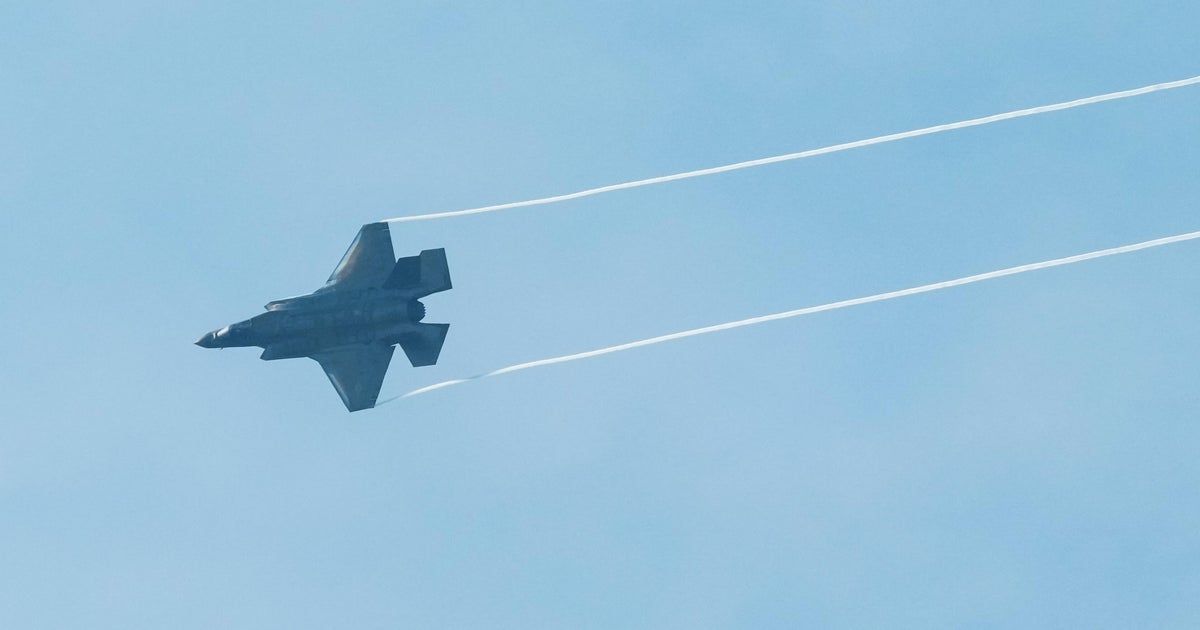
The Pentagon is investigating how a shipment of F-35 fighter jet parts on its way to the U.S. from overseas was diverted, and the military is now trying to retrieve the parts, a defense official confirmed to CBS News. A source briefed on the incident told CBS News a shipment was diverted to Hong Kong. According to Bloomberg News, the parts are now in China's hands, although the Pentagon declined to confirm this.
A defense official said in a statement, "The F-35 Joint Program Office and Department of War are aware of a shipment issue of unserviceable F-35 Lightning II components." The parts were in transit to the U.S. from Australia either for replacement or repair when they were diverted. "We are actively working with U.S. authorities and industry partners to retrieve these components, investigate the incident, and place safeguards to avoid a future occurrence," the defense official said. The F-35A Lightning II is the newest version of the plane and the most advanced fighter jet in the military's arsenal.
It travels up to 1,200 miles per hour and can carry a payload of 18,000 pounds. The missing parts are said to be related to the plane's canopy and weapons bay door. If this is the case, they do not contain the kind of advanced avionics that would be advantageous for an adversary to obtain.
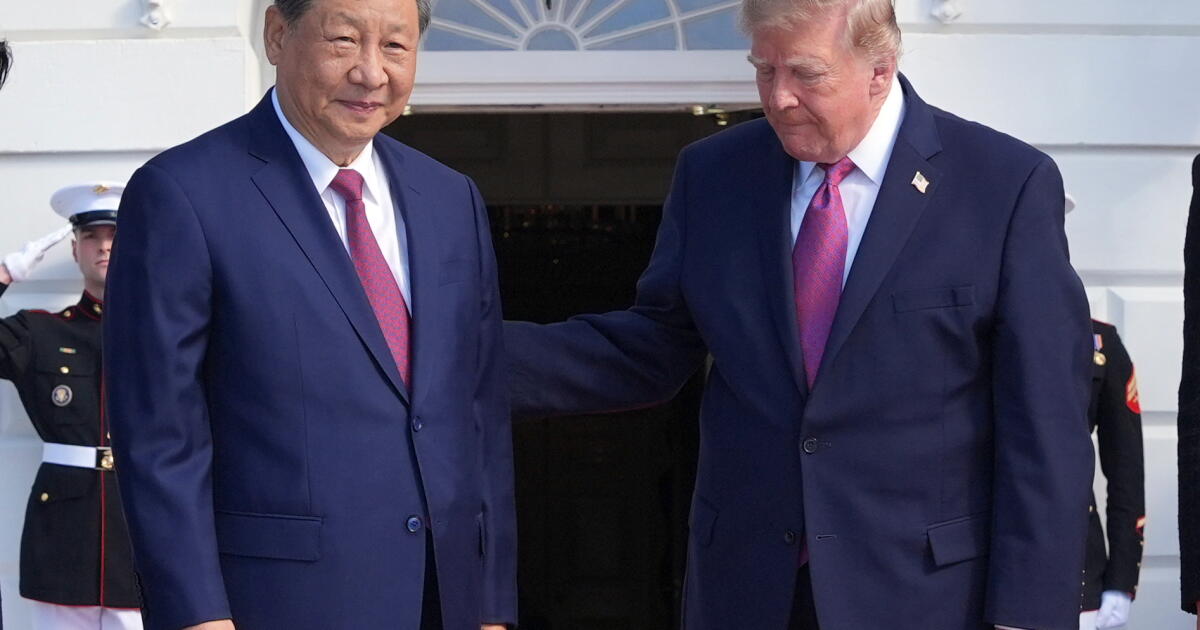
Nonetheless, they could provide information about the F-35's stealth technology: Even the canopy contains elements of the stealth systems — it's coated with radar-absorbent material that helps the plane hide from enemy radar. It's not clear whether the U.S. raised the missing plane parts with China during Chinese President Xi Jinping's visit with President Trump on Thursday, but military issues almost certainly came up during their meeting. Xi was expected to press Mr.
Trump to curb U.S. support for Taiwan. China wants the U.S. to halt all arms sales to the self-governed island and oppose Taiwanese independence. Doing so would effectively end the longstanding policy of strategic ambiguity, that is, refusing to state whether the U.S. would intervene militarily if China were to attack Taiwan.
After their summit in May, Mr. Trump said he had made "no commitment either way" on whether to move forward with a pending arms sale to Taiwan. Democratic and Republican lawmakers have urged him to approve the arms package, but it has remained in limbo since Mr.
Extract — continue reading at the source.