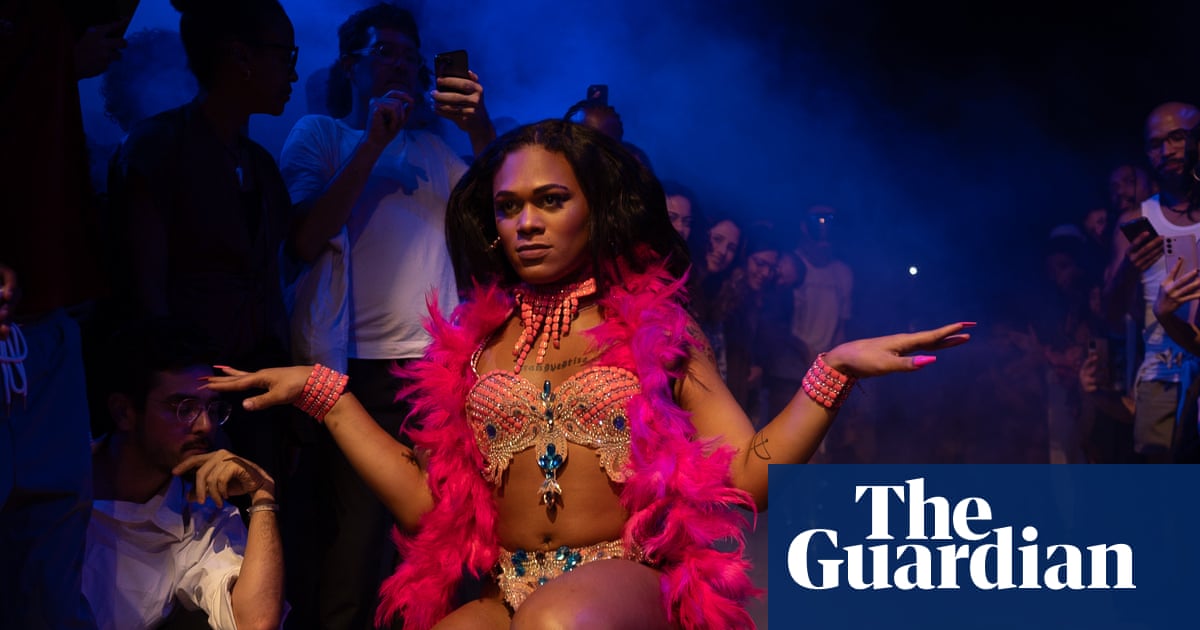
My first encounter with Rio de Janeiro’s ballroom scene was in 2023, during Noite das Estrelas, an artistic occupation that moved through the streets of Maré. From the top of a sound truck, the performer and drag queen Preta Queen B Rull, of the Kiki House of Mamba Negra, sang as people followed her through the neighbourhood. Before we had even reached our destination, the procession had changed the rhythm of the street.
At the end of the day, two rows of people shouted, pressed against one another and took photographs, forming a runway inside a warehouse. I had gone simply to watch, but I had my camera in my bag. I did not know whether to admire, photograph or try to understand what I was seeing: dance, fashion, performance, movements I did not yet know how to name.
I left certain that I would return. That day, I learnt that photographing a ball demands quick decisions: hesitate, and the moment disappears. But what drew me back was the energy between the runway and the people gathered around it, the shouts for the houses, the response of the crowd, the vibration that seemed to pass through the body.
After attending many balls, this has never become ordinary to me. What I feel there is a force built from presence and belonging, as if, for a few hours, no one has to make themselves smaller in order to fit into the world. Ballroom culture began to take shape in New York between the late 1960s and the 1970s.
It was created by Black and Latinx LGBTQ+ people in response to racism and exclusion within drag pageants. Organised into houses, chosen families that provide guidance and support, participants compete at balls in categories involving dance, fashion, performance and gender expression. In Rio, the scene began to organise around 2015 and 2016 through voguing and exchanges with pioneers from other Brazilian states.
Conferência das Bruxas, held in May 2016, is locally recognised as the first ball in the state of Rio de Janeiro. The House of Cazul and the House of Kínisi later played pioneering roles in consolidating house culture in the region. Since then, the scene has developed according to Rio’s own geographies and rhythms, incorporating funk, carnival, the cultures of the city’s peripheries and local political struggles.
Extract — continue reading at the source.