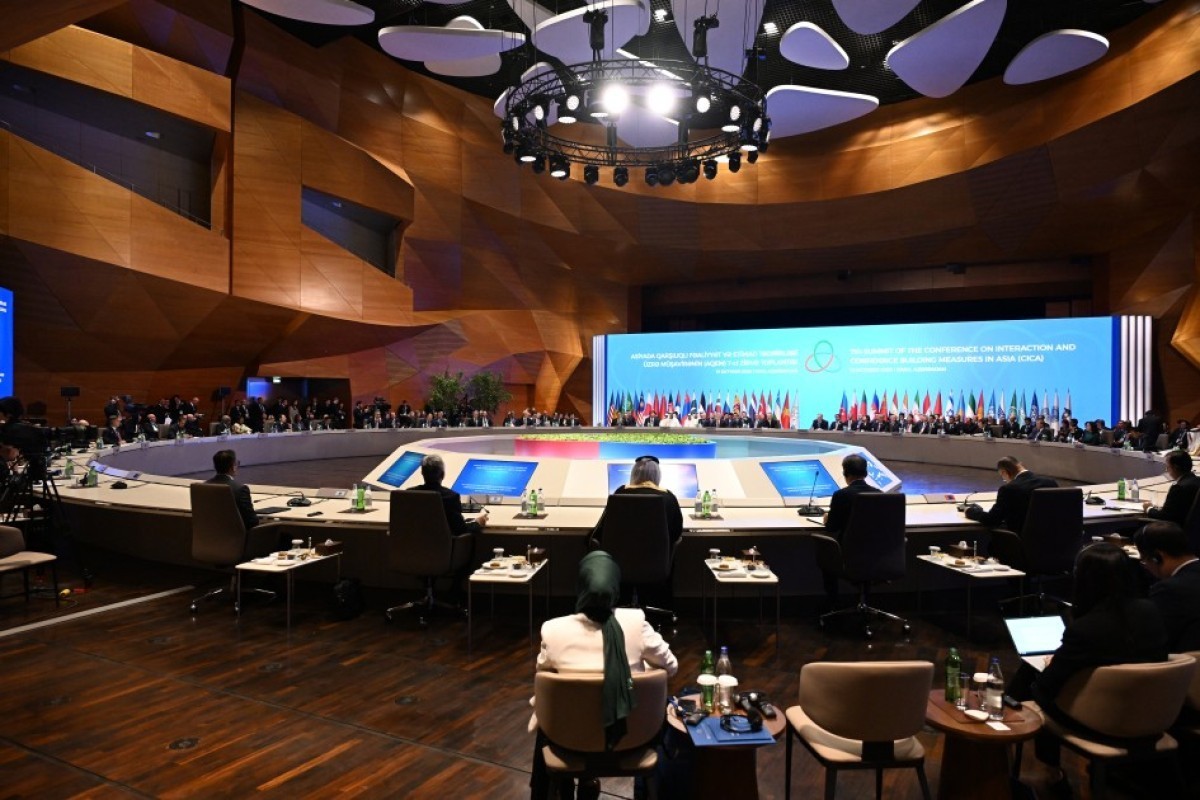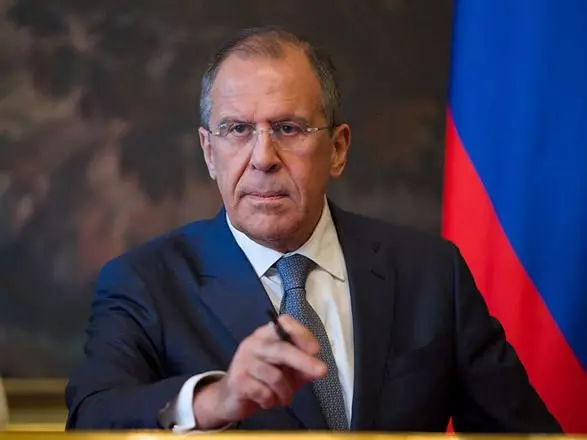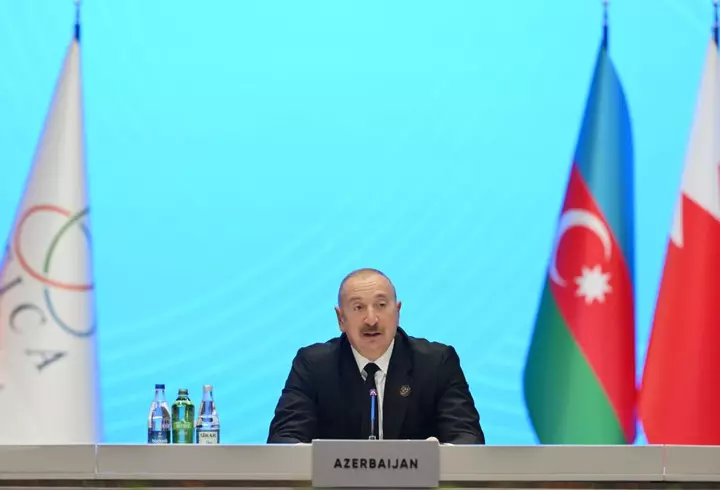
The Azerbaijani president used the CICA summit in Baku to make a wider argument about the failures of international diplomacy. The challenge now is to ensure that a peace won after decades of conflict becomes more than an uneasy truce. There is an uncomfortable question at the heart of international politics: what happens when the rules that supposedly govern relations between states are ignored, and the institutions responsible for enforcing them do nothing?
President Ilham Aliyev put that question at the centre of his address to the seventh summit of the Conference on Interaction and Confidence Building Measures in Asia (CICA) in Baku. Although much of his speech focused on Azerbaijan’s conflict with Armenia, his argument extended well beyond the South Caucasus. It was about the credibility of international law, the consequences of diplomatic failure and the conditions under which peace can survive.
The Azerbaijani President's central contention was straightforward, implying that international organisations cannot claim to defend a rules-based order while allowing their own decisions to remain unenforced for decades. In his telling, Azerbaijan’s experience offers a particularly stark illustration of that contradiction. For a country that regained its independence in 1991, the legacy of the Karabakh conflict has shaped national security, foreign policy and relations with international institutions.
President Aliyev recalled that approximately 20% of Azerbaijan’s internationally recognised territory remained under Armenian occupation for around 30 years, while hundreds of thousands of Azerbaijanis were displaced. He argued that the international response failed to match the scale of the problem. The most consequential example was the United Nations Security Council.
In 1993, it adopted four resolutions demanding the withdrawal of Armenian forces from occupied Azerbaijani territories; however, those resolutions remained unimplemented for decades. For the Azerbaijani President, this was more than a historical grievance and evidence of a structural weakness in the international system, which mostly displayed a gap between declaring a principle and ensuring that it is respected. Moreover, the President’s criticism raises a question that extends far beyond Azerbaijan.
What value do international resolutions possess if their implementation depends on political calculations rather than consistent rules? International law is often presented as the foundation of a stable global order. But its authority depends not only on the principles written into treaties and resolutions.
Extract — continue reading at the source.