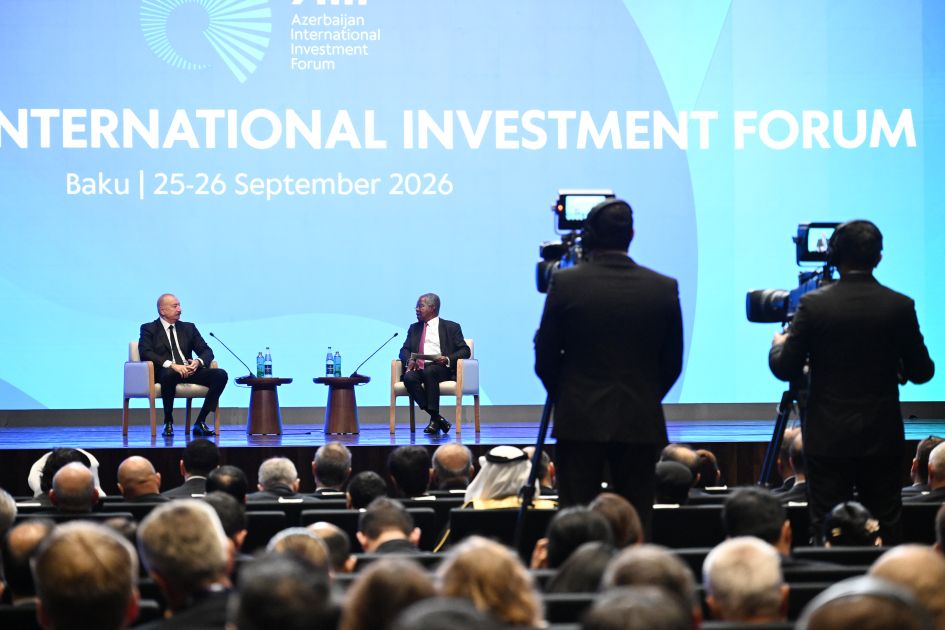
There is a revealing tension at the heart of Azerbaijan’s economic story. The country is still an energy exporter, and oil and gas remain central to its external trade. However, the investment message coming from Baku is increasingly about what comes after the first phase of energy-driven development.
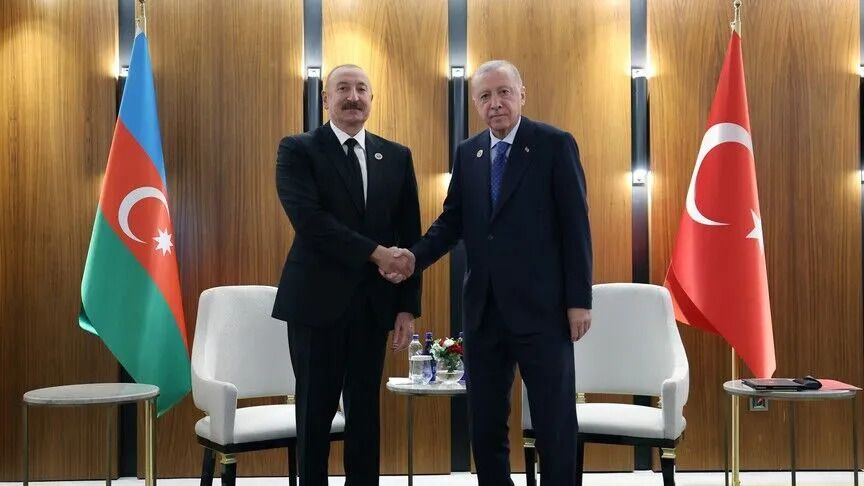
President Ilham Aliyev used the 2nd Azerbaijan International Investment Forum to make that case. Speaking at an event themed “Restoring Trust in a Fragmented World”, he presented diversification as a process already underway. President Aliyev said the non-oil and gas sector now accounts for more than 70 per cent of GDP.
Why we mention it, because the numbers matter. At the same time, he acknowledged the harder part of the transformation: energy resources still make up the overwhelming majority of exports, and the challenge, therefore, is no longer simply to build a non-oil economy, but to make that economy competitive enough to sell more of what it produces abroad. Certainly, diversification is not achieved simply by changing the composition of GDP.
It requires companies capable of competing in foreign markets, infrastructure capable of moving goods efficiently and investors willing to commit capital to sectors beyond hydrocarbons. President Ilham Aliyev put the challenge plainly: “So diversification of economy is already a reality, but we have to continue, definitely.” This is where Azerbaijan’s investment proposition is becoming more interesting. The country is trying to turn advantages that once supported its energy economy into assets for a broader economic model.
Let's take geography, where obviously it is impossible for Azerbaijan to change its position between Europe and Asia, but it can invest in making that position economically useful. Roads, railways, ports and logistics infrastructure are being developed around the East-West and North-South corridors. The Middle Corridor, in particular, gives Azerbaijan an opportunity to become more than a transit point: it can develop logistics, warehousing, manufacturing and services around the movement of goods.
The same logic applies to energy, in a sector where Azerbaijan’s experience in building complex international energy infrastructure is now being extended into renewables. President Aliyev said contracts already signed with international and local companies would provide eight gigawatts of solar and wind capacity by 2032, while work is underway on transmission infrastructure to connect future electricity exports with markets, particularly in Europe. Then there is agriculture, food security, the Alat Free Economic Zone, digital transformation, artificial intelligence, infrastructure and human capital.
Extract — continue reading at the source.