Mohammad Akrami-Nia argued Friday that the U.S. and Israel had failed to achieve their primary objectives in the war. "The enemy had set many objectives in its attack on Iran, including the destruction of missile and nuclear capabilities, overthrowing the system and, of course, the partition of Iran. But it failed to achieve all of these objectives," he declared in a statement relayed by state news agency IRNA.
Akrami-Nia said Iran's enemies had made several miscalculations, including "not correctly understanding the Iranian people" and "not correctly understanding the military capabilities of the Islamic Republic of Iran." He also said the U.S. had failed to anticipate Iran's ability to control the globally crucial shipping lanes through the Strait of Hormuz, and had failed to secure support from its NATO and other allies ahead of the war. An Iranian government spokeswoman acknowledged Friday that the country is facing economic pressure and shortages, insisting that officials do not deny the difficulties confronting regular Iranians. Fatemeh Mohajerani, speaking at the opening of a 64-bed hospital in the western Ilam Province, said U.S. sanctions had impacted the implementation of infrastructure projects across the country.
"The government does not deny the economic pressure on the people and the shortages, and whenever we have spoken to the people honestly and transparently, the people have also cooperated with the officials," she said, according to Iran's state news agency IRNA. She said delays in completing infrastructure projects "should not be attributed to the inefficiency of managers, because the severe sanctions have affected the process of securing resources and implementing projects." Mohajerani said Iran's government would continue efforts to complete unfinished projects despite the constraints. Iran's Central Bank Governor Abdolnaser Hemmati, meanwhile, was quoted on Friday as telling state television that the bank would intervene in the foreign currency exchange market "in a timely and forceful manner" when necessary, acknowledging that the war with the U.S. had caused "abnormal fluctuations in the market." "Whenever rates move away from economic realities, intervention will take place so that market traders do not regard the fluctuations as one-way," he said, without laying out any specific plans.
The value of Iran's currency, the rial, has been falling for years under foreign sanctions pressure, and the U.S. military blockade of Iranian oil exports has depleted it further and sent inflation to record levels in the Islamic Republic. As of Friday, one U.S. dollar was worth a record 2.2 million rials on the black market, which is how most Iranians and visitors to the country access foreign currency. There is a sharp gap between that rate, however, and the official rate determined by the government, which, as of Friday, put the rial at about 42,000 to the dollar.
The vast gulf in the official exchange rate and the rate paid by virtually all normal Iranians has fueled concern over currency volatility and the rising cost of imports and other goods inside the country. Lebanese President Joseph Aoun thanked President Trump and the U.S. for "all the efforts and initiatives" that on Friday "led to the release of the first group of Lebanese detainees held by the Israeli government." Israel handed over one former detainee on Thursday and four more Friday, the International Committee of the Red Cross, which acted as an intermediary for the transfers, confirmed in a statement Friday. The five were among about 30 people from Lebanon who have been detained by Israel before and during its war against the Iran-backed Hezbollah group, according to reports by The Times of Israel and the BBC.
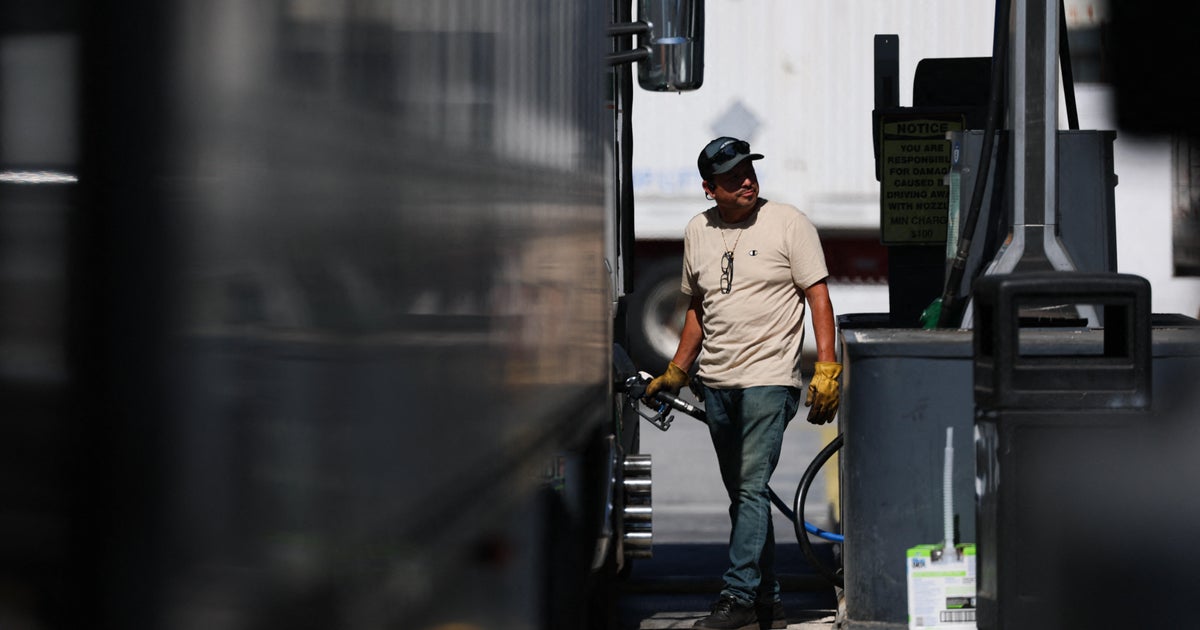
"Many families in Lebanon are still waiting for answers about the fate of loved ones who may be detained, deceased or otherwise unaccounted for," the ICRC said in its statement, noting that it "continues to engage with the families themselves and remains determined to clarify the fate of their loved ones." The ICRC also said it had not been given access to "detainees held in Israeli places of detention, including Lebanese nationals," since the war in Gaza started in October 2023, and it reiterated "the requirement to receive information on conflict-related detainees and to be granted access to them." In his statement, Lebanon's president called the release of the five nationals this week a first step to reaffirm "the effectiveness of the firm Lebanese position" as his government works toward "the restoration of full Lebanese sovereignty." Israel's government announced the release on Thursday, saying interrogations determined the five former detainees were "civilians who are not members of any terrorist organization, have not engaged in terrorism, and there is no reason to continue holding them in Israel." Israeli forces have occupied a strip of land stretching about six miles into Lebanese territory from Israel's border. Israeli officials have said the troops will remain in the "security zone," and not allow the thousands of Lebanese residents forced to evacuate from it return until the threat posed by Hezbollah is eliminated. U.S. gas prices surged ahead of Labor Day weekend, with diesel hitting a record of $5.85 a gallon Friday, eclipsing its prior mark of $5.81, set in June 2022.
Extract — continue reading at the source.