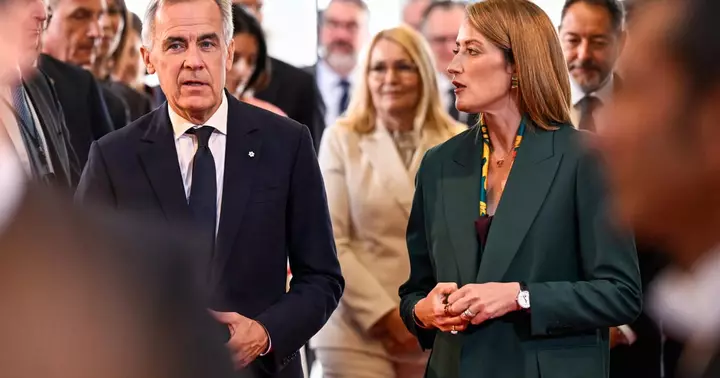
BRUSSELS — Quebec’s new separatist government is treating this week’s EU-Canada summit in Montreal as the start of a wider diplomatic push to get the province in the room whenever Ottawa and Brussels strike deals that concern its powers. The separatist Parti Québécois returned to power this month at the head of a minority government in the province, promising to assert greater control over Quebec’s affairs and eventually hold another referendum on independence. Prime Minister Mark Carney hosts Commission President Ursula von der Leyen and European Council President António Costa on Thursday and Friday for a summit the two sides have billed as a step change in relations, driven by Donald Trump’s tariffs and a shared need for new partners.
Von der Leyen has even proposed to make Canada an “associate member” of the EU — an offer that goes too far for some of the bloc’s member countries. Early drafts of a joint summit declaration include a digital trade deal, a pact to let the European Investment Bank finance Canadian critical minerals projects, and a consignment of Canadian water bombers for Europe’s emergency services. While Canada is responsible for negotiating the text, much of it lands in areas where its 10 provinces have extensive powers, such as over natural resources, education and health.
Quebec is the second-largest province by population after Ontario and has a territory more than twice the size of France — with which three-quarters of its people share French as their mother tongue. Natural resources are a provincial matter, she added, noting that Quebec has deposits of 22 of the 34 minerals on the EU’s critical list. The province is already talking to the European Investment Bank and DG GROW, the European Commission’s industry department, about the bank’s entry into Canada, she noted.
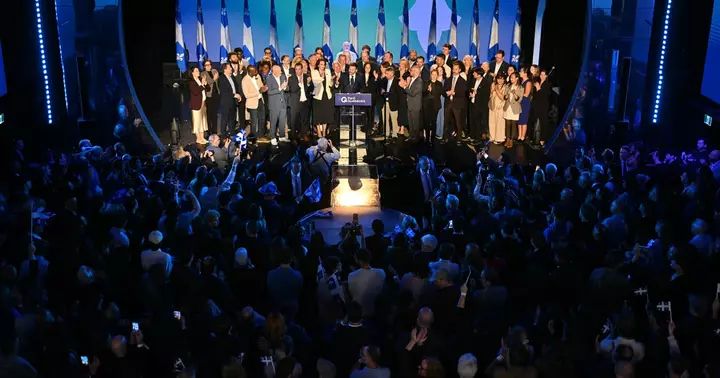
Asked whether Quebec’s interests line up with those of Ottawa, Drainville said federal and provincial officials have already set up joint working groups to implement the summit’s outcomes. The cooperation comes at an unusual moment. Quebec’s new premier, Paul St-Pierre Plamondon, won power on Oct. 5 while promising a third referendum on sovereignty, though not as long as Trump is in the White House.
His cabinet includes the new position of minister for “accession to independence.” However, support for independence in the province is the lowest it has been for three decades, around 29% in a poll from earlier this year — hardly a popular mandate for the project. The Parti Québécois has nevertheless pledged to double Quebec’s 34 offices abroad. A party blueprint published last year would raise the number of countries with a Quebec office from 19 to 38 and, if the referendum delivers a “yes” to sovereignty, would turn those delegations into embassies and consulates.
Drainville said the new government, which has been in office for three weeks, has not yet set its line on Europe. That’s Canada.” What Quebec does want from the EU, she said, is “win-win partnerships,” noting that the province and Ottawa complement each other and are stronger together when it comes to relations with Europe. Quebec’s diplomatic ambitions date back to the 1960s, when the provincial government asserted the right to pursue international relations in areas under its constitutional jurisdiction.
Extract — continue reading at the source.