At least 68 people died when a Spanish high-speed express slammed into a stationary train on Wednesday, with rescuers scouring mangled carriages for more bodies after Spain's second fatal rail crash this year and Europe's deadliest since 2013. Prime Minister Pedro Sanchez said "all of Spain" was in mourning after the collision, which the transport minister said happened after a Renfe service was authorised to proceed despite an active red signal due to a stationary train ahead. To display this content from YouTube, you must enable advertisement tracking and audience measurement.
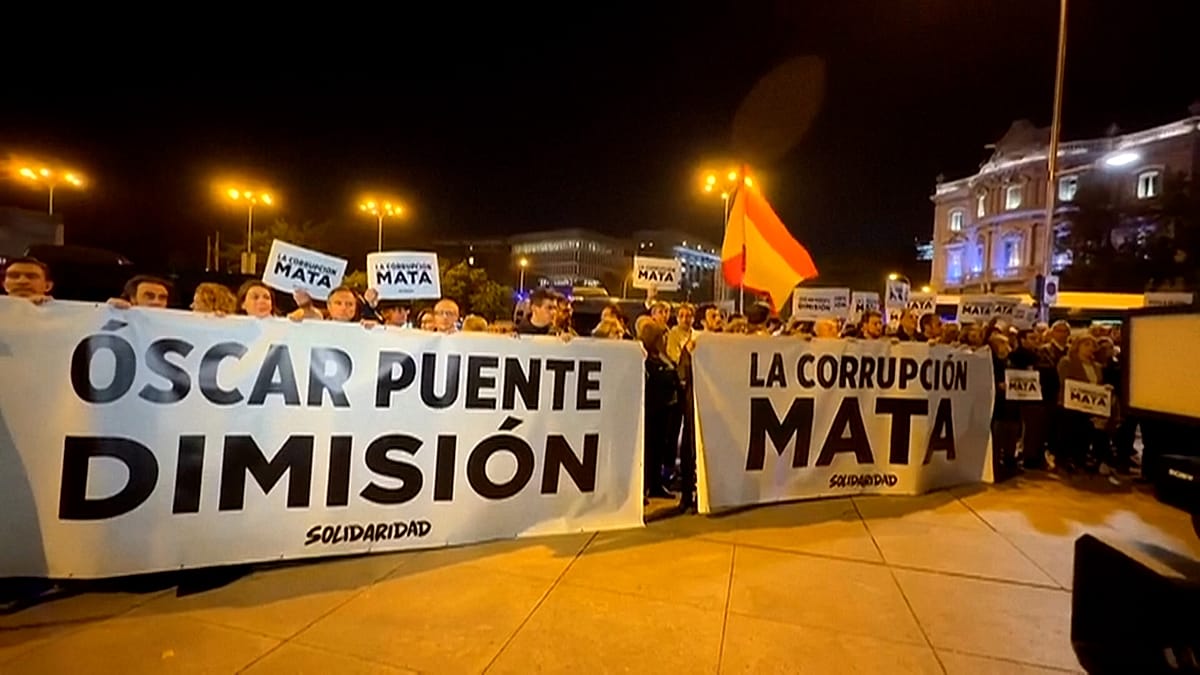
One of your browser extensions seems to be blocking the video player from loading. To watch this content, you may need to disable it on this site. Oscar Puente told reporters in Madrid that the red signal was issued due to a computer communications failure, which automatically stopped traffic, but an erroneous decision was then taken to restart the Renfe train.
Sanchez said in a televised address from near the site south of Madrid that the "terrible tragedy" would be investigated and vowed to address any failures that came to light, adding that the causes of the two crashes appeared to be unrelated. Read moreSpain to observe three days of mourning after scores killed in high-speed train collision "If we need to further strengthen safety in order to rebuild confidence in our high-speed rail system, we will do so, because what is unacceptable for a country like Spain is to suffer two high-speed rail accidents in the same year," Sanchez said. Spain's opposition People's Party said it had cancelled all campaign events for the day, ahead of elections next month.
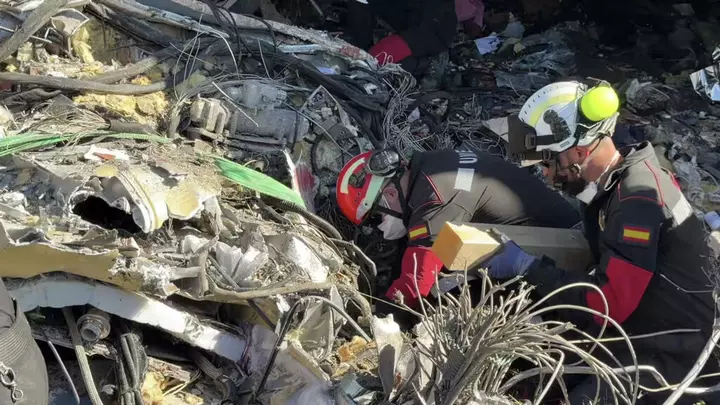
At the scene in rural Castilla-La Mancha, ambulances, funeral home vans and helicopters assembled beside one of the trains on an elevated stretch of track, while twisted metal and wreckage lay scattered down an embankment where at least three carriages had plunged. The head of the regional government, Emiliano García-Page, said the death toll had risen to 68, while rescuers searching for other victims as darkness fell did not know if other fatalities would be discovered once the carriages were moved. Passengers, some splattered with blood or bandaged, were evacuated along a nearby road after the crash, which Spain's health minister, Monica Garcia, said had injured 80 people, 15 of them very seriously.
Salvador Arriza described the chaos in his carriage. "I was very close to the door, but (other passengers) were breaking the windows to be able to get out. Some people practically couldn't move because they were trapped amongst the seats," said the 62-year-old.
The disaster, the deadliest train accident in Europe since a 2013 derailment in Spain's Santiago de Compostela in which 80 people died, follows another fatal accident in January involving high-speed trains operated by the same companies on the same line, in which 46 people died. In that collision, a train derailed and smashed into an oncoming train, prompting a debate over investment in railway maintenance. Renfe said on Wednesday that after being authorised to continue its journey, its train had crashed into the Iryo train that had remained stationary "for reasons we don't know".
Extract — continue reading at the source.