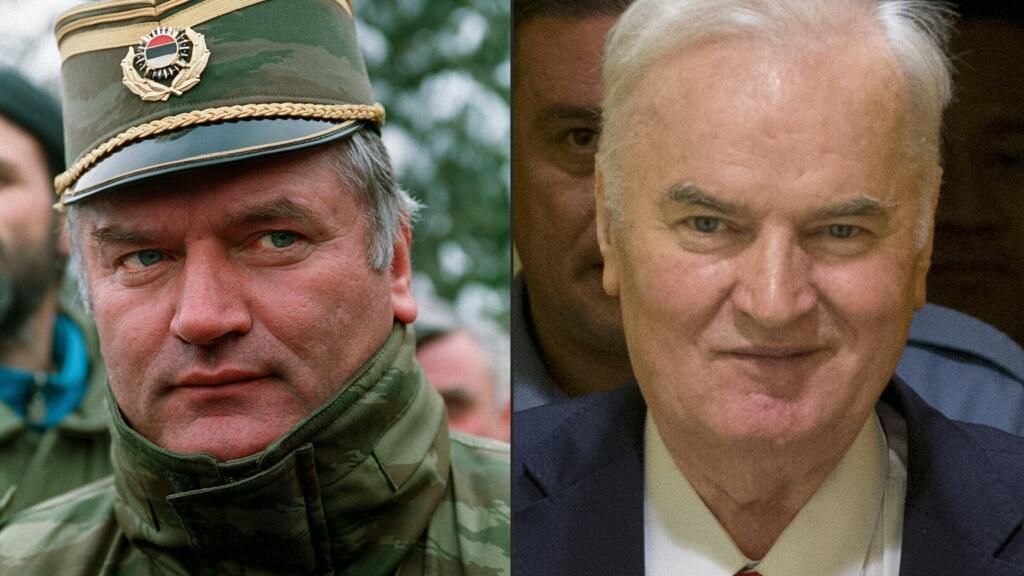
The former Bosnian Serb military commander died in hospital in The Hague while serving a life sentence for genocide and war crimes committed during Bosnia’s 1990s war. Ratko Mladić, the former Bosnian Serb military commander convicted of genocide and war crimes over his role in the Bosnian war, has died aged 84 while serving a life sentence in The Hague. The International Residual Mechanism for Criminal Tribunals confirmed that Mladić died in hospital on Thursday.
The tribunal said Judge Graciela Gatti Santana had ordered a full inquiry into the circumstances of his death. Mladić became one of the most notorious figures of the 1990s Balkan wars and was widely known as the “Butcher of Bosnia”. He was convicted in 2017 of genocide, crimes against humanity and war crimes and sentenced to life imprisonment.
His conviction was upheld on appeal in 2021. At the centre of the case was his role in the 1995 Srebrenica massacre, in which more than 8,000 Bosnian Muslim men and boys were killed after Bosnian Serb forces overran the UN-declared safe area. The massacre was the worst atrocity in Europe since the Second World War and was recognised by international courts as genocide.
Mladić also commanded Bosnian Serb forces during the prolonged siege of Sarajevo, where artillery, tank and sniper attacks killed thousands of civilians during the war. International prosecutors argued that Mladić was a central figure in a campaign to forcibly remove Bosnian Muslims, Croats and other non-Serbs from territory claimed by Bosnian Serb forces. The tribunal found that he worked alongside Bosnian Serb political leader Radovan Karadžić and former Serbian President Slobodan Milošević as part of a broader criminal enterprise.
Mladić remained defiant throughout his trial. At his sentencing in 2017, he rejected the tribunal's findings, calling the proceedings lies and refusing to recognise the court's authority. His death closes the life of one of the most consequential and controversial military figures of the Bosnian war, but not the political battles surrounding his legacy.
Mladić was arrested in Serbia in 2011 after 16 years as a fugitive. His capture removed one of the last major wartime fugitives sought by the International Criminal Tribunal for the former Yugoslavia. His death is likely to revive debate across the Balkans over the legacy of the war, the memory of Srebrenica and the competing narratives that continue to shape politics in Bosnia and Herzegovina and Serbia.
Extract — continue reading at the source.