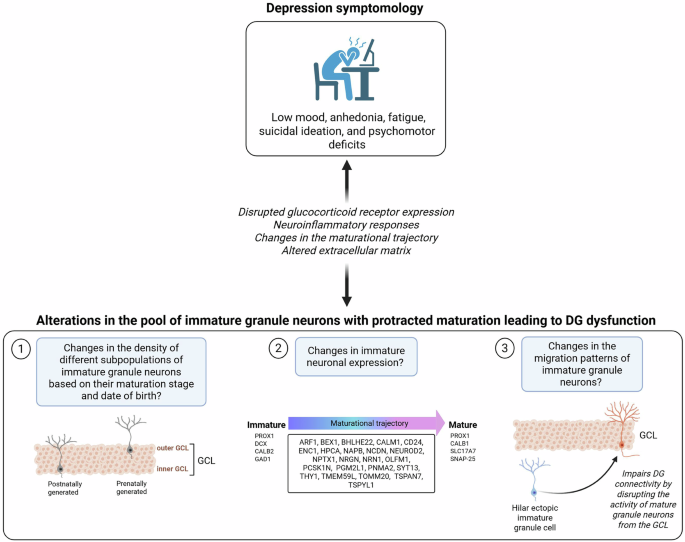
Depression is a highly prevalent mood disorder with a complex etiology that has yet to be fully characterized. Alterations in the generation of new granule neurons in the hippocampal dentate gyrus have been hypothesized to contribute to the pathophysiology of depression and recovery from this mood disorder, a theory coined the “neurogenic hypothesis of depression”. This article revisits current evidence of this hypothesis in humans, which reveals varying perspectives from post-mortem studies.
Drawing on recent findings in the field of human adult hippocampal neurogenesis, we also offer here potential research directions regarding how immature granule neurons, which have been so far understudied in this context, may be affected in the pathogenesis of depression. Finally, this review explores to what extent immature granule neurons are involved in the neurobiological basis of this mood disorder and how their properties may increase their vulnerability to stress-mediated changes in the hippocampus. Together, this review provides crucial insight into immature granule neurons as a particularly interesting therapeutic target to mitigate stress-related behavioural impairments.
This is a preview of subscription content, access via your institution Receive 12 print issues and online access Prices may be subject to local taxes which are calculated during checkout World Health Organization. Depressive disorder (depression) 2025 [Available from: https://www.who.int/news-room/fact-sheets/detail/depression. Lucassen PJ, Fitzsimons CP, Korosi A, Joels M, Belzung C, Abrous DN.
Stressing new neurons into depression? Mol Psychiatry. 2013;18:396–7. Depression: the case for a monoamine deficiency.
J Clin Psychiatry. 2000;61 Suppl 6:7–11. Pariante CM, Lightman SL. The HPA axis in major depression: classical theories and new developments.
Trends Neurosci. 2008;31:464–8. Keller J, Gomez R, Williams G, Lembke A, Lazzeroni L, Murphy GM Jr., et al. HPA axis in major depression: cortisol, clinical symptomatology and genetic variation predict cognition.
Extract — continue reading at the source.