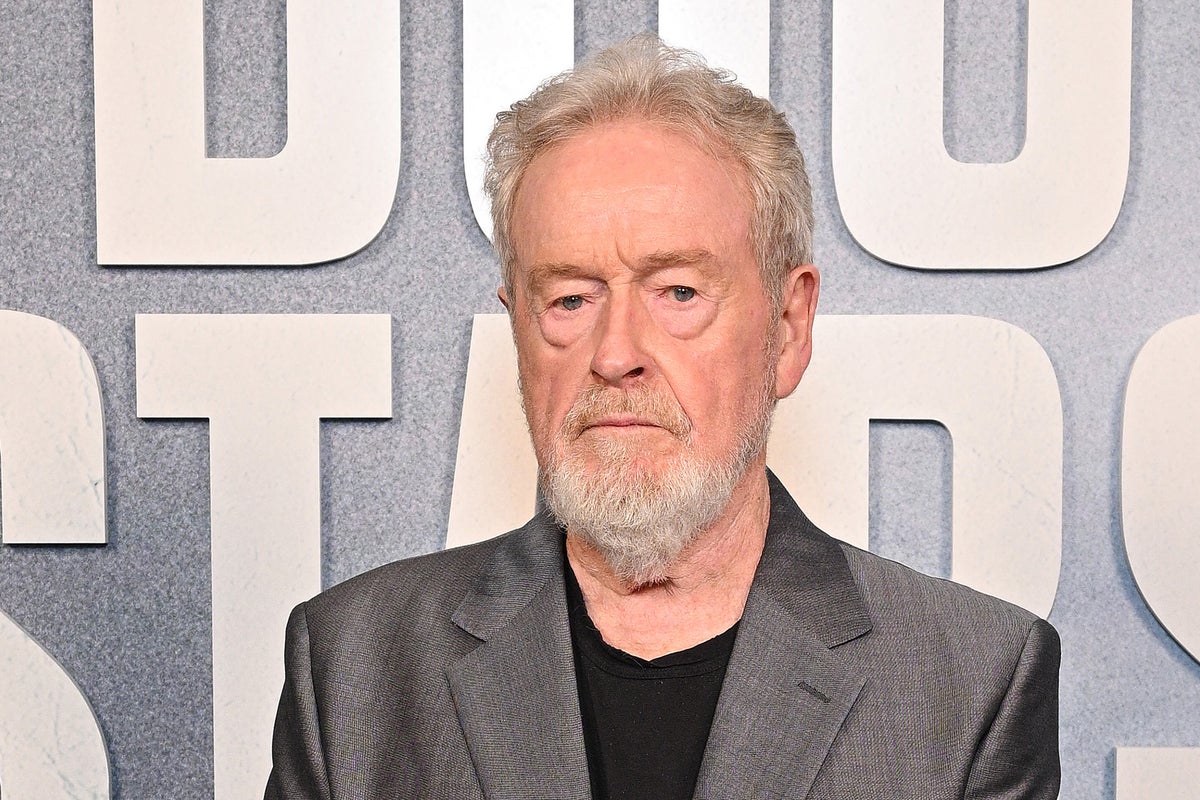
The 88-year-old has recently mastered the art of failing upwards, spearheading a string of creatively uninspiring blockbusters that have made audiences shrug and often lost studios millions of dollars in the process – yet he keeps going, this week claiming to be about to make his most expensive film ever with an adaptation of Treasure Island. And it’s threatening what was at one point a remarkable legacy. Scott is, of course, one of our finest ever British exports, a filmmaker of deserved renown whose credits range from classics of unparalleled influence (Alien, Blade Runner, Thelma & Louise, Gladiator) to movies that have developed their own rabid fandoms over the years through pure style and panache (Black Rain, The Counsellor, GI Jane).
Scott has been brilliant, pushing against the perceived limitations of wide-scale, audience-pleasing filmmaking throughout his career. But in the last decade or so, Scott has tended to bounce from one artistically parched project to the next, from the dismal Gladiator II to last month’s stagnant neo-western The Dog Stars. Scott’s occasional creative successes, too, work in spite of him lately.
With their kooky line readings and Dolmio ad accents, the stars of House of Gucci (2021) seemed to think they were in a camp Eurotrash odyssey – so why was Scott’s direction so flat and stodgy? Was that same year’s brilliant tale of historic sexual violence The Last Duel – with its all-timer performance from Jodie Comer – so good because of Scott’s entirely fine, workmanlike direction? Or was it down to that elegant, perspective-hopping screenplay by Ben Affleck, Matt Damon and the perennially surprising indie filmmaker Nicole Holofcener?
It’s been more than a decade since Scott made a film that was a hit with both audiences and critics alike, that being his 2015 Matt Damon vehicle The Martian. It boasted a rare lightness of touch for the typically taciturn Scott, and was the last of his movies to properly bother the major categories at the Oscars, including Best Picture and Best Actor. (Though it ultimately won nothing.) Despite the financial and critical disappointments of everything from 2017’s Alien: Covenant to his confused 2023 historical epic Napoleon, Scott is still being blessed with enormous budgets and huge amounts of creative freedom. His adaptation of Treasure Island – reportedly due to star Adolescence’s Owen Cooper and Hughs Jackman and Grant – will have the highest budget of his career to date.
And considering Gladiator II and his Russell Crowe Robin Hood in 2010 cost around $250m each to produce (and both underperformed at the box office), that takes some doing. (The Dog Stars, meanwhile, has in two weeks grossed just $34m worldwide off a reported production budget of between $70m and $110m.) You can see why Hollywood studios are still drawn to Scott even after all these calamities. His name, of course, carries instant global recognition, and he’s one of the few octogenarian filmmakers still eager to make proper meat-and-potatoes crowdpleasers. (Even if the crowds don’t show up.) At 88, he has none of the artistic aspirations of the 83-year-old Martin Scorsese, nor the mad-scientist flamboyance of late-career Francis Ford Coppola, 87, who financed his bizarre cod-philosophising epic Megalopolis himself back in 2023. But a darker, more annoying explanation might be that Scott just works incredibly fast now – even if that comes at the expense of quality.
He shoots with multiple cameras at once while watching all the resulting footage live from inside a trailer on the set, reducing shoot time and meaning fewer takes are required for his actors. Despite the sky-high budgets he’s drawing, his films are likely cheaper than they would be if any other director was involved. But it’s not a process that is remotely typical for a filmmaker of his renown.
Extract — continue reading at the source.


