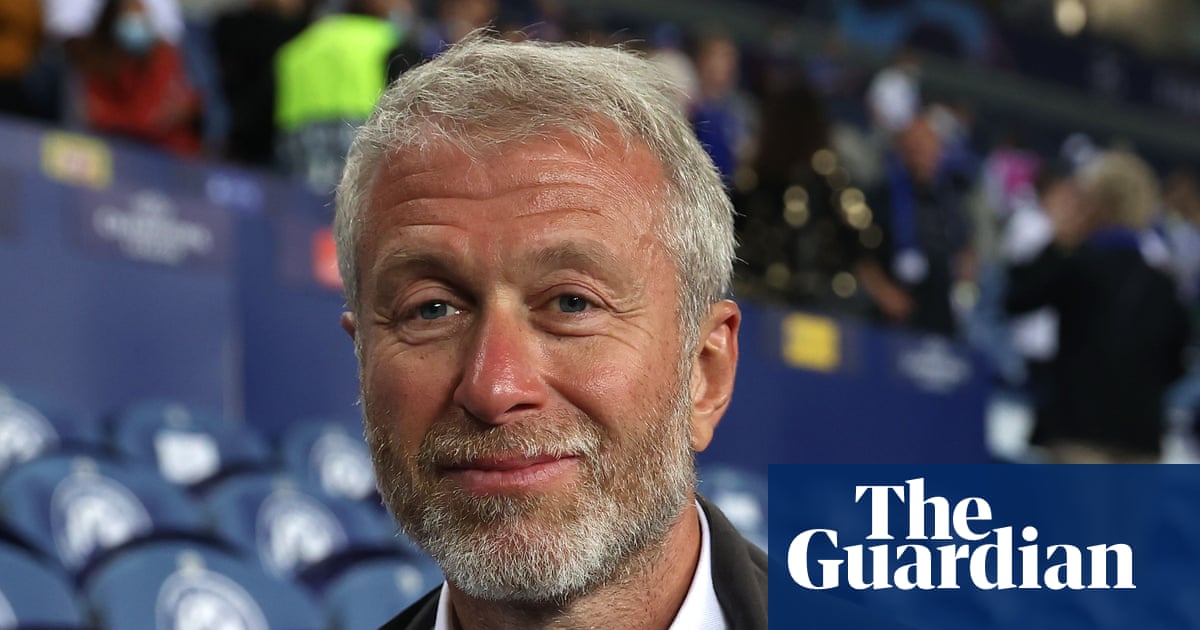
Aides of Roman Abramovich – including staff at the global accountancy firm Deloitte – falsified paperwork mapping the oligarch’s sprawling offshore business empire, records suggest, helping his businesses dodge tax and disguise assets. New analysis of leaked corporate records uncovers what appears to have been a long-running and carefully orchestrated strategy of backdating documents. The Russian billionaire’s closest aide, London-based Eugene Tenenbaum, appears to have been involved in the backdating and may also have given false evidence to the UK high court during a potentially costly lawsuit, the papers indicate.
Abramovich’s personal and financial affairs are now restricted, owing to sanctions imposed by the UK and EU in response to Russia’s war on Ukraine. But the documents raise questions about how Abramovich was able to shield his financial affairs from the authorities for more than a decade, with the apparent assistance of apparatchiks and blue-chip advisers. The findings are based on the Cyprus Confidential leak, more than 500,000 documents, first released to the International Consortium of Investigative Journalists (ICIJ) and analysed by organisations including the Guardian, the Bureau of Investigative Journalism and the BBC.
The digital paper trail charts the reorganisation of billions of pounds that the former Chelsea FC owner obtained via the controversial acquisition of oilfields in the frozen wastes of Siberia, amid the break-up of the Soviet Union. From 1999 until at least 2013, a cadre of aides and accountants tasked with shifting the funds between offshore jurisdictions deployed tactics that experts say may have constituted fraud and tax evasion. This, it seems, involved backdating documents to create a convenient paper trail showing that agreements and transactions had taken place years earlier.
Lawyers for Abramovich denied any wrongdoing and said he relied on the advice of his advisers and Deloitte Cyprus. Tenenbaum denied any wrongdoing and said he also relied on the specialist advice given by Deloitte Cyprus. Deloitte Cyprus said that it “acts in compliance with all applicable laws” and that it could no longer access the relevant material because of the time that has elapsed.
A crown jewel in Russia’s rich seam of natural resources, Sibneft’s oilfields fell into Abramovich’s hands during the chaotic post-Soviet privatisation era. The famously shrewd entrepreneur obtained the business for roughly $250m, reportedly spending as little as $19m of his own money. By the time he sold the last of his shares to Gazprom in 2005, Abramovich had raised $16bn, money he ploughed into investments, mansions, superyachts and Chelsea FC.
One Cyprus-based company, Kravin Investments, was among several early vehicles through which that cash flowed. Kravin received a $3bn windfall in May 2003, of which it retained about $2bn. The money sat in Kravin’s bank account or was loaned to other companies, accruing interest that was, in theory, taxable in Cyprus.
Extract — continue reading at the source.