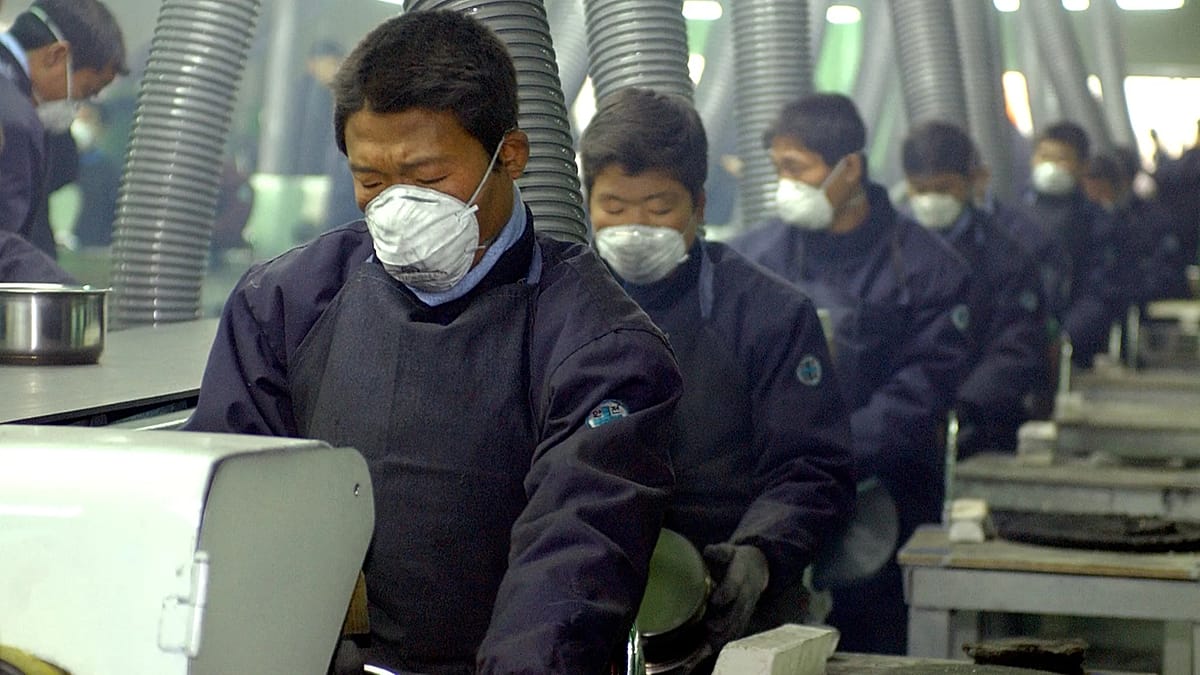
According to a report by the UN Security Council's Multilateral Sanctions Monitoring Team (MSMT), between 15,000 and 30,000 North Korean workers were present in Russia at the end of 2025. Up to 1,000 of them were employed at strategically important facilities, including defence plants, steelworks and shipbuilding capacities. The Ukrainian outlet "Ukrainska Pravda" also confirmed that up to 25,000 North Korean citizens are working on drone production in the Alabuga special economic zone in Tatarstan, where Russian versions of Iran's Shahed drone are assembled.
Radio Liberty cites similar data, noting that North Koreans are registered as "students" in order to bypass UN sanctions that prohibit the use of DPRK labour abroad. In 2025 Russia issued more than 36,400 visas to North Korean citizens, of which 35,800 were student visas. Workers from North Korea are now reportedly spread across Russia, from traditional employment regions in the Far East (Vladivostok, Khabarovsk and Sakhalin) to newer destinations such as Moscow, Saint Petersburg and Irkutsk.
Tatarstan has become the main centre of their employment, in particular the Alabuga special economic zone, which features in most investigations as a key hub for assembling strike drones. It is here, according to Current Time and Radio Liberty, that North Korean workers staff assembly lines producing drones used by Russia to attack Ukrainian cities and infrastructure. Although UN Security Council sanctions have banned the export of North Korean labour since 2017, Moscow and Pyongyang have built an entire ecosystem for circumventing these restrictions, the MSMT report notes.
North Koreans are being registered en masse on student and tourist visas, which allows their real status to be concealed and their work at Russian companies to be legalised. According to reports, Russian legislation was amended to create legal loopholes that enabled "students" to receive income officially. The report also describes cases in which Russian universities were bribed to arrange fictitious study programmes, as well as the role of intermediaries from third countries, including Belarus, which help organise entry and distribute the workforce.
This points to a systemic scheme that allows Pyongyang to earn millions of dollars and enables Russia to plug labour shortages in strategic industries. According to MSMT, the working conditions of North Korean labourers in Russia remain extremely harsh and are fully controlled by the Pyongyang authorities. The average annual income of such workers is around $7,500 (€6,593), but almost all of this is seized by Pyongyang.
The report notes that in 2025 alone North Korea received up to 800 million dollars from the labour of its citizens abroad. These funds, the report stresses, are channelled into financing the country's nuclear and missile programme. The workers in effect live under constant surveillance by DPRK security services: their movements are strictly restricted, contact with Russian citizens is forbidden, and they are housed in closed dormitories to which outsiders have no access.
Extract — continue reading at the source.