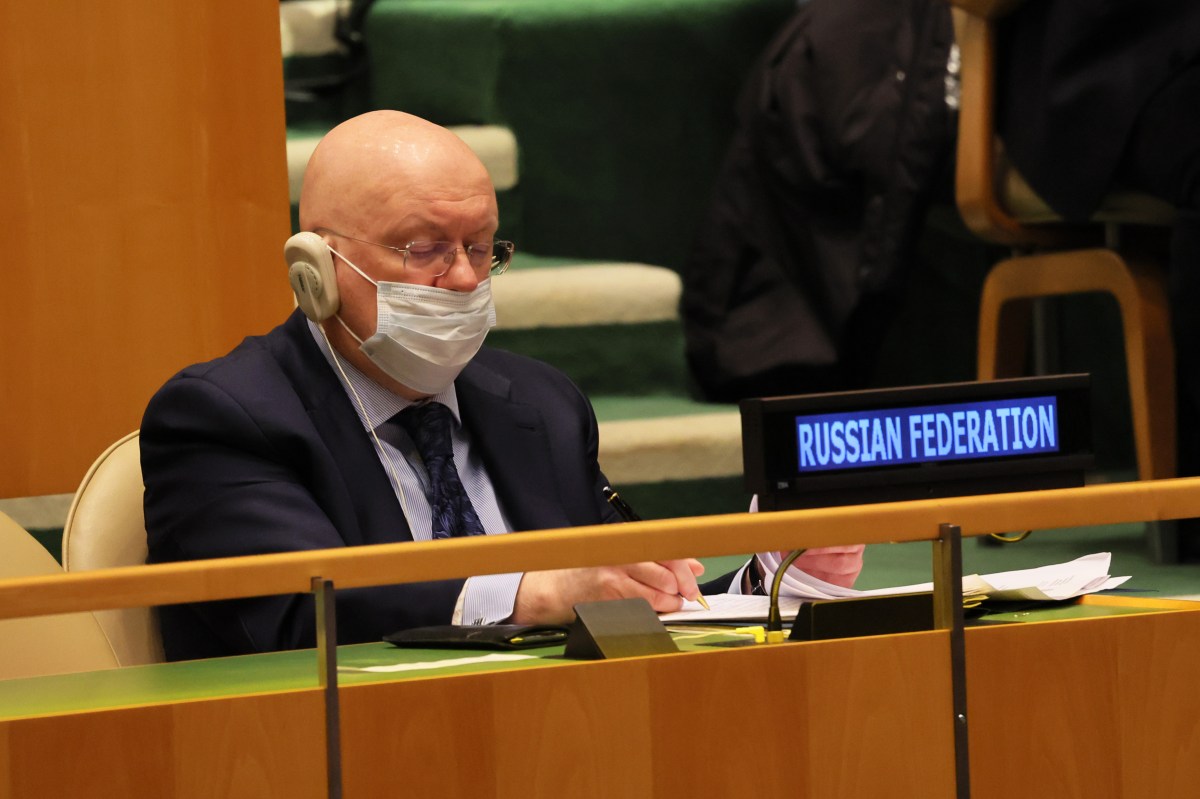
In May 2022, Russia’s ambassador to the United Nations, Vasily Nebenzya, had a tricky question for Washington and Kyiv. If biological laboratories operating in Ukraine with Pentagon support were engaged in peaceful scientific research, "why do you not agree to put it under international control?" he asked. Before Nebenzya took to the microphone, Moscow had alleged that at least 30 Ukrainian labs funded by Washington were conducting dangerous military-biological research involving pathogens including plague, anthrax, tularemia and cholera.
It demanded exhaustive explanations, invoked the Biological Weapons Convention (BWC), and even attempted to establish a Security Council commission to investigate American and Ukrainian activities. An unexplained death at the Irkutsk Anti-Plague Research Institute has attracted international attention to a facility with dangerous pathogen collections, a Soviet biological-defense history, and links to Russian military researchers. Moscow denies there was ever a plague infection or a laboratory accident in the first place, but has yet to reveal its findings to the world despite widespread calls—including from the World Health Organization and the White House—to do so.
By the standards Nebenzya has set for Ukraine and the U.S., Russia is failing its own test on biological security. On October 2, 28-year-old Darya Shipilova, an employee at the Irkutsk institute, reportedly died after developing severe pneumonia in late September. Various Russian media reports alleged she contracted pneumonic plague after breaking a test tube containing a strain of Yersinia pestis—the bacterium associated with the plague—which the facility in Irkutsk openly acknowledges it uses in research.
But Russia’s public health watchdog Rospotrebnadzor claims Shipilova’s illness was completely unrelated to her work. On October 8, it announced that everyone who came into contact with the unfortunate lab worker had undergone medical observation, and no dangerous pathogens were found after almost 5,000 tests. Two investigative commissions reportedly found no biological-safety incident.
So far, all we have to go on is Moscow’s word. "We don’t yet have the full picture of this event," WHO Director-General Tedros Adhanom Ghebreyesus said Wednesday. "We are not able to conduct a full risk assessment." Take one look at the history of the institute in Irkutsk and the scope of its work, and you can understand why the international community may be concerned.
Founded in 1934, the Irkutsk institute has spent nearly a century studying some of the world’s deadliest infectious diseases. Its former director Igor Domaradsky, who took charge in 1957, described in his memoir Biowarrior how he established new laboratories at Irkutsk to study plague's effects on the body, including what he called the "mechanism of plague toxicity." After leaving the institute, Domaradsky went on to become a key architect of Factor, a Soviet biological-weapons program which sought to genetically engineer more virulent, dangerous microorganisms. Irkutsk, meanwhile, participated in the Soviet antiplague network’s secret Problem 5 biodefense program, though renowned U.S. biological weapons historian Raymond Zilinskas found its involvement in offensive weapons programs was relatively limited compared with other Soviet institutes.
Extract — continue reading at the source.