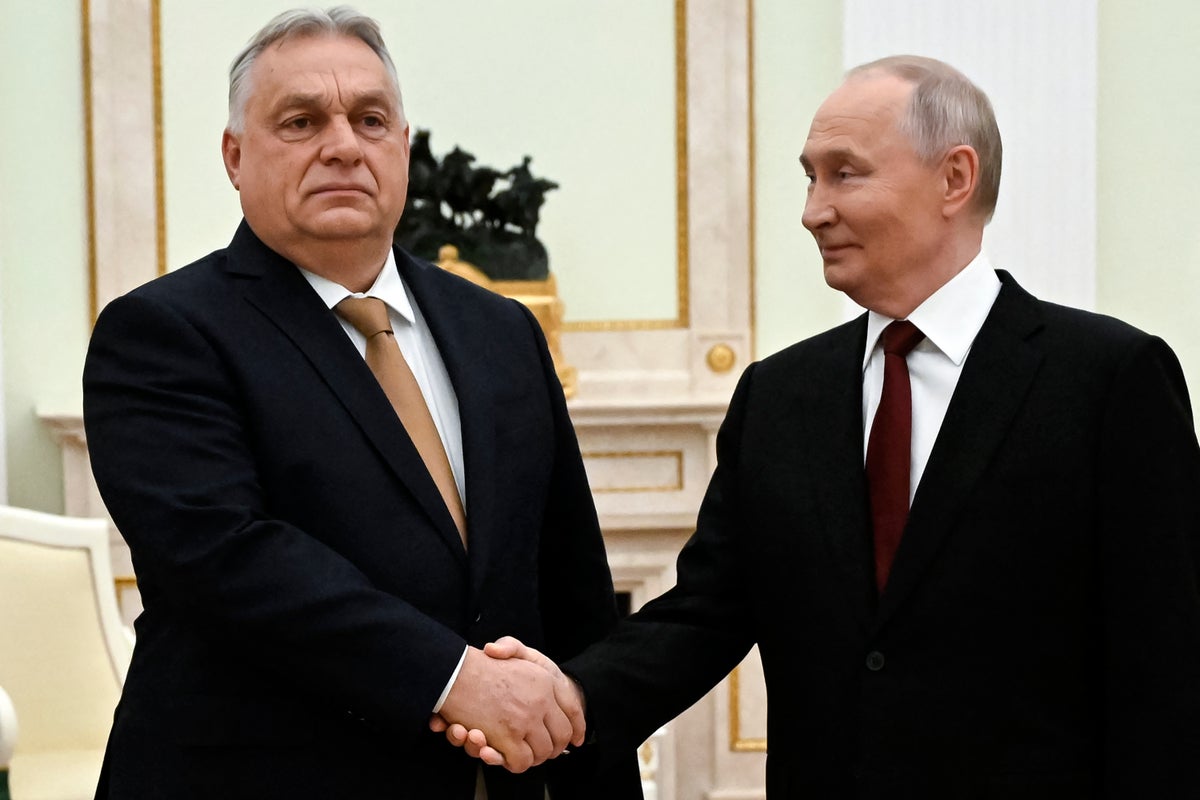
The Russian Foreign Ministry said on Tuesday that it would retaliate against Hungary over Budapest's expulsion of 10 Russian diplomats, the state RIA news agency reported. Hungary has ordered 10 members of Russia's diplomatic mission to leave the country over activities deemed unacceptable for diplomats, Foreign Minister Anita Orbán said on Tuesday. Minister Orbán said that Budapest had expelled the diplomats because they were "engaged in activities in Hungary that are unacceptable for diplomats under the Vienna Convention." She did not specify the alleged activities or say how long the Russian personnel had to leave.
She added that the Russian ambassador had been informed that "according to the assessment of the Hungarian authorities, 10 members of the Russian mission had engaged in activities in Hungary that are unacceptable for diplomats under the Vienna Convention." That is a reference to an international treaty that governs the conduct of diplomats. The move comes under Prime Minister Peter Magyar, who took office earlier this year promising to end the country's pro-Russia policies. "This decision protects Hungary's security and sovereignty," the foreign minister wrote in a statement.
"It does not imply breaking off diplomatic relations with Russia. Hungary intends to continue the necessary dialogue, based on mutual respect and adherence to the rules." The Interfax news agency cited the Russian Foreign Ministry as saying that Moscow's response would be very harsh and painful for Hungary. Magyar's predecessor, Viktor Orbán, was an ally of Russian President Vladimir Putin who repeatedly delayed or blocked European Union sanctions on Russia and pursued energy deals with Russia.
Magyar and his center-right Tisza party defeated the autocratic leader in a landslide election earlier this year. The win, which gave Tisza a two-thirds majority, allows it to roll back many of the policies that gave Orbán a reputation among his critics as a far-right authoritarian. Among Tisza's biggest campaign promises was holding Orbán, his nationalist-populist Fidesz party and their allied business elites accountable for alleged misconduct.
During his 16 years as Hungary’s prime minister, Orbán was accused by many critics of overseeing the widespread misuse of public funds. Join thought-provoking conversations, follow other Independent readers and see their replies
Extract — continue reading at the source.